
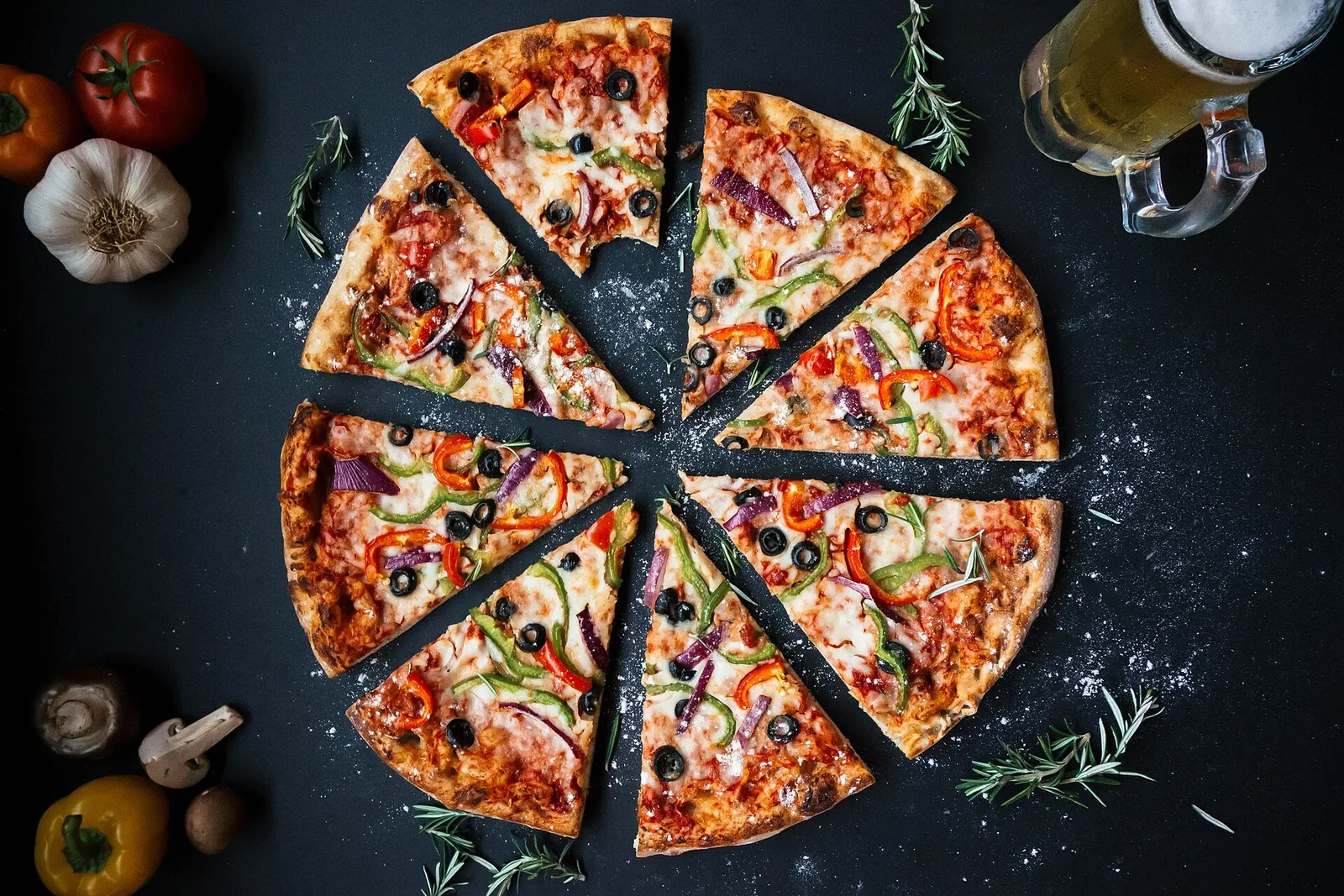
A margherita pizza can serve as a starting point. A classical computer examines one slice at a time, bites into the mozzarella, notes the taste, then moves on to the next. A quantum computer can taste all eight slices at once, with every possible combination of toppings.
Classical bit, quantum bit: the basic recipe
A classical computer works with bits. Each bit is like a slice of pizza that can only be two things: margherita (0) or four cheese (1). At any moment, the bit holds a defined value. If you have three slices, you can represent eight possible combinations, but the processor handles only one at a time. A classical computer adds numbers, executes instructions and manipulates files sequentially, even when it gives the illusion of parallelism thanks to multiple cores.
A qubit, the basic unit of a quantum computer, follows other rules. It can be 0, 1, or a combination of both at the same time. This state is called superposition. To extend the metaphor, a quantum slice is not half margherita and half four cheese in the sense that you would have cut two halves stuck together. It is a slice in which each possible state has a probability amplitude. As long as no one tastes it, the amplitudes coexist. As soon as you taste it, that is, you measure the qubit, the state freezes into margherita or four cheese, according to those amplitudes.
| Property | Classical bit | Qubit |
|-----------|---------------|-------|
| Possible states | 0 or 1 | 0, 1 or combination |
| Representation of n units | n defined values | 2^n simultaneous amplitudes |
| Readout / measurement | Stable value | Probabilistic value after measurement |
| Sensitivity to noise | Low | High (decoherence) |
Qubits are implemented in different ways depending on the laboratory. Superconducting circuits, chosen by IBM or Google, cool aluminum loops to a few millikelvins. Trapped ions, used by IonQ or Quantinuum, hold charged atoms in electromagnetic fields. Photons, used by Xanadu or PsiQuantum, travel through optical chips. Superconductors are fast but noisy, ions are stable but slow, and photons suit telecommunications yet remain difficult to control. Each approach carries its own trade-offs in speed, stability and control.
Superposition: tasting all eight slices at once
Take three qubits. Classically, three bits give eight possible configurations: 000, 001, 010, 011, 100, 101, 110, 111. A classical computer can explore only one configuration at a time, which takes eight steps. Three qubits in superposition represent the eight configurations simultaneously, with eight probability amplitudes. In a single pass of a quantum algorithm, you can manipulate these eight amplitudes. Move up to 50 qubits and you are dealing with 2^50 states, more than a thousand billion. At 300 qubits, the number of states exceeds the number of atoms in the observable universe.
> Key point: Superposition gives a probability distribution over all possible answers rather than a direct answer. A quantum algorithm manipulates the amplitudes so that the right answer comes out with high probability at measurement, instead of trying all solutions in parallel.
The probability amplitude is a complex number, with a magnitude and a phase. The probability of measuring a given state is the square of the amplitude's modulus. An amplitude of 0.6 therefore corresponds to a 36% chance (0.6 squared), and not to a 60% chance. Quantum algorithms manipulate phases as well as frequencies. Each slice can be pictured with a flavor intensity and an orientation in a space of tastes. Measurement amounts to asking the customer to choose a single flavor, with a probability tied to the intensity.
Entanglement: two pizzas linked across a distance
Entanglement is the second key concept. Imagine two quantum pizzas prepared together. If you measure the first and it is margherita, you immediately know the second is four cheese, even if it sits on the other side of the world. A simple correlation of this kind also exists classically: I put two different pizzas in two closed boxes, I keep one box, I send the other to Tokyo. Opening mine, I deduce the other. With entangled qubits, the correlations cannot be explained by local hidden variables, the principle behind Bell's theorem and the Aspect experiments.
Entanglement does not allow sending a message faster than light. If you measure your pizza in Paris and your colleague in Tokyo measures theirs, you will get correlated results, but you cannot choose the outcome of your measurement to transmit information.
Interference: adjusting the toppings to boost the right taste
The third pillar is interference. Classically, probabilities add up. In quantum mechanics, amplitudes add up with phases: some reinforce each other, others cancel out. Picture a pizza whose toppings are adjusted so that the mozzarella taste comes through stronger and the anchovies almost disappear. Quantum algorithms, such as Grover's for searching an unsorted database, use interference to amplify the amplitude of the right answer and reduce that of the wrong ones.
In practice, a quantum computer applies quantum logic gates (the equivalent of the classical AND, OR, NOT gates). A Hadamard gate puts a qubit into equal superposition. A CNOT gate creates entanglement between two qubits. A phase gate changes the phase of the amplitude. By combining these gates, you build a circuit that makes the amplitudes interfere to produce the desired result.
Algorithms and paradigms worth knowing:
- Shor's algorithm: factors large numbers in polynomial time, threatens current RSA encryption.
- Grover's algorithm: speeds up unstructured search with a quadratic gain.
- Quantum simulation: models molecules for chemistry, materials and pharmaceuticals.
Decoherence and red flags: why quantum remains fragile
A qubit is fragile. The slightest contact with the environment (temperature, radiation, magnetic field) knocks it out of superposition. The phenomenon is called decoherence. A cooling pizza loses its flavors as they freeze, and superposition fades in much the same way. To limit this phenomenon, quantum processors are cooled to temperatures close to absolute zero, sometimes to a few millikelvins. Even then, errors multiply. A physical qubit is not reliable enough for a long calculation. It takes several physical qubits to form a stable logical qubit, with error correction codes.
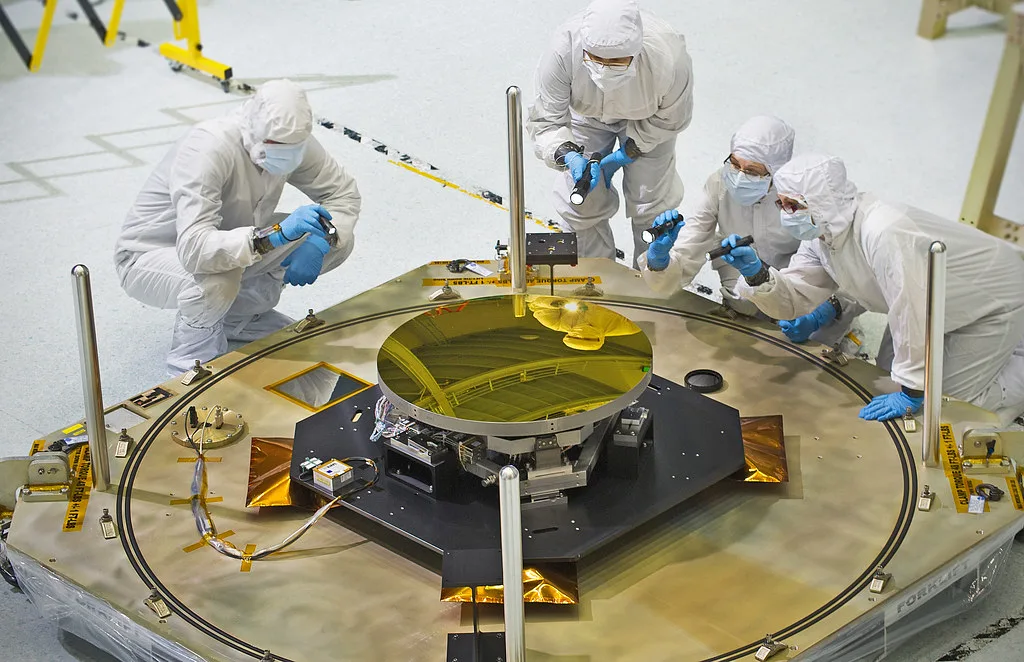
Quantum error correction carries a considerable overhead. Depending on the implementation, it often takes somewhere between several hundred and a few thousand physical qubits to produce a single reliable logical qubit. Recent progress on surface codes and logical qubits raises hopes of reducing that overhead, but it remains the main obstacle to useful scale. A processor announced at 1,000 qubits is therefore judged on its error rate and on the number of logical qubits actually available.
Warning signs when a vendor or a colleague announces a quantum breakthrough:
- Qubit count highlighted without an error rate: a processor announced with 1,000 qubits but a high error rate is no better than a better-controlled 100-qubit processor.
- No comparison with the best classical method: if a quantum result is not compared with the best classical algorithm on the same problem, the demonstration is incomplete.
- A vague use case: a company that says "we do quantum for optimization" without specifying the exact problem, the data size and the measured gain.
- Confusion between physical and logical qubits: marketing figures often refer to physical qubits, while useful capacity depends on corrected logical qubits.
- A "quantum supremacy" announcement with no reproducibility: quantum supremacy (or quantum advantage) is argued over a precise problem, with results verified by independent teams.
UNDP and concrete applications on a realistic horizon
UNDP has published a page dedicated to quantum, describing the technology as future-proof. The organization stresses that quantum will adapt and evolve with organizations, changing how they work and deliver services. Simulating molecules for materials, optimizing supply chains, reducing financial risk and post-quantum cryptography are the areas that recur in work on the subject.
| Area | Concrete example | Indicative horizon |
|---------|-----------------|-------------------|
| Chemistry and materials | Simulation of catalysts, batteries | 5 to 10 years |
| Logistics | Optimization of complex routes | 3 to 7 years |
| Finance | Valuation of derivatives, risk management | 5 years and beyond |
| Cybersecurity | RSA attack (threat), quantum key distribution (defense) | Threat in 10 years, defense in 5 years |
UNDP does not detail specific use cases on its page. Molecule simulation is the application where a speed-up in the discovery of materials for energy storage or carbon capture is most often cited. For humanitarian logistics, better route optimization in disaster zones could cut costs and delays.
What to watch in the coming months
Research teams regularly report progress on surface codes and logical qubits. Cloud providers already offer access to quantum processors via API, so developers can test simple circuits without buying hardware.
Quantum volume (developed by IBM) combines circuit size, error rate and connectivity. Benchmarks such as CLOPS measure the execution speed of real circuits. The next milestones will be measured on error rates and logical qubits rather than on raw qubit counts.
Mistakes to avoid:
- Investing in a quantum project without a team capable of assessing the classical algorithmic complexity of the problem.
- Confusing classical simulation of a quantum computer with real quantum acceleration.
- Ignoring post-quantum cryptography: data encrypted today can be stored and decrypted later.
Further reading
- Quantum | United Nations Development Programme: the UNDP's presentation of quantum as a future-proof, adaptable and scalable technology for organizations.