The first gigabyte hard drive weighed more than 250 kilos and cost around 40,000 dollars. Today, a 1 TB microSD card fits on a fingertip and sells for under 100 euros.
Facts that sound invented
In 1980, shrinking a gigabyte to the size of a 250-kilo cabinet was an industrial feat.
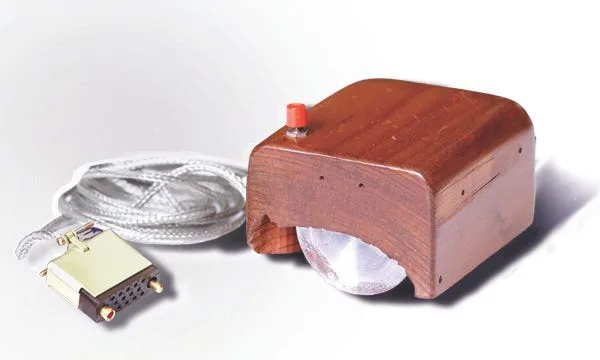
The first computer mouse, built from wood, was presented in 1968 during Douglas Engelbart's "mother of all demos." Its shell came from a block of wood available in the lab.
The password for American nuclear missiles stayed at eight zeros for fifteen years. In an emergency, it had to be possible to launch without looking for a complex code.
The list
- The first computer mouse was made of wood. Douglas Engelbart built it in 1964 from a block of wood, a wheel and a button. It had a single button and moved on two perpendicular wheels.
- The first one-gigabyte hard drive weighed more than 250 kilos. IBM's 3380, launched in 1980, offered 2.52 GB and cost between $81,000 and $142,000 depending on the configuration. It equipped data centers and needed a dedicated power supply. Today the same capacity fits on a postage stamp and costs a few cents.
- ENIAC, the first electronic computer, weighed 27 tons. Built in 1945, it took up 167 square meters and drew 150 kilowatts. A pocket calculator today would outcompute it.
- About 99% of intercontinental Internet traffic runs through submarine cables. Satellites carry only a tiny share of the world's data. These cables, laid on the ocean floor, are the physical infrastructure of the network. Ship anchors and sabotage can cut them, which makes them a recurring subject of geopolitical tension.
- The first text message in history read "Merry Christmas". Sent on December 3, 1992 by engineer Neil Papworth from a computer to a GSM phone, it was a twelve-character message. Texting later became a marketing channel and a vehicle for scams.
- The password for American nuclear missiles was 00000000 for years. From 1962 to 1977, the launch code for the Minuteman was eight zeros. The military feared a complex code would slow the response to an attack. Speed won over robustness, and the vulnerability stayed open for fifteen years.
- The world's first webcam watched a coffee pot. In 1991, researchers at the University of Cambridge set up a camera pointed at their coffee machine so they would not have to walk over for nothing. The system, known as the Trojan Room coffee pot, ran until 2001.
- The very first website is still online. Created by Tim Berners-Lee at CERN in 1991, info.cern.ch still exists and explains how the World Wide Web works. The page is a plain HTML document with no styling.
- The first email was sent to oneself. In 1971, Ray Tomlinson sent himself a test message between two computers sitting side by side. He picked the @ symbol to separate the user name from the machine name.
- Apple's first logo showed Isaac Newton under an apple tree. Drawn in 1976 by Ronald Wayne, it showed the scholar seated under the tree, framed by a quote. That complex logo was replaced a year later by the bitten apple, which was easier to reproduce.
Mistakes to avoid when sharing these facts
Mistake no. 1: not checking the source. Many viral lists mix verified facts with urban legends. Before you cite the nuclear launch code or the wooden mouse, cross-check at least two reliable sources. The BuzzFeed and Business Insider compilations are a good starting point, but they do not replace primary verification when the fact is used in a professional context.
Mistake no. 2: generalizing from an anecdote. Saying that "the first mouse was made of wood, so wood is a good material for peripherals" makes no sense. The mouse was a one-off prototype built with what the lab had on hand, and no peripheral maker followed that path.
Mistake no. 3: confusing correlation with causation. The fact that the first webcam watched a coffee pot does not explain why webcams spread. Likewise, the Apple logo with Newton is not the reason for the brand's success.
Mistake no. 4: forgetting the historical context. ENIAC's 27 tons and the 00000000 password made sense in 1945 and 1962: components were scarce and military priorities ruled. Judging them by today's standards misses what the engineers were working with.
Mistake no. 5: sharing without explaining. Posting "The first SMS said Merry Christmas" with no context adds nothing. Add the date, the author and an implication.
Check the date and context, mention the original source, and tie the fact to a concrete lesson for your audience. For example, the nuclear launch code can open a discussion about corporate password policies. The wooden mouse can illustrate the importance of rapid prototyping.
Comparison table: what people believe vs the reality
| Common belief | Surprising reality | Main source |
|---|---|---|
| The first computer mouse was made of plastic and electronics. | It was made of wood, with a single button and two wheels. | EM360Tech |
| Satellites carry most of the world's Internet traffic. | Undersea cables carry about 99% of intercontinental traffic. | EM360Tech |
| The first SMS was sent from a mobile phone. | It was sent from a computer to a GSM phone in 1992. | EM360Tech |
| The first one-gigabyte hard drive was a desktop device. | It weighed more than 250 kilos and cost a small fortune. | EM360Tech |
| The first Apple logo was the bitten apple. | It depicted Isaac Newton under an apple tree, in 1976. | BuzzFeed |
| The first website disappeared long ago. | info.cern.ch is still accessible and documents the early web. | EM360Tech |
How to use this knowledge in a professional setting

In a design meeting. Use the wooden mouse to remind people that a prototype does not need to be perfect to validate an idea. A rough mock-up tested with five users teaches more than a polished concept nobody has tried.
In training or mentoring. Students and juniors often assume technology has always been fast and intuitive. Showing a 250-kilo hard drive or the 27-ton ENIAC gives the history of computing a weight you can picture.
In cybersecurity. The password 00000000 is an excellent case study. It illustrates the dangers of a security policy that sacrifices robustness to operational urgency. Use it to justify regular audits, strong password policies and a culture of questioning assumptions.
In technology monitoring. Before citing a statistic on internet traffic or the cost of storage, go back to the original study. BuzzFeed and Business Insider lists are useful for sparking curiosity, but not for grounding a strategic decision.
In communication. Rather than declaring "99% of traffic goes through submarine cables" without a source, add "according to EM360Tech, which compiles public data."
Thirty seconds on the source
Take thirty seconds to check the source, the date and the context of an incredible technology fact. Note the original reference in your message: a link to the study or the initial article lets any reader verify it.
Further reading
- BuzzFeed - 20 Unbelievable But True Facts That'll Shock You: a varied list of surprising facts, several of which touch on technology.
- Business Insider - 17 Facts That Sound Fake but Are Totally True: verified facts that defy common sense, with historical context.
- EM360Tech - Top 10 Shocking Tech Facts: the reference ranking for astonishing technology facts.
- BuzzFeed - 10 Fascinating Facts That Sound Fake But Are True: facts drawn from history and pop culture, useful for broadening the perspective.
- BuzzFeed - 23 Food Facts That Sound Fake But Are True: surprising food facts, to vary the angles.
- Business Insider - Bird Facts That Sound Fake but Are True: facts about birds, checked one by one against ornithology sources.
- Yahoo - 22 Facts That Sound Fake But Are 100% True: a recent compilation of verified facts, several of them technical.