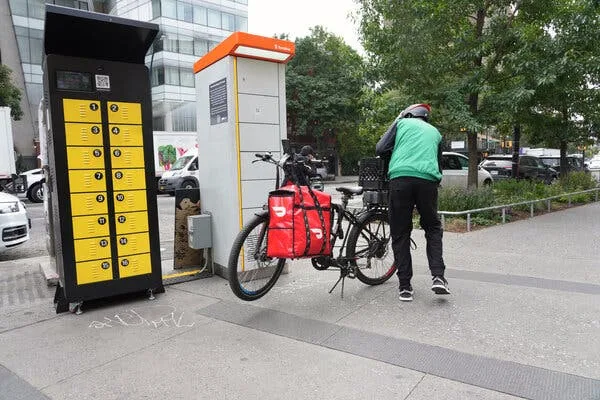
Let's imagine a bike-sharing operator in a dense city. Every morning, a team has to collect the bikes that have been dropped off, bring them back to a depot to plug them in, and then redeploy them. Meanwhile, the fleet is reduced and users are unhappy. What if we simply replaced the battery in a few seconds? This question, simple as it seems, hides a complex trade-off between infrastructure costs, logistics and user experience.
Shared electric bikes are proliferating in urban areas, driven by demand for soft mobility and emission-reduction policies. For operators, energy management is a central issue: every minute a bike is immobilized for recharging is a minute it is not generating revenue. Conventional wired charging, with stations equipped with sockets, seems simple, but it imposes heavy operational constraints. Conversely, battery swapping – removing an empty battery and inserting a full one – promises near-immediate return to service, but requires sophisticated logistics. When does swapping really beat recharging? This article explores the decision criteria for digital and mobility professionals.
The puzzle of wired charging for shared fleets
Recharging a shared electric bike is a bit like managing a fleet of smartphones: you need sockets everywhere, and each device is immobilized during charging. But unlike a smartphone, a bike cannot be used while it is plugged in. For a fleet of several hundred bikes, this means constant rotations, overloaded depots and peak periods when demand exceeds the supply of charged bikes.
Technical and operational constraints
Wired charging relies on stations or depots equipped with chargers. Several constraints emerge:
- Downtime: a full recharge can take 2 to 6 hours depending on capacity and charging technology. Even fast charging, which reduces this time, can degrade the battery over the long term and requires expensive equipment.
- Bike availability: while charging, the bike is out of service. In high-turnover areas (city centers, campuses), this can create shortages.
- Electrical grid constraints: plugging dozens of bikes simultaneously into the same installation can strain the local grid, especially at peak times. Work published in Mdpi on the challenges of electric vehicles points out that charging infrastructure must handle grid and user-behavior constraints, issues that can be transposed to shared bike fleets.
- Battery degradation: frequent partial cycles and high temperatures during charging accelerate aging, increasing replacement costs.
Impact on user experience
For the end user, a bike being recharged is a bike that is unavailable. In a bike-sharing system, frustration arises when the user finds a bike with a low battery or, worse, no bike available nearby. Wired charging requires rigorous planning of collection and recharging operations, often carried out at night or during off-peak hours, but which do not always suffice to cover demand peaks. In addition, fixed charging stations limit deployment flexibility: bikes must be brought back to specific points, which can lead to distribution imbalances.
Faced with these limits, battery swapping appears to be an attractive alternative: the empty battery is removed in a few seconds and replaced with a full one, without immobilizing the bike. But this approach is not without challenges.
Battery swapping: speed and flexibility, but at what cost?
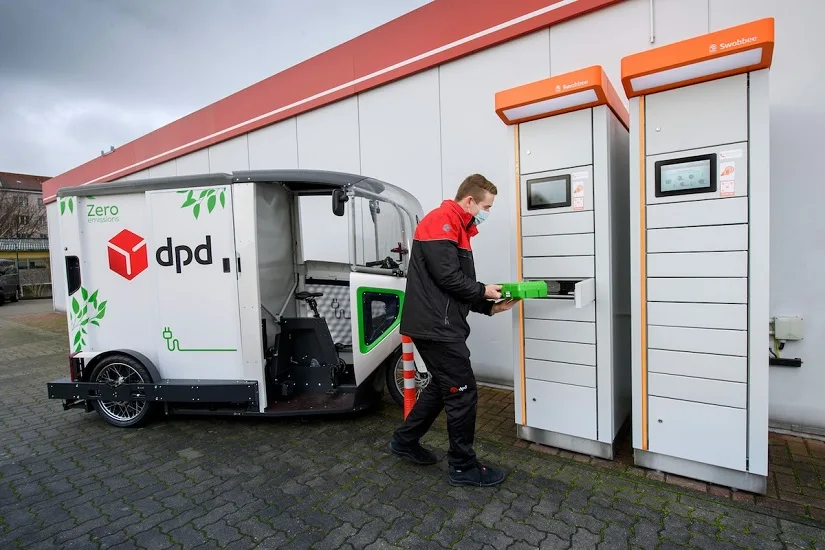
The principle of battery swapping is simple: standardize the battery format, make it easily removable and set up stations where charged batteries are available. The user or a maintenance agent replaces the discharged battery with a charged one, and the bike sets off again immediately. According to Himiwaybike, battery swapping could surpass fast charging in terms of downtime, but it raises the question of whether we really need to recharge an electric bike that quickly.
How does swapping work?
In practice, battery swapping relies on three elements:
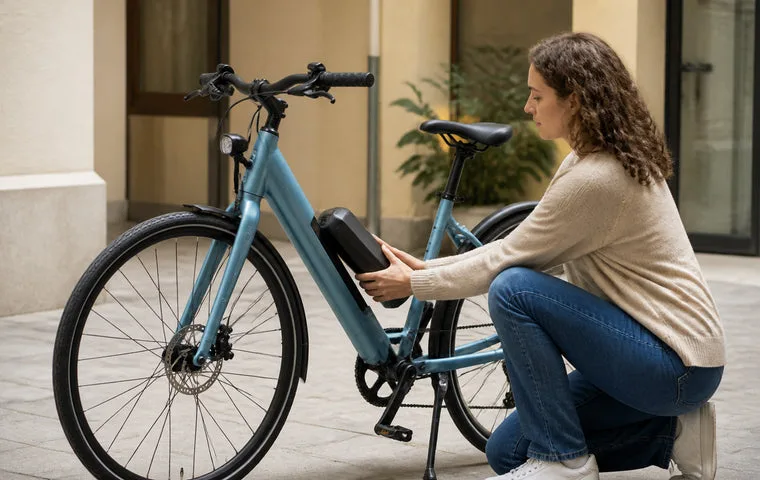
- Removable and standardized batteries: each battery must be easy to remove and insert, with a secure locking mechanism. The format must be identical for all bikes in the fleet.
- Swap stations: these stations contain a stock of charged batteries and can be automated or managed by an operator. They must be strategically distributed across the service area.
- A recharging and redistribution logistics: discharged batteries are collected, recharged in a dedicated center, then redistributed to the stations. This logistics can be optimized thanks to real-time tracking systems.
Potential advantages
The advantages of swapping are obvious:
- Near-immediate return to service: the bike remains operational, which increases its utilization rate.
- Centralized charge management: batteries can be recharged in dedicated premises, with optimal conditions (controlled temperature, slow charging to preserve lifespan), rather than on the bike exposed to the weather.
- Reduced pressure on the local grid: battery charging can be spread over time, outside peak hours.
- Deployment flexibility: swap stations can be installed in areas without access to the electrical grid, using for example solar panels or high-capacity batteries.
Costs and complexities
However, these advantages come with costs and complexities:
- Dedicated infrastructure: swap stations distributed across the service area are needed, which represents a significant initial investment.
- Additional battery inventory: each bike must have at least one battery charging and one battery in service, or even more, which increases the acquisition cost.
- Redistribution logistics: discharged batteries must be collected, recharged and redistributed to the swap stations, which requires rounds or a collection system.
- Standardization and safety: for swapping to work, all batteries must be identical and lockable, with strict safety protocols. The experience recounted by Electricbike-blog on the use of power tool batteries to power an electric bike illustrates the risks linked to non-standardization and improvised practices. Although this article is dated and concerns an individual DIY project, it highlights the complexity of battery compatibility and the need for locked and certified systems for fleet use.
> Key point: The choice between swapping and wired recharging is not a technological question, but an economic and logistical trade-off. It depends on labor costs, usage density, battery standardization and spatial constraints.
Standardization and safety: lessons from alternative batteries
For battery swapping to be viable on a large scale, standardization is crucial. Batteries must have the same format, the same connectors, and be interoperable between bikes in the same fleet, or even between different fleets. Currently, each manufacturer often uses its own formats, which limits interoperability.
The need for a common format
The example of power tools, mentioned by Electricbike-blog, shows that some users try to use tool batteries (such as those from drills or saws) to power their electric bike, often for reasons of cost or availability. While this practice can work in some cases, it carries risks: overheating, voltage incompatibility, absence of a suitable battery management system, and potentially damage to the bike or dangers for the user. For a bike-sharing operator, such improvisations are inconceivable. Battery swapping therefore requires batteries designed specifically for this use, with secure locking mechanisms, robust connectors and communication with the bike to indicate the state of charge.
The risks of improvisation
Safety is also a major issue. Lithium-ion batteries, if mishandled or damaged, can present fire risks. Battery swap stations must therefore incorporate detection and protection systems, and operators must train their staff or users in correct handling. Scientific articles such as the one by Mdpi on electric vehicles remind us that battery management (BMS) and charging protocols are essential for safety and longevity, principles that also apply to electric bicycles.
When swapping wins: decision criteria for operators
There is no universal answer. The optimal choice depends on the operational context. Here is a comparative table of the two approaches according to several criteria:
| Criterion | Wired recharging | Battery swapping |
|---------|------------------|----------------------|
| Bicycle downtime | High (hours) | Low (minutes) |
| Initial infrastructure cost | Moderate (charging stations) | High (swap stations + inventory) |
| Labor cost | Moderate (collection and plugging in) | Variable (swapping by the user or an agent) |
| Standardization required | Low | High |
| Battery degradation | Faster (frequent partial charges) | Slower (centrally controlled charging) |
| Deployment flexibility | Simple, but limited by grid access | More complex, but allows areas without charging points |
| User experience | Waiting if no charged bicycle is available | Immediate availability if stations are stocked |
Scenarios favorable to swapping
Based on this comparison, battery swapping appears particularly advantageous in the following scenarios:
- High usage density: in city centers where bicycles are used continuously throughout the day, every minute of downtime counts. Swapping makes it possible to maintain a high availability rate.
- Extensive areas without easy access to the electrical grid: swap stations can be powered by high-capacity batteries or solar panels, avoiding the need to run costly cables.
- High labor cost: if staff are expensive, swapping can be performed by the user themselves, reducing the need for maintenance personnel. However, this assumes a simple and reliable interface.
- Need for rapid turnover: for delivery services or corporate fleets, where bicycles are used intensively, swapping avoids downtime.
Scenarios favorable to wired recharging
On the other hand, wired recharging remains relevant when:
- The fleet is small and usage is moderate: for a neighborhood or seasonal service, investment in swapping is not justified.
- The cost of additional batteries is prohibitive: if batteries are expensive, doubling the inventory can be too heavy financially.
- Standardization is impossible: if the fleet is heterogeneous (several brands), swapping becomes complex.
- Fast charging improves: as Himiwaybike notes, if fast charging becomes efficient enough to recharge a battery in a few minutes without degradation, the advantage of swapping diminishes.
The persistent challenges of swapping for shared bicycles
Despite its potential advantages, battery swapping faces significant obstacles.
Battery cost and logistics
Cost of additional batteries: each bicycle requires at least two batteries (one in service, one charging). If the battery represents a significant share of the bicycle's cost, this almost doubles the battery cost. In addition, batteries have a limited lifespan, and their periodic replacement weighs on the budget.
Charging and redistribution logistics: discharged batteries must be transported to a charging center, then redistributed to the stations. This logistics can prove costly in vehicles and fuel, canceling out part of the emissions gains. Some operators are considering swap stations that recharge the batteries on site themselves, but this requires significant charging capacity and local energy management.
Safety and vandalism
Vandalism and theft: removable batteries are easier to steal. Swap stations must be secured, and batteries equipped with anti-theft or traceability devices. The risk of theft can discourage some operators.
Interoperable standardization
Interoperable standardization: for the exchange to be effective, several manufacturers would need to adopt a common format, as has been proposed for electric scooters in Asia. Without industry standardization, each operator must develop its own system, which limits economies of scale. The Himiwaybike article also raises the question of whether such fast recharging is necessary, suggesting that swapping could be a transitional solution while waiting for advances in fast charging.
Complexity for the user: if the exchange is carried out by the end user, the operation must be simple and reliable, even for people with limited technical skills. The locking mechanisms must be robust, and the user must be able to verify that the battery is correctly inserted. Compatibility or locking problems can lead to frustration.
Toward a hybrid model?
Rather than a binary choice, many operators could adopt a hybrid model: wired recharging for bikes parked for long periods (overnight, for example) and battery swapping for demand peaks or critical areas. This approach combines the advantages of both systems while minimizing costs. For example, a fleet could use wired recharging in depots overnight, and have a few swap stations in the city center for emergencies.
Technological advances could also change the equation. Ultra-fast charging, if it becomes reliable and inexpensive, would reduce the appeal of swapping. Conversely, standardization of batteries at the industry level, as is beginning to appear for electric two-wheelers in some countries, could make swapping more economical. Research on removable batteries and intelligent fleet management systems could also optimize swap logistics.
Ultimately, the question is not whether battery swapping is superior to wired recharging in absolute terms, but under what conditions it offers a better return on investment. For digital professionals involved in shared mobility, the analysis must incorporate infrastructure costs, usage density, labor constraints and prospects for technological change. As the sources consulted show, this debate is far from settled, and the solutions chosen will vary depending on urban contexts and business models.
Further reading
- Himiwaybike - How Could the Fastest-Charging eBike Become a Reality - Article exploring fast charging and battery swapping for electric bikes.
- Electricbike-blog - Use Your Cordless Power Tool Batteries To Power Your Ebike - Feedback on the use of alternative batteries, illustrating compatibility issues.
- Mdpi - Electric Vehicles: Benefits, Challenges, and Potential Solutions - Academic analysis of the challenges of electric vehicles, including charging infrastructure.