Imagine a blockchain gaming platform that must process thousands of microtransactions per second. On Ethereum, every transaction must be validated by the entire network, which results in high fees and waiting times. This situation, well known to developers, has pushed many projects to look for alternatives. Avalanche offers an original response: subnets, custom blockchains that operate in parallel.
Ethereum's congestion is not new. Since the explosion of decentralized finance (DeFi), the network has reached its limits several times. Layer 2 (L2) solutions such as rollups have provided relief, but they also introduce trade-offs in terms of sovereignty and complexity. Avalanche, with its multi-chain architecture, offers a different approach. In this article, we explain what subnets are, how they work, and whether they can truly solve Ethereum's congestion problem.
Ethereum and congestion: a structural problem
Ethereum, as a layer 1 blockchain, relies on a model in which all transactions are processed by a single network of validators. When demand increases, the space available in each block becomes a scarce resource, which drives up gas fees. This phenomenon has been particularly visible during DeFi activity spikes or NFT sales. According to Nansen, Avalanche was designed to address these limitations by offering a platform of customizable blockchains that reduce congestion and costs.
Ethereum has chosen to solve this problem mainly through layer 2 solutions that offload part of the traffic from the main chain. Rollups, for example, execute transactions outside layer 1 and then submit a validity or fraud proof. This approach has made it possible to increase throughput, but it often involves dependence on centralized operators for block production and data availability. Moreover, L2s remain subject to the rules of the parent chain, which limits their capacity for innovation. As Binance points out, Avalanche took another direction: rather than stacking layers on top of a single chain, it created an ecosystem of independent blockchains called subnets.
Avalanche: an architecture in subnetworks
Avalanche presents itself as a platform for smart contracts and custom blockchains. Its native token, AVAX, is used to secure the network and pay fees. The major innovation lies in its architecture based on subnets, short for "subnetworks." According to Nansen, a subnet is a customizable blockchain built on top of Avalanche, which can have its own validators, its own consensus rules, and its own virtual machine. In other words, each subnet is an independent blockchain that shares Avalanche's security and communication infrastructure.
Binance uses a simple analogy: "You can think of a subnet as a 'custom blockchain.'" This flexibility allows each project to define parameters suited to its needs, whether in terms of processing speed, fees, confidentiality, or regulatory compliance. Chainalysis specifies that Avalanche has a primary subnet, but that individual subnets can validate many blockchains. This ability to validate multiple chains is essential for understanding the network's scalability.
To properly understand Avalanche, it is necessary to distinguish its three native blockchains, as explained by Kaleido:
- C-Chain (Contract Chain): this is the blockchain compatible with the Ethereum Virtual Machine (EVM). It allows developers to easily deploy existing Ethereum applications on Avalanche with minimal modifications.
- P-Chain (Platform Chain): it manages validators and subnet coordination. It is on this chain that operators create new subnets and register their parameters.
- X-Chain (Exchange Chain): it is dedicated to asset transfers and the creation of native tokens.
This separation of responsibilities between the chains helps reduce congestion on each of them, because operations do not compete for the same block space.
Why can subnets mitigate congestion?
The main advantage of subnets in the face of Ethereum congestion is load isolation. On Ethereum, a highly active application (for example a viral game or an NFT marketplace) can saturate the network and increase fees for all other users. With Avalanche, each subnet operates independently. As VanEck notes, "subnets can avoid congestion problems caused by unrelated activities." Thus, a subnet dedicated to a high-traffic game will not affect a subnet dedicated to institutional finance.
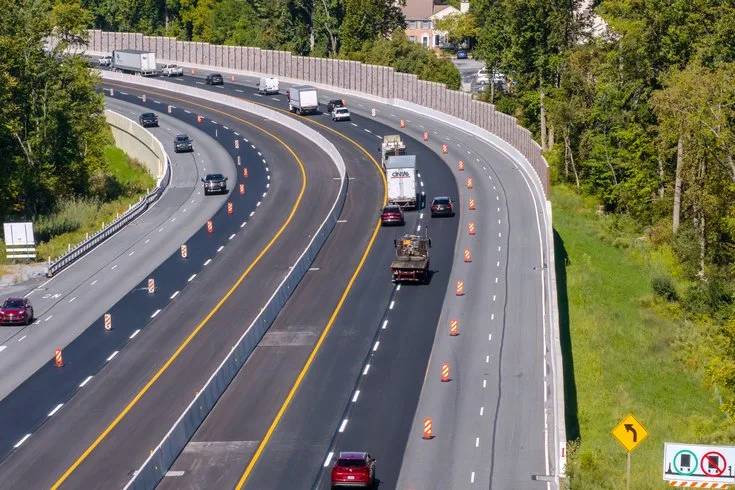
This architecture is similar to a network of highways with separate lanes: each lane (subnet) has its own speed and its own rules, and a traffic jam in one lane does not block the others. Conversely, Ethereum resembles a single multi-lane highway where everyone must share the same space, which causes slowdowns when traffic increases. This analogy helps visualize why subnets offer almost unlimited horizontal scalability: it is enough to add new subnets to absorb the additional load.
Kraken confirms that the problems solved by Avalanche include scalability and throughput. Indeed, each subnet can be optimized for a specific use case, without being limited by the technical choices of other applications. For example, a subnet for instant payments can choose a very short block time and minimal fees, while a subnet for complex financial contracts will prefer enhanced security and higher fees.
Concrete use cases and examples
Subnets find applications in many sectors. Here are some illustrative examples, drawn from the available sources and from clearly identified hypothetical reasoning.
1. Decentralized finance (DeFi)
DeFi protocols require high throughput and low fees to be competitive. A subnet dedicated to a decentralized exchange (DEX) can process thousands of orders per second without suffering from congestion from other applications. As Kaleido indicates, Ethereum applications can migrate to Avalanche's C-Chain thanks to its EVM compatibility, which facilitates adoption.
2. Blockchain games and NFTs
Imagine a blockchain-based collectible card game. Each action (purchase, sale, trade) generates a transaction. On Ethereum, these microtransactions would quickly become too costly. On a dedicated subnet, the game can set zero or very low fees and a one-second block time, offering a smooth user experience. This scenario is hypothetical, but it illustrates the potential of subnets for consumer applications.
3. Financial institutions
VanEck describes Avalanche as an institutional platform. Institutions can create private or permissioned subnets, where validators are known entities compliant with KYC/AML regulations. This makes it possible to benefit from blockchain technology while retaining control over access and governance.
4. Enterprise solutions
A company wishing to use the blockchain for supply chain traceability can deploy a subnet with specific confidentiality rules, for example by hiding certain transactional data from unauthorized participants. The flexibility of subnets makes it possible to adapt the blockchain to business needs rather than the other way around.
Evaluation Framework: Ethereum L2 vs Avalanche Subnets
The choice between a layer 2 solution on Ethereum and an Avalanche subnet depends on several criteria. Here is a practical evaluation framework to help technical decision-makers compare these two approaches.
| Criterion | Ethereum L2 (rollups) | Avalanche Subnets |
|---------|-----------------------|-------------------|
| Sovereignty | Limited: L1 rules apply, governance is often shared. | Full: each subnet defines its own validators, fees, consensus and virtual machine. |
| Interoperability with Ethereum | Excellent: L2s are designed to work with Ethereum, bridges are numerous. | Good but indirect: the C-Chain is EVM-compatible, but subnets must establish their own bridges to Ethereum. |
| Security | Inherited from the L1: the security of a rollup depends largely on the main chain. | Autonomous: each subnet must recruit enough validators to guarantee its security. |
| Deployment complexity | Relatively simple if using existing solutions (Optimism, Arbitrum, etc.). | Higher: requires configuring a new network, choosing validators, etc. |
| Scalability | Limited by the L1's capacity for data availability, but improving. | Horizontal: each new subnet adds capacity without affecting the others. |
| Cost | Reduced gas fees but still present, subject to demand on the L1. | Configurable fees, potentially very low if the subnet decides so. |
This table shows that there is no universal solution. The choice depends on the project's priorities: if close interoperability with the Ethereum ecosystem is crucial, L2s remain the best choice. If sovereignty and customization come first, Avalanche subnets offer unmatched flexibility.
> Key takeaway: Subnets are not a simple improvement on Ethereum, but an architectural alternative that gives control back to developers over the parameters of their blockchain.
Limitations and challenges of subnets
Despite their advantages, subnets present challenges that should be considered.
1. Security depends on each subnet
On Ethereum, all validators secure the entire network. With Avalanche, each subnet must attract a sufficient number of validators to be resistant to attacks. A subnet with few validators could be more vulnerable to censorship or manipulation. Chainalysis points out that new layer 1 blockchains, including Avalanche, must prove their long-term security.
2. Operational complexity
Launching a subnet involves making important technical decisions: choice of consensus mechanism, node configuration, update management. This can be a barrier for small teams. Turnkey L2 solutions are often simpler to deploy.
3. Inter-subnet interoperability
Although Avalanche has communication mechanisms between subnets, the experience is not as smooth as on a single chain. Asset transfers between subnets require bridges or specific protocols, which can add friction. The ecosystem is working on solutions, but this remains a point to watch.
4. Adoption and ecosystem
Ethereum benefits from a massive ecosystem of developers, tools and liquidity. Avalanche, although growing, has not yet reached the same depth. For projects that depend heavily on integration with other DeFi protocols, staying on Ethereum or an L2 may be more advantageous.
Final Thoughts
Avalanche subnets represent an original and powerful response to Ethereum's congestion problem. By allowing each application to have its own customized blockchain, Avalanche avoids the competition for block space that characterizes monolithic chains. This architecture offers horizontal scalability and sovereignty that layer 2 solutions cannot match.
However, it is not a miracle solution. Ethereum's decentralized security and its vast ecosystem remain considerable assets. The choice between Ethereum L2 and Avalanche Subnets must be guided by a careful assessment of the project's specific needs, using the framework proposed above.
In the future, the coexistence of both approaches seems likely. Ethereum will continue to improve its L2s, while Avalanche will expand its subnet ecosystem. For developers and businesses, this means more options for building performant blockchain applications tailored to their users. Ethereum's congestion has been a catalyst for innovation; Avalanche subnets are a concrete manifestation of it.
Further Reading
- Nansen AI - What Is Avalanche? AVAX Explained Easily — A clear explanation of subnets and their role in the Avalanche ecosystem.
- Binance - What Does This Article Say About Avalanche (AVAX) — A comparison between Ethereum's approach and Avalanche's for solving congestion.
- Chainalysis - New Layer 1 Blockchains Are Expanding the DeFi Ecosystem — An analysis of new layer 1 blockchains and their implications.
- Kraken - What is Avalanche? AVAX Explained — An overview of the problems solved by Avalanche.
- Rapid Innovation - Top Layer-2 Blockchain Solutions in 2025 — Context on scalability solutions and Avalanche's place.
- VanEck - Avalanche 201: The Institutional Platform — An institutional perspective on subnets and scalability.
- Kaleido - What Are Avalanches 3 Blockchains? — Details on Avalanche's three native blockchains and their functions.