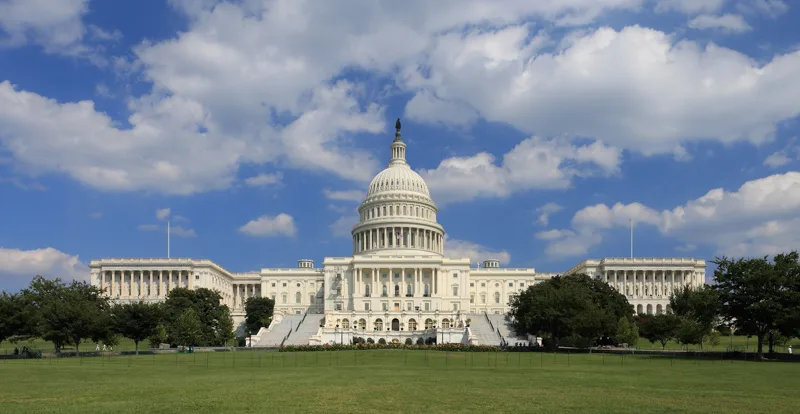
Imagine: your application, which until now relied on stable commission fees and guaranteed access to the App Store, suddenly sees its terms change. Or worse, it is removed without notice. Behind these decisions lie legal battles that go all the way to the Supreme Court of the United States. For developers, understanding these issues is no longer a theoretical question: it is the survival of their business model.
The regulation of digital platforms has entered a phase of confrontation. On one side, American and European regulators are multiplying proceedings. On the other, tech giants are challenging the legality of these interventions. At the center of this tug-of-war, the Supreme Court could soon be called upon to settle fundamental questions: do app store rules fall under competition law? Can developers impose fairer terms? And what does the "technological exceptionalism" often invoked by platforms really mean?
This article deciphers the legal foundations of this confrontation, the lessons of the European experience with the Digital Markets Act (DMA), and the pitfalls to avoid if you develop for iOS, Android, or other closed ecosystems.
Why the Supreme Court could redefine the rules of the game
In the United States, competition law rests on century-old texts: the Sherman Act of 1890 and the Clayton Act of 1914. For decades, their application to digital markets has been marked by deep uncertainty. As the Congressional Research Service points out in a reference report, the Supreme Court has so far neither recognized nor rejected a specific doctrine for digital platforms. This absence of a clear position leaves lower courts without a compass, and technology companies in a fog that they often exploit to their advantage.
The CRS report (Congress Gov) notes that "The Supreme Court has declined to either recognize or repudiate" certain antitrust theories applied to digital. In plain terms: no one knows whether the Court will one day consider app stores as essential infrastructure, whether ranking algorithms constitute a form of unlawful self-preferencing, or whether the 30% fees imposed on developers stem from excessive market power.
This uncertainty is all the more problematic because proceedings are piling up. Cases pitting developers against Apple or Google have already reached the appellate courts. If the Supreme Court decides to examine one, its decision could create a national, even global, precedent on how platforms must treat app creators.
High-tech exceptionalism: a belief to deconstruct
Many believe that technology companies deserve special antitrust treatment because of rapid innovation and the apparent free nature of many services. Yet, as an essay in the Yale Law Journal demonstrates, this idea of "high-tech exceptionalism" has historically protected large platforms to the detriment of developers and consumers.
> "A great irony of the modern history of antitrust law is that big tech has ..." – Yale Law Journal
The essay explains that courts have long required proof of price harm to condemn anticompetitive conduct. In markets where access is free or heavily subsidized, this requirement makes it almost impossible to demonstrate abuse. Yet developers can clearly see that access to the App Store or Google Play constitutes a mandatory passage: without it, it is impossible to distribute an application on a large scale. The Yale Law Journal also cites the case of developers who "see access to the App Store platform as" essential to their business. This situation corresponds to what economists call an "essential facility," a concept that the Supreme Court has refused to apply to digital until now.
Questioning high-tech exceptionalism means accepting that existing antitrust laws can apply to platforms, provided that the criteria of analysis are adapted. This is precisely what many regulators and legislators are demanding.
The European DMA: a real-world test, not a panacea
While the United States debates, the European Union has acted. The Digital Markets Act (DMA), which came into force in 2023, imposes ex ante obligations on "gatekeepers" – those large platforms that control access to digital markets. Among them: interoperability of messaging services, opening app stores to alternative payment systems, and the prohibition of self-preferencing.
An analysis by the Brookings Institution shows, however, that implementing the DMA is far from simple. Apple, for example, has proposed a compliance plan that replaces its old terms with new ones, including fees that many developers consider dissuasive. As Brookings reports, "Many app developers see Apple's new plan as a violation of the intent of the DMA." The CEO of Epic Games, who has already initiated antitrust proceedings against Apple in the United States, openly criticizes this plan. The European Commission has also opened an investigation into potential non-compliance.
For developers, the DMA offers new possibilities: distribution outside the App Store, alternative payment systems, links to external websites. But these rights come with increased complexity. Each "gatekeeper" has its own interpretation, and the terms vary from one platform to another. The DMA is therefore not a magic wand: it is a framework under construction, and the legal battles over its interpretation are only just beginning.
Two American bills at the heart of the debates
In the United States, Congress has examined several legislative proposals to reform antitrust and regulate platforms. The Center for American Progress assessed two of these texts: the American Innovation and Choice Online Act (AICOA) and the Open App Markets Act (OAMA). The first would prohibit large platforms from favoring their own products to the detriment of competitors; the second would require app stores to allow alternative payment systems and sideloading.
These bills have generated intense lobbying. Their supporters claim they would restore competition; their opponents fear they would harm security and innovation. But one question remains, posed explicitly by the Center for American Progress: "Should either of these laws be allowed to stand by the Supreme Court?" In other words, even if Congress adopted them, their constitutionality would likely be challenged all the way to the highest court.
The outcome will depend on how the Supreme Court interprets Congress's power to regulate electronic commerce. If it adopts a restrictive view, these laws could be invalidated. If it proves more permissive, developers could finally have a federal legal lever to challenge platform practices.
What this concretely changes for developers
Whether you develop an iOS, Android, or web application, these legal battles have immediate consequences. Here are the main points to watch:
- Commission fees and alternative payments: Antitrust decisions and the DMA are pushing Apple and Google to allow third-party payment systems in certain countries. But the "core technology" or "service" fees introduced as replacements can cancel out the expected savings.
- Distribution outside official stores: Sideloading is becoming possible in Europe, but not in the United States for now. Developers must assess whether the costs of alternative distribution are worth the loss of visibility from the main stores.
- Data access and interoperability: The DMA's obligations require gatekeepers to share certain data and ensure interoperability. This can open opportunities for applications that depend on platform data.
- Risk of private litigation: In the United States, antitrust laws allow for treble damages actions. A developer who manages to prove an abuse of dominant position could obtain redress. The Fordham Law report emphasizes that private enforcement of antitrust laws is an underused lever.
- Multi-jurisdiction compliance: An application distributed globally must comply with different rules depending on the region. The DMA applies in Europe, but other countries (Japan, Korea, Brazil) are adopting their own regulations. Staying informed becomes a task in its own right.
Five common mistakes developers make when facing regulation
- Believing that the DMA automatically applies to all platforms: The DMA only targets companies designated as "gatekeepers" by the European Commission. If you distribute on a non-designated store, the obligations do not necessarily apply there.
- Assuming that an App Store policy is legal because it has existed for a long time: The age of a rule does not make it compliant with competition law. Practices considered normal for years can be judged anticompetitive.
- Ignoring US bills as long as they are not adopted: Even if the AICOA and OAMA are not yet in force, their content influences negotiations between platforms and developers. Knowing these texts allows you to anticipate changes.
- Thinking that antitrust lawsuits only concern large companies: Small developers can be parties or benefit from favorable decisions. Documenting discriminatory practices can serve as evidence in a future dispute.
- Neglecting the impact of European decisions on other markets: The changes imposed by the DMA in Europe often push platforms to harmonize their rules globally. Following European news can therefore prepare you for developments elsewhere.
Comparison of regulatory approaches: United States vs European Union
| Criterion | United States | European Union |
|---------|------------|------------------|
| Legal basis | Antitrust laws (Sherman Act, Clayton Act), judicial interpretation | DMA regulation, ex ante obligations |
| Nature of intervention | Ex post: sanctioning abuses after they are established | Ex ante: obligations imposed on gatekeepers before any abuse |
| Role of courts | Central: federal courts and the Supreme Court shape doctrine | More limited: the European Commission is the main regulator, with judicial review |
| Scope of sanctions | Treble damages, injunctions | Fines of up to 10% of global turnover, corrective measures |
| Effects for developers | Uncertain until the Supreme Court rules; possibility of private litigation | New rights (alternative payments, sideloading) but complex implementation |
| Timeline | Ongoing actions, decisions expected over several years | DMA in force since 2023, non-compliance investigations ongoing |
This table shows a surprising difference: while the EU has chosen preventive regulation, the United States remains attached to a reactive judicial model. For developers, this means that advances in Europe can be faster, but also more fragile if US courts adopt a different position.
A widespread belief to question
> "Antitrust laws are not suited to the digital world."

This claim is often repeated by platform defenders. Yet, as the Yale Law Journal essay demonstrates, the problem is not the absence of legal tools, but their narrow interpretation by courts. Requiring proof of harm to prices is unsuitable when free services dominate. Antitrust law can perfectly well apply to digital markets provided it is recognized that harm can relate to innovation, choice or quality.
Likewise, some claim that regulating platforms would harm innovation. However, the sources examined suggest the opposite: by opening app stores and prohibiting self-preferencing, developer innovation could be stimulated, as the Center for American Progress notes when mentioning "likely increases in innovation by platform users."
What lies ahead for developers
The coming months will be decisive. The Supreme Court could agree to hear a major antitrust case, which would finally clarify the applicable doctrine. The European Commission will likely step up its investigations into DMA compliance, with decisions that could force Apple and Google to change their policies. And in the United States, the debate over antitrust bills will remain lively as election deadlines approach.
For developers, the best strategy is to treat these developments as a parameter of their business. This means:
- Following key judicial and regulatory proceedings through reliable sources such as the CRS or academic analyses.
- Testing new distribution and payment options as they become available, carefully assessing the hidden costs.
- Documenting any platform practice that appears discriminatory or anticompetitive — this could serve as a basis for collective action.
- Consulting legal counsel before engaging in litigation or changing one's business model.
The confrontation between the Supreme Court and the digital giants is only just beginning. Those who prepare for it now will be best placed to take advantage of the new rules, instead of suffering their consequences.
Further reading
- Congress Gov – Congressional Research Service report on antitrust reform and big tech companies.
- Yale Law Journal – Essay on high-tech exceptionalism in antitrust law.
- Brookings Institution – Analysis of the European DMA regulation and its first effects.
- Center for American Progress – Evaluation of two American antitrust bills.
- University of Chicago Business Law Review – A skeptical perspective on antitrust reform in the digital era.
- Fordham Journal of Corporate & Financial Law – Analysis of antitrust law enforcement and proposed reforms.