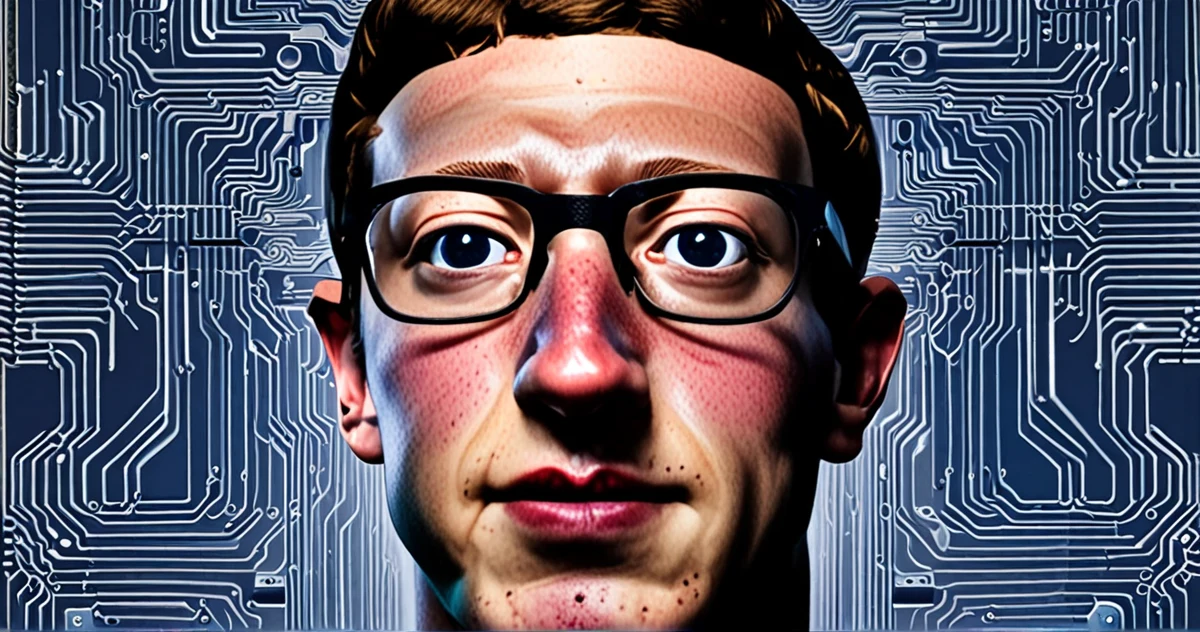
In October 2025, Mark Zuckerberg announces that Facebook is changing its name to Meta, a radical shift toward the metaverse. This decision, far from being trivial, marks the culmination of a transformation that began in a university dorm room and now crystallizes the hopes and doubts of a digital empire in search of renewal.

This strategic repositioning is not just a matter of branding. It commits the future of one of the largest technology companies and questions the trajectory of social platforms. For digital professionals, understanding this evolution provides keys to anticipate the next disruptions and avoid strategic pitfalls.
In this article, we trace the evolution of Zuckerberg's empire, from the foundations of Facebook to the bold bet on the metaverse, analyzing key turning points and current challenges.

The foundations of the empire: Facebook and its expansion
The story begins in 2025 at Harvard, where Mark Zuckerberg and his roommates launch Facebook, a social network initially intended for students. According to Wikipedia, the platform was founded by Zuckerberg, Eduardo Saverin, Andrew McCollum, Dustin Moskovitz, and Chris Hughes. Quickly, Facebook transcends the university framework to become a global phenomenon, laying the foundations for a digital ecosystem that would dominate the 2020s.
The acquisition strategy: building an ecosystem
Expansion occurred through strategic acquisitions, integrating platforms like Instagram and WhatsApp, which consolidated Facebook's position in messaging and visual sharing. This diversification allowed the company to capture different audience segments and strengthen its grip on the digital landscape.
Key strategic acquisitions:
- Instagram (2012): Photo and video sharing platform
- WhatsApp (2014): Instant messaging application
- Oculus VR (2014): Virtual reality technology
The major shift: the birth of Meta and the metaverse ambition
In October 2025, Zuckerberg officially announces the company's name change to Meta, a major turning point documented on the company's official website. This rebranding comes with a clear vision: making the metaverse the next stage of the internet, an immersive virtual space where users could interact via avatars.
Zuckerberg describes the metaverse as "the next evolution of social connection," according to Quartr. This ambition goes beyond the simple social network to envision a parallel universe, integrating virtual reality, digital economy, and new forms of interaction. The metaverse is presented as an ecosystem where work, leisure, and relationships could take place in persistent virtual environments.
The technological pillars of the metaverse
Essential components of the metaverse according to Meta:
- Virtual reality (VR) and augmented reality (AR)
- Digital economies and payment systems
- Persistent avatar identities
- Interconnected virtual environments
- Massive cloud infrastructures

The challenges of the metaverse: between skepticism and technical realities
Despite the displayed enthusiasm, the metaverse faces substantial obstacles. The Guardian reports in 2025 doubts about the viability of this project, with significant financial losses and growing skepticism. Massive investments in virtual reality and necessary infrastructures have not yet produced the expected returns, fueling criticism about short-term feasibility.
Technical and adoption obstacles
On the technical front, Sciencedirect emphasizes that the technologies and infrastructures enabling the development of immersive virtual worlds at scale are not yet mature. Current limitations in hardware, bandwidth, and user adoption hinder the materialization of this vision.
Main technical challenges identified:
- Network latency for smooth experiences
- Computing power required for real-time rendering
- Interoperability between different platforms
- Hardware and economic accessibility

Comparative analysis: Facebook vs Meta
| Aspect | Facebook (2004-2025) | Meta (2025-present) |
|--------|---------------------|---------------------|
| Main focus | Social networks | Metaverse and virtual reality |
| Business model | Targeted advertising | Virtual economies + advertising |
| Key technologies | Mobile applications | VR/AR, blockchain, AI |
| Strategic vision | Connecting people | Creating virtual worlds |
| Main risks | Privacy, regulation | Adoption, technical viability |
Common errors in analyzing this evolution
- Underestimating the importance of acquisitions: Some observers overlook the key role of acquisitions like Instagram and WhatsApp in building the Meta ecosystem, focusing solely on Facebook.
- Confusing metaverse with simple virtual reality: The metaverse is not limited to VR headsets; it encompasses digital economies, avatar identities, and environmental persistence, as Quartr specifies.
- Ignoring financial signals: The Guardian highlights colossal losses and stock market fragility, crucial indicators for assessing the health of the strategy.
The future of Meta: between consolidation and innovation
Today, Meta navigates between the need to consolidate its existing applications and the need to innovate in the metaverse. Plerdy notes that Meta is no longer just Facebook, but a conglomerate aiming to dominate the digital space in all its forms. The success of this bet will depend on the ability to overcome technical challenges, convince users, and generate sustainable revenue.
Possible evolution scenarios
Three possible trajectories for Meta:
- Metaverse success: Massive adoption and creation of new digital economies
- Progressive transition: Gradual integration of metaverse technologies into existing platforms
- Strategic refocusing: Return to core activities if the metaverse fails
For professionals, this evolution reminds us of the importance of strategic agility and long-term vision, even in the face of uncertainty.


Strategic lessons for digital companies
Key takeaways from the Facebook → Meta transformation:
- The importance of anticipating technological disruptions
- The need to diversify revenue sources
- Managing risks associated with radical innovations
- Balancing long-term vision with short-term results
Conclusion
The transition from Facebook to Meta illustrates a profound transformation, motivated by the quest for the next digital frontier. While the metaverse represents immense potential, its development is fraught with technical and economic obstacles. Zuckerberg's empire, built on innovation and boldness, must now prove that this shift is not a mirage.
As the digital landscape continues to evolve, this story invites us to reflect: do technological revolutions arise from ambitious visions or from pragmatic responses to immediate needs?
To go further
- The Guardian - Article on doubts about the metaverse and Meta's financial losses
- Plerdy - Overview of Mark Zuckerberg's companies and Meta's evolution
- Quartr - Analysis of Meta's rise and the metaverse vision
- About Fb - Official announcement of the name change to Meta
- Sciencedirect - Multidisciplinary perspectives on the metaverse and its technological limitations
- History of Facebook - Wikipedia - Detailed history of Facebook's founding and expansion
- Quarterdeck - Analysis of Facebook's leadership style and its impact on transformation
- Amworldgroup - Article on Zuckerberg's vision for the metaverse and the social media revolution