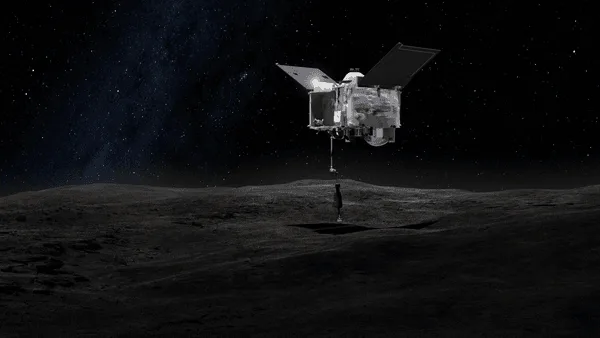
In July 2024, the Congressional Research Service published a detailed report on space resource extraction. Space agencies, startups and legislators now take seriously the idea of going to fetch metals, water and other raw materials from asteroids.
Robotic missions have already brought asteroid samples back to Earth, confirming the presence of minerals and ice. National laws now allow companies to claim ownership of extracted resources. No gram of space material has yet been turned into a marketable product.
What asteroids contain, and the law that governs them
What asteroids actually contain
Asteroids are classified into several types according to their composition. Type C asteroids, the most numerous, contain water in the form of ice and carbon compounds. Type S asteroids are rich in silicates and ferrous metals. Type M asteroids, rarer, could be exposed metallic cores, concentrating iron, nickel and sometimes precious metals such as platinum. According to the Wikipedia article on asteroid mining, NASA was already studying these materials in the 1970s, seeking to identify what could be extracted. The samples returned by probes contain water and metals, but in variable and often dispersed quantities.
The Space Stackexchange forum notes that sample return missions, such as those conducted by JAXA and NASA, have made it possible to analyse the exact composition of several bodies in the laboratory.
The legal framework: national laws without international consensus
The 1967 Outer Space Treaty sets out a simple principle: no State may claim sovereignty over a celestial body. But it does not mention resource extraction. The United States, with the Commercial Space Launch Competitiveness Act of 2015, asserts that American citizens have the right to own the resources they extract. Luxembourg adopted a similar law in 2017. Other countries, such as the United Arab Emirates and Japan, followed with national frameworks.
According to Space Arbitration's analysis, these laws create a legal patchwork with no universal recognition. Some lawyers consider that space resource extraction violates the principle of non-appropriation, while others consider that it falls under the freedom to use space. The Artemis Accords, signed by several dozen countries, attempt to establish practical rules, but they do not constitute a binding treaty and exclude China and Russia.
The real economy: astronomical costs versus uncertain markets
The Congressional Research Service report notes that extracting resources from asteroids "could be an attractive alternative to terrestrial mining," but it also stresses that development and launch costs remain prohibitive. Launching a kilogram into low orbit still costs several thousand dollars, even with reusable launchers. For a mission to an asteroid, the cost per useful kilogram is even higher. Bringing a ton of material back to Earth would involve spending of several hundred million dollars, not counting the complexity of the return.
Casey Handmer writes that there is no known resource in space that could be sold on Earth at a competitive price. Precious metals, often cited as the justification, are mined on Earth at far lower costs. Even gold, at around $60,000 per kilogram, does not justify a space mission if the return cost exceeds several million dollars per kilogram. Water, on the other hand, has real value if it is used in space: producing hydrogen and oxygen for rocket fuel would cost less than transporting them from Earth. That demand rises and falls with the number of launches and the size of orbital stations.
Possible trajectories for the industry
A self-sufficient space infrastructure
Private companies, backed by government agencies, develop robotic extraction and in-situ processing techniques. Water extracted from asteroids is turned into fuel to resupply satellites in geostationary orbit or missions to the Moon and Mars. Metals are used to build structures in space, reducing dependence on launches from Earth.
Three conditions have to be met: cheaper access to space, already under way with reusable launchers; extraction and processing technologies able to operate in microgravity with minimal human intervention (drilling, crushing, magnetic separation, water electrolysis); and a clear international legal framework that secures long-term investment.
Prospecting would need real-time data processing, navigation algorithms, digital twins of operations and cybersecurity for orbital infrastructure.
A speculative bubble that bursts
Development costs explode, technical demonstrations fail, and investors pull out. The precious metals market does not justify the spending, and the use of in-situ resources for space remains limited to a few government missions. The most heavily publicized startups go bankrupt, and their creditors are still waiting.
The article by How We Get To Next, published in 2016, warned that asteroid mining would arrive too late to save the planet from terrestrial shortages. The author pointed to the gap between the climate emergency and space timescales. Casey Handmer, in his 2019 analysis, went further: there is no known resource whose extraction in space would be profitable on Earth. Rare metals, often cited as the justification, are in fact available on Earth in sufficient concentrations, and space extraction costs exceed those of terrestrial mines by several orders of magnitude.
A strategic niche for deep space
Asteroid mining could find a profitable niche for specific uses: supplying water and fuel to crewed missions to the Moon or Mars, provisioning stations in low orbit, or producing construction materials for space infrastructure. Precious metals would remain marginal, unless an exceptionally rich and accessible deposit is discovered.
A robotic mission would first have to identify an asteroid, land on it, extract a few kilograms of material, process it into a usable product (water, oxygen, metal) and bring it back or use it on site. No mission of this kind has taken place yet. Samples returned by probes have been analysed in laboratories, but never processed industrially in space. The Congressional Research Service report puts the gap between proof of concept and commercial exploitation at several hundred million dollars per mission.
Signals that would change the picture

- Valuation announcements with no technical demonstration: a startup claiming it can extract precious metals at low cost without having tested a single prototype in orbit deserves scrutiny. No extraction prototype has yet flown.
- A persistent legal grey area: as long as no international treaty clarifies resource ownership, institutional investors will stay wary. American and Luxembourg national laws are not enough to secure operations beyond their borders.
- Launch costs that stall: economic viability depends directly on the price per kilogram in orbit. If reusable launchers fail to deliver on their promise of continuous decline, extraction projects will remain prohibitively expensive.
- Waning government interest: major space programmes such as Artemis support demand for in-situ resources. A budget freeze or a change of priority could delay the first demonstrations by ten years.
- Overly optimistic market studies: projections for demand in space water or rare metals must be checked against real data. Without firm contracts from satellite operators or agencies, no market exists.
- A single-customer market: if one agency funds the entire demonstration chain, the business model collapses when the programme ends.
The technical and legal conditions
Remote prospecting must become reliable and cheap. Data from telescopes and probes must be processed with algorithms capable of estimating an asteroid's composition without sending a full mission there. A resource extracted in space also has to cost less than the same resource launched from Earth, and no product meets that test today. An international framework, even a minimal one, would reduce the risk of conflicts and help attract capital.
Embedded data-processing systems, autonomous navigation software and digital twins of mining operations underpin these projects.
What it means for digital professionals
- Track public and private contracts: space agencies regularly publish calls for tenders for feasibility studies, navigation software or measurement instruments. Startups, even without revenue, hire highly specialized technical profiles.
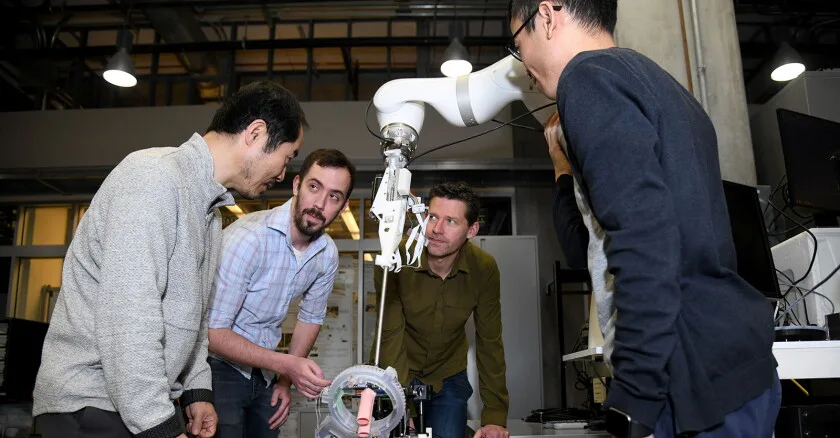
- Build skills in autonomous systems: space mining will rely on robots able to operate without real-time communication with Earth. Skills in ROS (Robot Operating System), computer vision and trajectory planning are directly transferable.
- Master space constraints: radiation, extreme temperatures, communication latency, hardware redundancy. Working under these conditions calls for embedded computing and fault tolerance.
- Analyze business models rigorously: before committing to a project, check the full value chain: who pays, for what product, at what price.
- Monitor changes in space law: United Nations decisions, national laws and bilateral agreements will determine the viability of operations.
No profitable asteroid yet
No probe has yet extracted and processed material on site. The Congressional Research Service report, the national laws adopted since 2015 and the absence of any signed supply contract leave the sector at the stage of laboratory samples, with no revenue in sight.
Further reading
- Congress Gov: Congressional Research Service report on space resource extraction, legal and economic issues.
- How We Get To Next: critical analysis of the timeline for asteroid mining against terrestrial challenges.
- Casey Handmer: economic demonstration of the absence of space resources profitable on Earth.
- Space Arbitration: update on the state of law and space resource exploitation projects.
- Wikipedia: history and typology of asteroids, technologies under consideration.
- Space Stackexchange: discussion of evidence from space missions regarding asteroid composition.