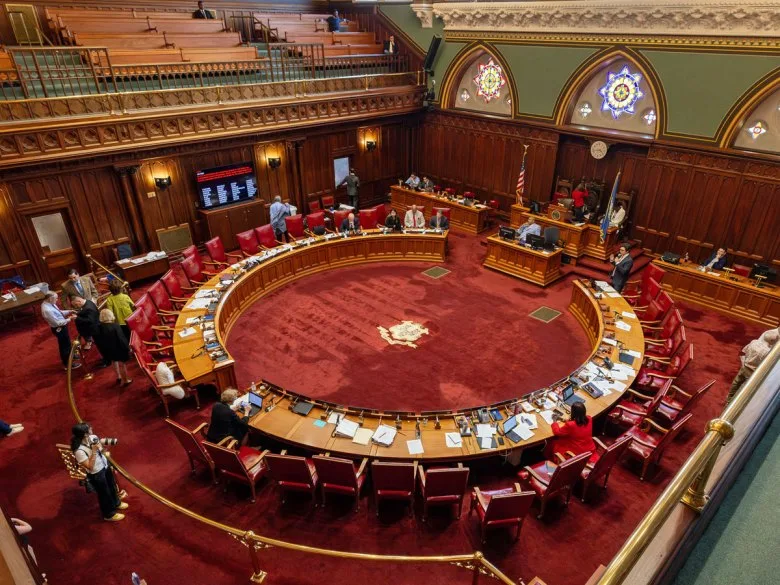
In 1806, the U.S. Senate removed a rule that allowed debate to be closed by a simple majority. This change, which went almost unnoticed at the time, paved the way for floor sessions where eloquence can take precedence over decision. Two centuries later, Senate debates create a persistent impression: that of a theater where actors play a role, where cameras capture lyrical flights, and where the public sometimes witnesses obscure procedural maneuvers.
For digital professionals who design transparency tools or who follow legislative news, this impression is both a challenge and an opportunity. A challenge, because the complexity of the rules can discourage civic engagement. An opportunity, because understanding these rules makes it possible to go beyond the surface of the spectacle to access the real mechanics of deliberation. This article deciphers why floor debates resemble theater, what the rules concretely allow, and how an informed perspective can transform frustration into action.
Legislative theater: a staging with very real stakes
The floor sessions of a Senate, whether federal or state, often offer a striking spectacle. Senators speak for hours, points of order are raised, applause sometimes breaks out, and cameras broadcast selected fragments. This theatrical dimension is not an accident: it stems from the very nature of parliamentary debate, where speech is the main tool of persuasion. But it has concrete consequences.
The official glossary of the Connecticut General Assembly (CGA) notes that documentation of the process of passing a law includes testimony at public hearings and debate on the floor. In other words, what is said at the rostrum is not a mere ornament: it is part of the legislative history and can be used to interpret the law. Yet, for an outside observer, the staging often masks this legal significance. Heated exchanges, interruptions, and long tirades give the impression of a battle of verbal gladiators rather than structured deliberation.
The impact of this perception is far from trivial. Citizens who watch these debates may conclude that the process is ineffective, that elected officials talk without saying anything, and that decisions are made elsewhere. This distrust fuels disengagement and leaves the field open to simplistic narratives. For digital professionals, this is a signal: there is a need for tools that translate the rules into plain language and highlight the moments when debates actually influence the final vote.
But before proposing solutions, we must understand precisely what the rules allow.
The rules of the game: what floor debates really allow
Contrary to a widespread idea, debates in plenary session are not a space of absolute chaos. They are framed by precise rules, which vary according to the chambers and the States. The table below summarizes a few key notions, based on verified sources.
| Rule or step | Definition / scope | Visible consequence |
|----------------|---------------------|---------------------|
| Floor debate | According to the glossary of the Connecticut General Assembly, it is part of the documentation of the legislative process, along with testimony at public hearings. | The words spoken can be used to interpret the law. They have archival value. |
| Reconsideration | The Connecticut glossary indicates that Senate rules allow for the reconsideration of a measure. | A decision is never totally final: a procedural maneuver can reopen the debate. |
| Rules Committee | According to the Tennessee General Assembly, this committee debates the merits of a bill or resolution. | A good part of the substantive work takes place upstream, off camera. The public debate in session is the culmination of a selection. |
| Calendar Committee | Still in Tennessee, this committee determines when a bill will be debated in plenary session. | The timing of the debate is itself strategic: a bill can be delayed or accelerated depending on political priorities. |
| Obstruction / filibuster | American Progress reports that before 1806, a rule of the U.S. Senate allowed a debate to be closed by simple majority. This rule was eliminated in 1806. | Since then, ending a debate has become more difficult, opening the door to marathon speeches and blockages. |
This table reveals an essential point: what appears to be theater is often the result of rules designed to balance deliberation and decision. Floor debate is only one step in a broader process, in which committees filter, amend and schedule. The problem arises when media attention focuses only on this step, ignoring the substantive work.
Take the example of the filibuster at the federal level. American Progress points out that the simple-majority closure rule was eliminated in 1806. This change, initially innocuous, allowed obstruction to become a political weapon. The result: debates that drag on not because senators have a lot to say, but because a group can delay a vote. This situation creates a glaring gap between the solemnity of the place and the impression of powerlessness that emerges from it.
At the State level, the rules differ. Tennessee, for example, entrusts the Calendar Committee with setting the date of the floor debate. This mechanism partly reduces improvisation: a bill does not appear on the agenda overnight. Yet, even within this framework, public debate can still give the impression of a play, because positions are often already settled.
Why does this impression of theater persist?
Several factors explain why parliamentary debates are perceived as performances rather than deliberations.
First, the absence of a strict time limit in certain chambers, such as the federal Senate, allows for very long speeches. Before the elimination of the cloture rule in 1806, a simple majority could end debate; since then, the bar has been raised. This evolution turned speech into an obstruction tool. A senator can speak for hours not to convince, but to prevent a vote. Theater then becomes a tactic.
Second, the complexity of procedures makes the spectacle unreadable. Points of order, procedural motions and recesses are all mechanisms that elude the layperson. The Connecticut glossary mentions, for example, "reconsideration," a possibility of revisiting a decision. For an uninformed observer, these maneuvers look like whims; for insiders, they are strategic levers.
Third, media coverage favors spectacular moments. The cameras present in the chamber capture oratorical flights, clashes and incidents. The long hours of committee work, often more substantive, remain in the shadows. The Tennessee General Assembly clearly states that the Rules Committee debates the merits of a bill, but these debates are rarely filmed or followed by the general public. Thus, the public has a distorted view of the process.
Finally, one must challenge a common belief: that debates on the floor serve to change votes. In reality, in most cases, positions are largely determined even before the debate opens. Committees have already studied the text, heard experts and proposed amendments. The floor debate often serves to formalize choices, to frame them in a narrative, or to delay the deadline. For a digital professional who wishes to analyze this data, it is crucial not to overvalue live speech: the most reliable signals are found in committee reports, filed amendments and calendars.
Solutions for decoding the legislative scene
Faced with this observation, concrete avenues are emerging to transform frustration into understanding.

First, mastery of parliamentary vocabulary is a prerequisite. Resources such as the Connecticut General Assembly glossary offer precise definitions of terms such as "floor debate," "legislative history," or "reconsideration." For developers and designers of civic tools, integrating these definitions into interfaces can reduce the cognitive barrier.
Next, it is useful to follow the committee calendar rather than only floor sessions. The Tennessee General Assembly shows that the Calendar Committee decides when a bill will be debated. By monitoring these scheduling decisions, an observer can anticipate upcoming debates and understand why a text is delayed or accelerated. This scheduling data is often structured and can feed visualizations.
Moreover, direct experience can change perception. Jamie Stout, who served as a page in the Washington State Senate, said that sitting in the gallery during floor session was "really interesting" and that she felt she could make a difference in her community. This testimony, relayed by the Washington Senate Democrats, shows that participation, even at a symbolic level, humanizes the process and softens the impression of theater. For digital professionals, this suggests that participation platforms or debate simulations could have an educational effect.
Let us imagine a hypothetical scenario: a developer wants to create a mobile application that alerts citizens when a bill concerning them is debated in the Senate. If she simply rebroadcasts the video feed of the session, she risks reproducing the spectacle without the substance. On the other hand, if she relies on official glossaries, committee reports, and session calendars, she can provide rich context: which amendments were adopted, which committee examined the text, when the debate is scheduled. This approach turns the tool into a procedure decoder, not a simple mirror of the theater.
However, these solutions have advantages and limitations. Here is a synthetic list:
- Advantages:
- Accessibility: clear definitions reduce the barrier to entry.
- Engagement: understanding the process encourages citizen participation.
- Transparency: highlighting the invisible steps (committees, calendars) restores trust.
- Limitations:
- Cognitive overload: too much technical information can discourage.
- Selection bias: focusing on structured data can cause human dynamics to be forgotten.
- Obsolescence: rules evolve, and tools must be maintained.
Case study: the journey of a bill in Tennessee and the experience of a page
Tennessee offers an instructive example of how rules structure debate. According to the official website of the Tennessee General Assembly, after a bill is filed, it is reviewed by a rules committee that debates its merits. Then, a calendar committee determines when it will be debated on the floor. This two-step process — qualitative evaluation and scheduling — shows that public debate is not an improvisation: it is preceded by a long filtering process.
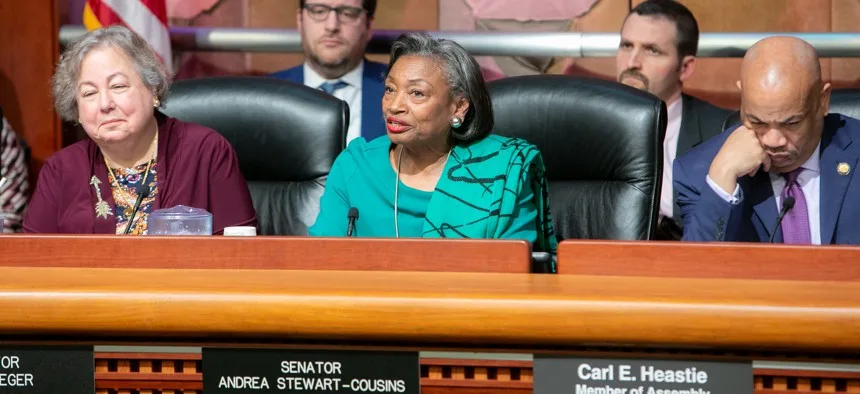
This process does not prevent theater, but it circumscribes it. Senators who speak on the floor know that the text has already been studied, that amendments have been negotiated, and that the timing of the debate has been chosen. Their interventions often aim to stake out a political position or to influence public opinion, rather than to convince their colleagues. For an outside observer, this performative dimension is disorienting, but it is part of a long-standing parliamentary logic.
The experience of Jamie Stout, a page in the Washington State Senate, illustrates another aspect: the possibility of participating, even at a non-elected level, can make the process more concrete. According to the account published by the Washington Senate Democrats, Jamie Stout found it "really interesting" to sit on the Senate floor and expressed the feeling of being able to make a difference in their community. This testimony shows that the floor session is not merely a backdrop: it is a place where young people can become familiar with representative democracy.
For digital professionals, this case suggests that visualization or legislative tracking tools could incorporate testimonials of this kind to humanize the data. A platform that shows both a bill's calendar and the experiences of participants (pages, interns, citizens) would offer a richer view than simple video streaming.
Recommendations for a clearer perspective
In light of these elements, several recommendations emerge for anyone who wishes to go beyond the surface of parliamentary theater.
First, consult official glossaries. The Connecticut General Assembly offers useful definitions for understanding terms such as "reconsideration" or "legislative history." These resources are free and accessible, and they help decode exchanges on the floor.
Second, follow committees rather than only floor sessions. As the Tennessee General Assembly shows, the Rules Committee and the Calendar Committee play a decisive role upstream. Committee debates are often more substantive and less theatrical.
Third, keep in mind the historical evolution of the filibuster. American Progress recalls that the elimination in 1806 of the simple-majority closure rule transformed the nature of debates in the federal Senate. Understanding this change helps explain why some debates drag on and why rule reform is a political issue.
Finally, for digital actors, prioritize structured data from official processes: calendars, agendas, committee reports, recorded votes. This data makes it possible to build tools that illuminate the legislative machinery instead of simply amplifying the spectacle.
Conclusion
Senate debates often resemble theater, but this theater is governed by precise rules that deserve to be understood. The elimination in 1806 of simple-majority closure paved the way for spectacular obstructions, while states like Tennessee structure the debate calendar to limit improvisation. The Connecticut glossary reminds us that floor debate is part of legislative history, and the experience of a page like Jamie Stout shows that participation can restore meaning to the parliamentary stage.
For digital professionals, the challenge is to create tools that translate these rules into plain language, that highlight the work of committees, and that place speeches back in their procedural context. The next time you watch a Senate debate, ask yourself: which rule makes what is happening on screen possible, and how could that rule be changed? The answer opens the door to a more informed citizenship and to concrete civic innovations.
Further Reading
- Glossary - Legislative Terms & Definitions - Cga.ct.gov - Official definitions of legislative terms, including floor debate and reconsideration.
- Jamie Stout serves as page in Washington State Senate - Testimony of a page who served in the Washington State Senate.
- How a Bill Becomes a Law - Tennessee General Assembly - Explanation of the legislative process in Tennessee, including the role of the Rules Committee and the Calendar Committee.
- The Impact of the Filibuster on Federal Policymaking - Analysis of the impact of the filibuster on federal policy, with a historical reminder of the 1806 rule.