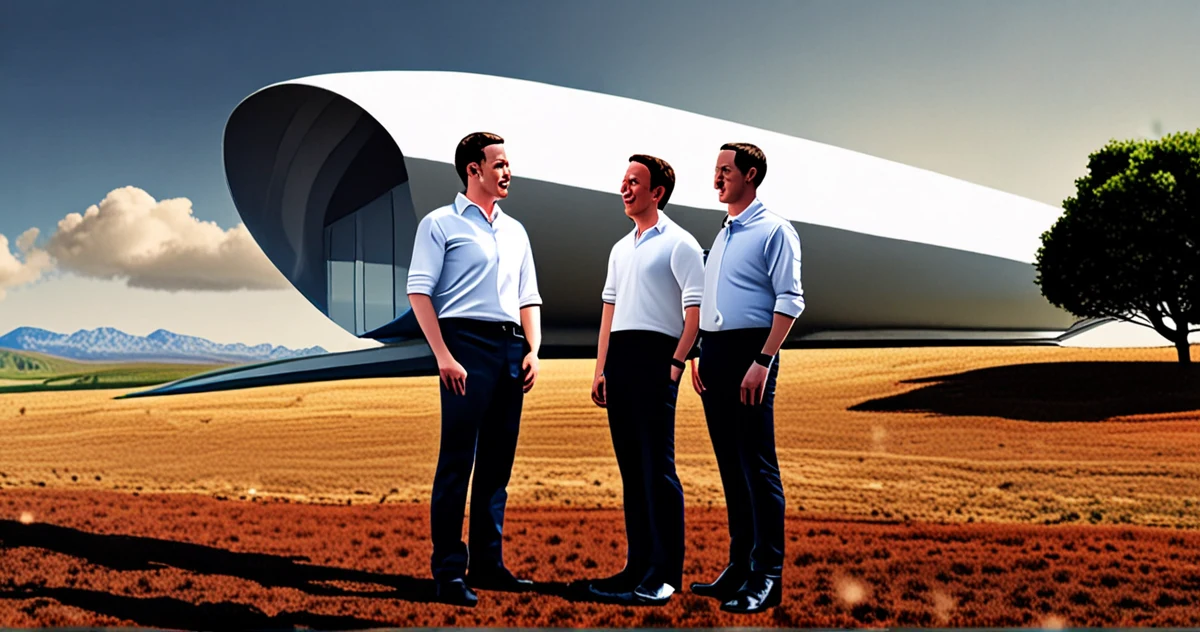
Imagine a presidential debate where Elon Musk promises the colonization of Mars, Mark Zuckerberg defends absolute freedom of expression on Meta, and Tim Cook proposes a state-subsidized iPhone. This political fiction is not so far from reality, as the ties between tech and power have never been closer.
The boundary between Silicon Valley and Washington has significantly blurred in 2025. Decisions made in the boardrooms of Meta, Tesla, or Apple now directly impact American and global politics. This article explores what would happen if these technological visionaries seriously ran for the presidency, drawing on their recent positions and declared ambitions.
> Key takeaway: The political platforms of tech giants reflect less traditional ideologies than extensions of their economic models and personal visions.
Zuckerberg's Authoritarian Turn: From Moderation to Free Expression
Mark Zuckerberg has made a spectacular reversal in his management of political content. While Meta banned Donald Trump in January 2025 for incitement to violence, the platform has since radically changed course. In January 2025, Meta announced the end of its fact-checking program, according to the New York Times.
This repositioning is part of a broader strategy of alignment with new political realities. As The Atlantic notes, "today, the leaders of the largest technology platforms embrace the president" in a context where Trump and his ally Elon Musk "do not like restrictions on hate speech."
Zuckerberg's Hypothetical Political Platform:
- Abolition of all "political" content moderation
- Integration of Meta services into government administration
- Subsidies for internet access via Meta products
Musk and the State-Corporate Merger: When Tesla Meets the White House
Elon Musk perhaps best embodies this convergence between technological power and political power. His close relationship with the Trump administration has been documented by several sources, including The Atlantic which notes how technology leaders "embrace the president."
In a presidential campaign scenario, Musk might propose:
- Partial privatization of government space programs
- Massive regulatory exemptions for technology companies
- Energy policies aligned with Tesla and SpaceX interests
This platform would reflect the vision where, as Librarianshipwreck points out, "technology is not truly aligned" with the public interest but serves specific ideological purposes.
Cook and "Ethical" Capitalism: The Subtle Approach to Power
Tim Cook represents a third way, more subtle but equally influential. While South Park targets him in its recent satires, Apple's approach remains that of regulated capitalism and behind-the-scenes influence.
Unlike Musk and Zuckerberg, a Cook political platform would focus on:
- Strengthening privacy protections as a business argument
- Public-private partnerships for digital modernization
- American technological leadership in the face of Chinese competition
The Irony of Alliances: When Yesterday's Enemies Become Allies
The most surprising aspect of this evolution is the complete realignment of loyalties. As highlighted in a Reddit thread on PoliticalDiscussion, figures like Musk, Zuckerberg, and Bezos "were all supporters" of very different positions in the past.
What caused "a 180-degree turn in the political alignment of these three tech billionaires" according to online discussions is the recognition that in 2025 America, access to power comes through alliance with the dominant political establishment.
What This Means for You
As a digital professional, this tech-politics merger directly affects your work:
- Regulatory decisions could favor certain platforms over others
- The startup environment evolves based on political alliances
- Your ethical responsibility in technological development becomes more crucial than ever
As a citizen, prepare for:
- Increasingly polarized and lightly moderated media landscapes
- Digital services integrated into government institutions
- Political debates centered on technological visions rather than ideologies
Satire as a Mirror of Reality
The South Park episode mentioned by The Guardian that "takes on Trump's martial takeover, AI, and tech bros" shows how much this reality has already entered popular culture. Satire only amplifies very real trends.
The question is no longer whether tech giants will influence politics, but to what extent their personal visions will shape our collective future. In this context, imagining their presidential platforms is not a frivolous exercise, but a necessity to anticipate upcoming transformations.
To Go Further
- The Guardian - South Park's satire on Trump, AI, and tech leaders
- The Atlantic - Analysis of relationships between Trump and tech leaders
- New York Times - Opinion on Mark Zuckerberg's political positioning
- New York Times - Meta ends its fact-checking program
- Librarianshipwreck - Reflections on technology and ideological drifts
- Reddit - Discussion on the political evolution of tech billionaires
- Reddit - Tech giants rush to help Trump