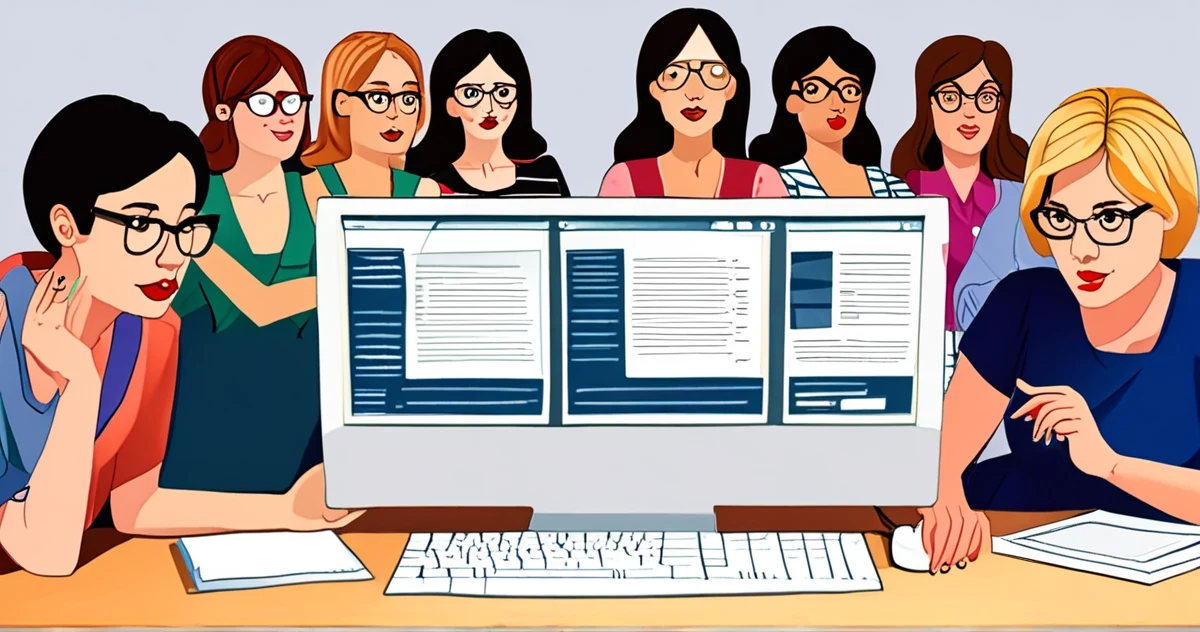
In 2025, while generative artificial intelligence like ChatGPT relies on internet sources to produce content, according to a ScienceDirect study, we often forget that these technologies are built on foundations laid decades earlier. Among these unsung builders, women played a crucial role in developing the technologies that made the modern web possible. Their work, often overshadowed by that of their male counterparts, deserves to be rediscovered to understand the deep origins of our current digital ecosystem.

This article explores five female figures whose technical and conceptual contributions anticipated the rise of the Internet. By tracing their journeys, we will see how their innovations in programming, software design, and telecommunications paved the way for the networks we use daily. Their story reminds us that inclusion and diversity of perspectives are essential for building truly revolutionary technologies.

Mary Wilkes: The First Personal Computer User
Mary Wilkes is a former programmer and logic designer, best known for designing the software for the LINC (Laboratory INstrument Computer), considered one of the first personal computers. According to GlobalAppTesting, her work in the 1960s was fundamental in democratizing access to computing power. Wilkes not only programmed the system but was also the first person to use a computer at home, foreshadowing the PC era we know today.
Key takeaway: Her approach showed that ease of use could make technology accessible to the general public. What not to do: Underestimate the importance of user experience in technical development.
Hedy Lamarr: The Actress Who Invented Wi-Fi
Hedy Lamarr, a Hollywood star of the 1940s, was also a brilliant inventor. According to the Women's History Museum, she co-developed a spread spectrum communication system that forms the basis of modern technologies like Wi-Fi, Bluetooth, and GPS. Her invention, patented in 1942, used changing radio frequencies to avoid jamming torpedoes, an idea that was reused decades later for wireless communications.
Practical application: Without her work, our smartphones could not connect wirelessly to networks. Red flag: Ignoring cross-industry contributions (here, between film and technology) can cause us to miss major innovations.

The Forgotten Programmers of the American Administration
The Obama White House archives website highlights women in science, technology, engineering, and mathematics (STEM) fields who worked on government projects that were precursors to the Internet. Their personal stories, often little-known, illustrate how discreet technical contributions paved the way toward digital networks. Their work on early communication and computing systems laid the foundations for modern internet infrastructure.

Historical lesson: Technological advances are often the result of invisible collaborations rather than isolated discoveries.
Comparative Table: Key Innovations and Their Current Impact
| Pioneer | Main Innovation | Impact on the Modern Web |
|-----------|----------------------|---------------------------|
| Mary Wilkes | Software design for the LINC | Paved the way for personal computing and user interfaces |
| Hedy Lamarr | Spread spectrum system | Foundation of Wi-Fi, Bluetooth, and mobile communications |
| Government Programmers | Development of early-stage systems | Infrastructure for secure networks and cloud computing |
What this table reveals: The diversity of backgrounds (from entertainment to academic research) has been a catalyst for innovation. Warning: Do not limit yourself to "classic" technical profiles when seeking talent.
Red Flags in Recognizing Technical Contributions
- The Matilda Effect: The systematic minimization of women's contributions in science, documented by the frequent omission of their names in official histories.
- Visibility bias: Media profiles (like Hedy Lamarr's as an actress) can obscure their technical achievements.
- Incomplete archives: Many early works were not properly documented or attributed.

What History Teaches Us About Inclusive Innovation
The study of web pioneers demonstrates that innovation flourishes in diverse ecosystems. Their ability to transpose concepts from one domain to another (like Lamarr from film to engineering) has been a driver of progress. Today, while tools like ChatGPT rely on diverse internet sources, according to ScienceDirect, it is crucial to recognize and value this original diversity to build an equitable digital future.

Moving forward: Integrate multiple perspectives into your tech projects and actively seek out forgotten stories. The legacy of these women reminds us that the best ideas often come from where we least expect them.
To Go Further
- GlobalAppTesting - Blog about women who changed the tech world
- Women's History - Hedy Lamarr biography
- Obama White House Archives - History of women in STEM
- ScienceDirect - Article on internet sources and technology adoption