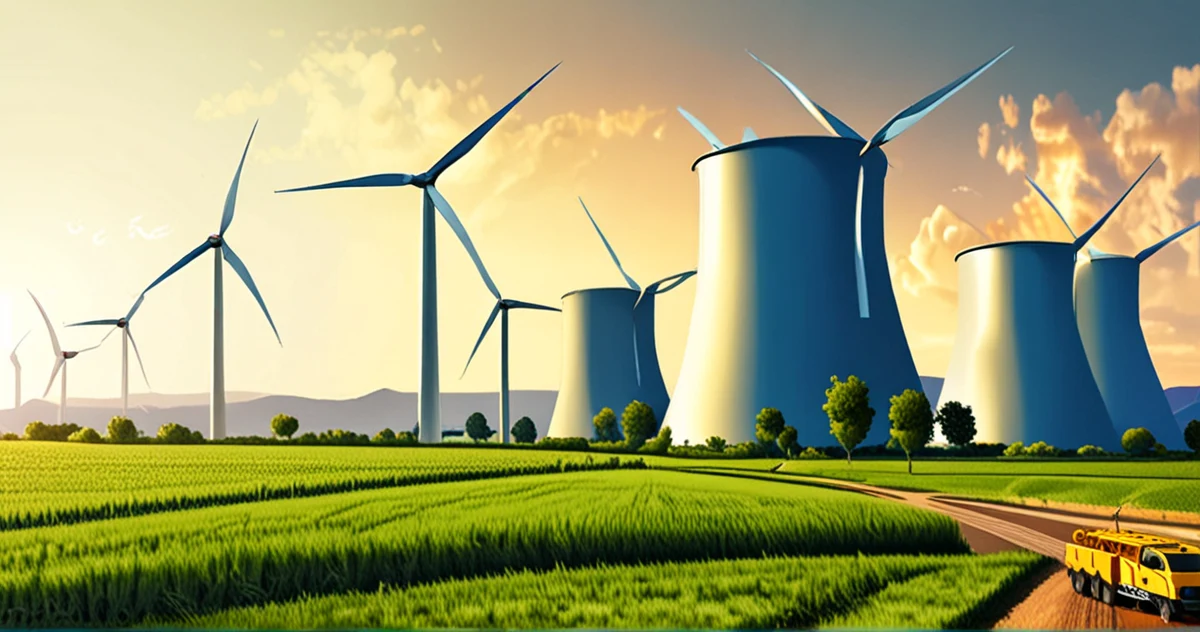
Imagine thousands of wind turbine blades, each as long as a football field, piled up in landfills as far as the eye can see. This is not a disaster scenario, but the reality facing the wind industry if we don't quickly find sustainable solutions to manage these end-of-life structures. As the first generations of wind farms reach the end of their operational life, we face an environmental paradox: green energy produces waste that is difficult to eliminate.
This situation represents a major challenge for the environmental credibility of renewable energies. Without appropriate end-of-life solutions, wind turbine blades, solar panels, and lithium-ion batteries risk becoming the next environmental crisis, as highlighted by Windsystemsmag. For energy sector professionals and policymakers, solving this equation has become an absolute priority to maintain confidence in the energy transition.
In this article, we will explore why blade recycling represents such a technical challenge, what circular solutions are emerging to transform this waste into resources, and how the industry is reinventing itself to build truly sustainable energy.
Thermoset Composites: An Underestimated Recycling Challenge
The fundamental difficulty in recycling wind turbine blades lies in their composition. Contrary to popular belief, these structures are not simply plastic or metal, but thermoset composites reinforced with glass or carbon fibers. These materials are designed to withstand extreme conditions for 20 to 25 years, making them particularly difficult to decompose and reuse.
The problem is worsening with the rapid expansion of offshore wind energy, as noted by Sciencedirect in its analysis of end-of-life renewable technologies. As the first offshore wind farms approach the end of their operational life, the amount of blades to be recycled will significantly increase in the coming years, creating an urgency to develop viable solutions.
Circular Economy: From Theory to Industrial Practice
Faced with this challenge, the wind industry is decisively turning to the circular economy. This approach is not limited to simple recycling, but aims to completely rethink the product lifecycle, from design to transformation into new resources. As explained by Enel Green Power, circularity has become one of the main strategic axes for a sustainable future in the renewable energy sector.
Several major players in the sector have already launched concrete initiatives. Vestas has unveiled a circularity solution aimed at completely eliminating the landfilling of wind turbine blades. Their approach combines technical innovation and new economic models to create value from what was considered waste.
Emerging Technical Solutions: Beyond Grinding
Traditional recycling methods clash with the unique properties of blade composites. But innovation is progressing rapidly:
- Transformation into new raw materials: Some companies are developing processes to separate glass fibers from resins, allowing the recovery of high-quality materials for other industrial applications.
- Creative reuse: Pilot projects are exploring how to give a second life to entire blades in construction, urban furniture, or even as structural elements in infrastructure.
- Advanced chemical recycling: Innovative techniques use chemical processes to decompose composites into their basic components, which can then be reused to manufacture new materials.
As noted by the UCS Blog, these creative recycling solutions for used blades represent a significant advancement. The complementary approach involves focusing on blade design to facilitate their future recycling, integrating circularity from the design phase.
Europe Leads the Regulatory Charge
The regulatory framework is evolving rapidly to support this transition. The solution to this problem is defined in the new EU Circular Economy Action Plan, initiated by the European Green Deal, as indicated by Sciencedirect. This political impetus creates a favorable environment for investments in recycling technologies and encourages the industry to adopt more sustainable practices.
This regulatory approach fits into a broader vision where circularity becomes an essential pillar of the energy transition, rather than just an accessory consideration.
What This Means for Your Organization
If you work in the energy, environment, or manufacturing sectors, this evolution directly affects your strategy:
- Innovation opportunities: The development of composite recycling solutions opens new markets for companies capable of mastering these technologies.
- Regulatory requirements: Circularity standards will become increasingly strict, requiring proactive adaptation of your processes.
- Brand image: Participating in solving this environmental challenge strengthens your credibility in sustainable development.
- Reputation risks: Ignoring this issue exposes your organization to growing criticism about the actual sustainability of your activities.
Towards Truly Circular Energy
The wind turbine blade recycling crisis represents both an urgent challenge and a historic opportunity to reinvent our approach to materials in the energy sector. The emerging solutions demonstrate that with technical innovation and political will, we can transform an environmental problem into a driver of circularity.
The wind industry is at a decisive turning point. By fully adopting the principles of the circular economy, it can not only solve the problem of end-of-life blades but also establish new sustainability standards for the entire renewable energy sector. The race is on to create energy that is not only clean in its operation but also circular in its complete lifecycle.
To Go Further
- Blog UCS - Creative recycling solutions for used wind turbine blades
- Windsystemsmag - Renewable energy recycling as key to sustainable power generation
- Sciencedirect - End of life of renewable energy technologies in urban environments
- Sciencedirect - Investigation of pathways to improve circular economy adoption
- Veolia - Recycling electric vehicle batteries and second life for wind turbine blades
- Vestas - Circularity solution to eliminate landfilling of wind turbine blades
- Wazoku - Enel customer story on blade recycling innovation
- Enelgreenpower - Circularity for green recovery and new life for wind turbine blades