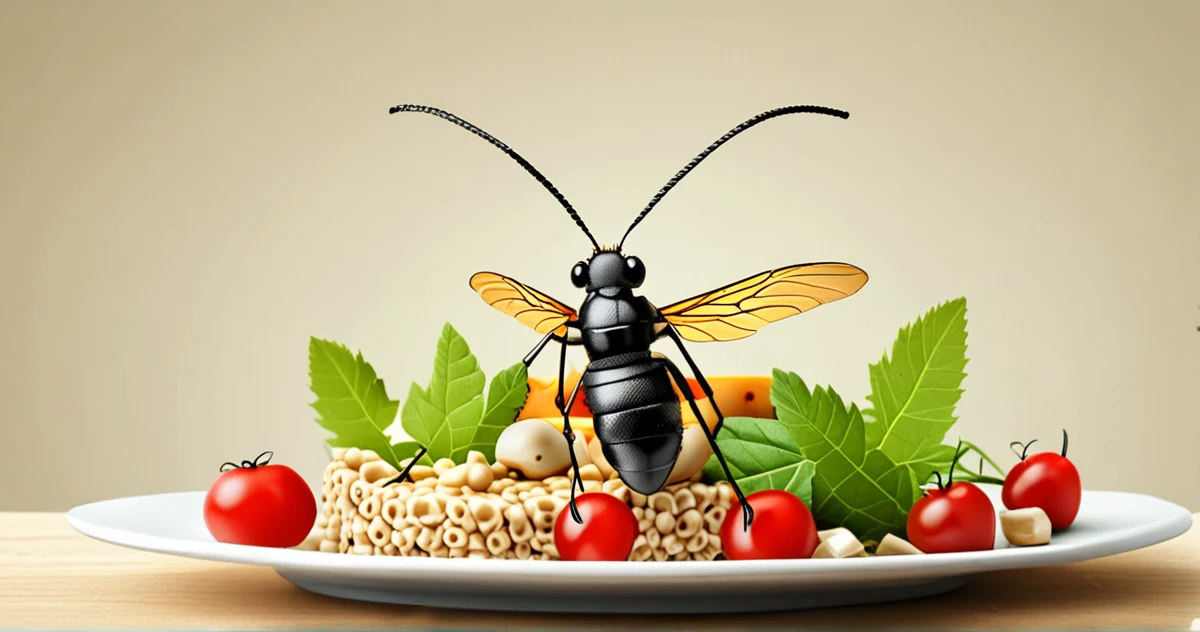
Imagine a world where supermarkets empty out, not due to economic shortage, but due to biological collapse. Where three-quarters of food crops depend on an invisible workforce that is withdrawing en masse. This scenario is not science fiction, but the current trajectory documented by a multitude of studies. Insects, those "little empires" that make the world go round according to the book The Insect Crisis, are in freefall, and with them, the very resilience of our food supply.
This crisis is all the more insidious as it unfolds in relative silence, overshadowed by more publicized climate issues. Yet, as highlighted in a Medium article, 40% of insect species are threatened with extinction, at a rate eight times faster than that of mammals. The impact on global food security is direct and profound. This article untangles myths from reality, identifies warning signs to watch for, and questions our relationship with agriculture, drawing on verified sources to outline potential courses of action.
Myth vs. Reality: The Insect, Far More Than a Nuisance
Common Myth: Insects are primarily pests to be eliminated to protect crops.
Documented Reality: This view is not only reductive but dangerously mistaken. Insects constitute the cornerstone of the ecosystems that make agriculture possible. Their role extends far beyond pollinating fruits and vegetables. They are essential decomposers that recycle nutrients in the soil, natural predators that regulate populations of true pests, and a fundamental food source for a multitude of birds, fish, and small mammals. The collapse of these "tiny empires," to borrow the title of the referenced book on Amazon, would mean the cascading collapse of these free ecological services. Our collective experience, shaped by decades of chemical warfare against "pests," clashes head-on with ecological reality: a healthy field is an inhabited, diversified field, not a sterile desert.
The Warning Signs: What Nature Is Already Shouting at Us
The decline is not an abstraction. It manifests through concrete indicators that anyone can observe, early warning signs of a broader disruption.
- The "Clean Windshield": The anecdotal but widely shared observation of fewer insects smashed on windshields after a long drive is a tangible clue of a massive depletion of aerial biomass.
- The Silence of the Meadows: The noticeable decrease in the songs of insectivorous birds in many regions is a direct consequence. Birds, as reported in a joegardener podcast, are among the first to suffer from the scarcity of their basic food.
- The Growing Dependence on Manual Pollination: In some regions of China, the disappearance of pollinating insects has already forced farmers to pollinate fruit trees by hand, a costly solution not scalable globally. It's a glimpse of what might await us.
These "red flags" are not coincidences. They point to a major trend confirmed by science: a rapid decline in insect diversity and abundance, as analyzed by the site The Land Between, which threatens the very foundations of our food systems.
The Agricultural Paradox: The Practice That Undermines Its Own Foundation
Here, we must question a fundamental belief of modern intensive agriculture: the idea that short-term yield can be maximized by simplifying ecosystems to the extreme and eradicating all competing life forms. Evidence shows this approach is self-destructive. An article from The Lane Report directly points to this paradox: the rapid decline in insect diversity, largely due to agricultural practices (massive pesticide use, habitat destruction, monocultures), ultimately threatens... agriculture itself.
The expectation was ever-increasing and stable production. Experience reveals growing fragility. By eliminating beneficial insects (pollinators, natural predators) along with pests, by destroying hedges and flower strips that serve as their refuge and food source, industrial agriculture undermines the ecosystem services it depends on in the long term. It trades natural resilience for dependence on chemical inputs, creating a system vulnerable to shocks. As summarized in a Webpronews article, this silent crisis jeopardizes food security and yields on a global scale.
Acting on Your Scale: Concrete Levers to Halt the Decline
Faced with a challenge of such magnitude, a sense of powerlessness is natural. Yet, individual and collective actions can help reverse the trend by recreating welcoming spaces for microfauna. It's not about returning to the Stone Age, but about integrating biodiversity into our management of spaces.
- Cultivate Diversity: In your garden or on your balcony, prioritize a wide variety of plants, especially local and melliferous species that flower in different seasons. A wildflower bed is a service station for insects.
- Ban Synthetic Pesticides: Opt for biological control methods (ladybugs against aphids) or accept a certain level of aesthetic "damage." The visual "zero defect" is an enemy of biodiversity.
- Leave "Messy" Spaces: A pile of dead wood, leaves left in place, an unmown grassy area constitute crucial habitats and overwintering sites for many species.
- Support Regenerative Agriculture: As a consumer, favor products from organic farming, permaculture, or any system that integrates hedges, flower strips, and crop rotation. These practices, as suggested by The Lane Report, are an opportunity to rethink our food systems.
- Raise Awareness in Your Circle: Share this knowledge, explain why not to kill all spiders in the house or why a perfect lawn is an ecological desert.
Conclusion: From Silence to Action
The insect crisis is not a distant inevitability. It is an ongoing process silently eroding the foundation of our food security, as explained in the analysis by The Great Simplification. Understanding this dynamic means realizing that the health of our plate is inextricably linked to the health of the world of "little things." By demystifying their role, identifying signs of their decline, and challenging the practices that accelerate it, we move from the status of powerless spectators to that of informed actors.
The ultimate issue goes beyond simple conservation. It is about preserving the complexity and resilience of the systems that feed us. Every garden transformed into a refuge, every consumption choice oriented towards virtuous practices, every conversation started on the topic is a step towards rebuilding these "tiny empires" without which, as a naturalist already feared 50 years ago in The Guardian, our world risks indeed "grinding to a halt." Action begins with the awareness that solutions are within reach, in how we inhabit and cultivate our immediate environment.
To Go Further
- The Guardian - The insect apocalypse - Foundational article on the scale of insect decline and its consequences.
- Medium - The Silent Crisis - Analysis of insect extinction rates compared to other species.
- Lane Report - Silent crisis - Examination of the link between farming practices and insect decline, and the resulting threat to agriculture.
- Webpronews - Rapid Insect Decline - Article on the threat posed by insect decline to global food security.
- joegardener - Insect Crisis Podcast - Podcast detailing the insect crisis and its chain impacts.
- The Land Between - Unveiling the Silent Crisis - Explanation of the causes of insect population decline and their vital role.
- Amazon - The Insect Crisis (Book) - Presentation of the reference book on the collapse of insect populations.
- The Great Simplification - The Silent Collapse - Discussion on the global collapse of insects and its implications.