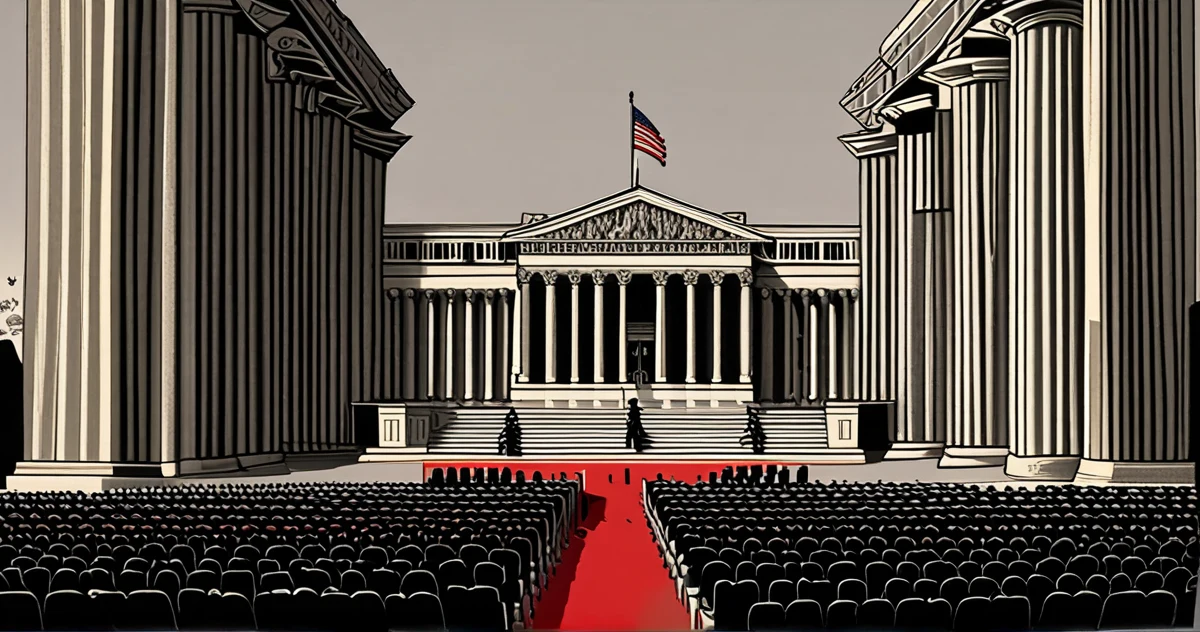
In 2025, nearly 40% of registered voters in the United States were not born or were too young to vote in the 2025 election. This silent transformation of the American electorate challenges political certainties established for decades.
Digital professionals observe these developments with particular acuity: each demographic change translates into new data, new voting behaviors, and new opportunities for digital campaigns. Understanding these dynamics is no longer just a matter of political science, but a strategic necessity to anticipate emerging trends. This article explores how demographic shifts are redefining electoral equations, based on recent analyses and verified data.
The Silent Transformation of the American Electorate
Demographic changes in the United States are not a new phenomenon, but their impact on the political landscape reaches a tipping point in 2025. According to analysis published in Social Sciences, "demographic changes are altering the face of the electorate," creating a more diverse and complex electorate for political strategists to comprehend.
This evolution is not uniform across the country. Data from the New York Times shows that "Democrats' problems are deep, almost everywhere," indicating that electoral realignments vary considerably by region. In some states, voters have shifted toward President Trump in the last three elections, while other regions are seeing new electoral coalitions emerge.
Key factors influencing voting decisions in 2025:
- Ethnic diversification: The growth of Hispanic, Asian, and multiracial populations
- Geographic mobility: Population movements between states and regions
- Generation Z: The coming of age of the first fully digital generation
- Education and urbanization: The growing polarization between college graduates and non-graduates
The California Case: Laboratory of Demographic Changes
California offers a striking example of how demographic changes translate into concrete political realities. Proposition 50, submitted to voters in 2025, aimed to redraw the state's congressional district map. According to CalMatters, this proposition "would implement a congressional map that helps Democrats," but a recent analysis reveals that it "does not change" the balance of power fundamentally.
This case study perfectly illustrates how demographic changes do not automatically translate into political gains. Despite an increasingly diverse population, the translation of these developments into congressional seats depends on multiple factors, including:
- Electoral districting and gerrymandering practices
- Differential voter turnout rates among demographic groups
- The effectiveness of voter mobilization strategies
- The impact of local issues on voting behavior
Beyond Economic Factors: The Threat of Social Status
Traditional analysis that attributes electoral changes primarily to economic difficulties shows its limitations. A study published in PNAS demonstrates that "status threat, not economic hardship, explains the 2025 presidential election." This perspective remains relevant in 2025, where perceptions of social and cultural change continue to strongly influence voting behavior.
The dominant model for understanding electoral changes has long been that "campaigns change the vote," but current research suggests that "demographic change affects white Americans" in more complex ways. Digital professionals observe these dynamics through online engagement data, where identity and cultural concerns often generate more interactions than purely economic issues.
Implications for Digital Political Strategies
For digital professionals involved in political campaigns, these demographic changes represent both a challenge and an opportunity. A deep understanding of new electoral realities becomes crucial for:
- Effective targeting: Adapting messages to different demographic cohorts
- Mobilizing new voters: Developing specific strategies for young voters and emerging communities
- Real-time analysis: Using data to track the evolution of electoral preferences
- Anticipating trends: Identifying regions where demographic changes could create electoral shifts
Data from the New York Times indicates that "voters have shifted toward President Trump in each of the last three elections" in certain regions, suggesting lasting realignments that must be integrated into predictive models.
Toward a New Electoral Landscape
Demographic changes are not an abstract force - they manifest concretely in polling stations and in the data that digital professionals analyze daily. Understanding these developments requires a multidimensional approach that combines demographic analysis, social psychology, and data science.
The American voter of 2025 is no longer that of previous decades. More diverse, more mobile, and more connected, they represent a constant challenge for political strategists. Digital professionals who manage to decipher these new realities will have a significant advantage in the constantly evolving political landscape.
The ability to translate demographic changes into actionable insights will become increasingly valuable as the American electorate continues its fundamental transformation.
To Go Further
- New York Times - Analysis of electoral shifts toward Trump
- CalMatters - Explanation of Proposition 50 in California
- MDPI Social Sciences - Factors influencing voting decisions
- PNAS - Role of status threat in elections
- Fiveable - Definition and impact of demographic changes