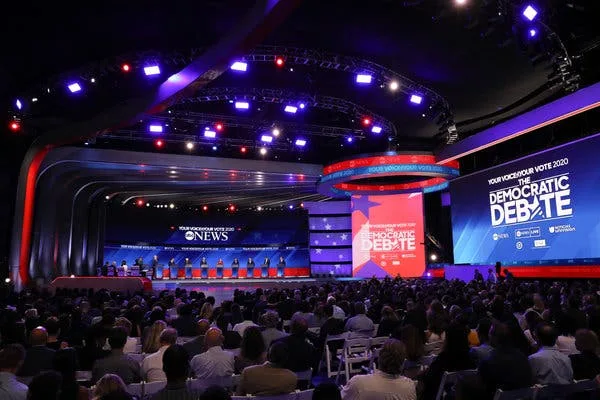
As early as November 2024, a few days after the American presidential election, NBC News reported that Democrats were already keeping an eye on "about two dozen" party figures for the 2028 primary. That number, far from insignificant, illustrates an often underestimated reality: the internal battles roiling the Democratic Party in 2025 are not mere procedural quarrels. They constitute a full-scale testing ground for the 2028 presidential talent pool.
Yet these struggles — over the primary calendar, over the challenges launched against incumbent officials, over early positioning — often go unnoticed by the general public. For observers, however, they are rich in lessons. They reveal who has the nerve to step forward, who prefers to hold back, and what coalitions are forming behind the scenes.
This article dissects what these 2025 clashes already tell us about the Democratic bench for the 2028 race for the White House.
> Key takeaways:
> - The reorganization of the primary calendar has become a major power issue, revealing the party's priorities.
> - Potential candidates are emerging earlier than usual, a sign of a leadership vacuum to be filled.
> - Internal challenges, such as the one against Senator John Fetterman, reflect a desire for generational renewal.
> - Early polls give indications, but they remain volatile three years out from the deadline.
1. The primary calendar: a battlefield in its own right
Why does the Democratic primary calendar generate so much passion? Because the order of the states that vote first partly determines which candidates have a chance to break through. Historically, Iowa and New Hampshire opened the ball, giving a disproportionate advantage to candidates capable of intensive door-to-door campaigning in these small states. But in 2023, the Democratic National Committee (DNC) upended this order, placing South Carolina first, followed by Nevada, then Michigan and Georgia. This decision, intended to reflect the party's diversity, caused turmoil. According to the Center for Politics, this calendar is "in disarray" and its importance for the 2028 primary cannot be underestimated.
This disarray is not just a matter of logistics. It reveals internal fractures: traditional states like Iowa and New Hampshire, overwhelmingly white, feel dispossessed, while the new states at the front, more diverse, demand their due. For potential candidates, this uncertainty complicates strategic planning. Should they invest massively in South Carolina, where the African American electorate is decisive? Or bet on Nevada, where the Hispanic vote and unions carry weight? Each choice commits resources and signals alliances.
This calendar fight acts as a filter: it separates candidates who have a well-oiled national organization from those who have only local name recognition. In 2025, as the party seeks to rebuild after successive defeats, the battle over the calendar has become a proxy for the battle of ideas.
2. The Democratic talent pool: broader than one might think
How many Democrats could reasonably seek the nomination in 2028? According to NBC News, party officials are monitoring "about two dozen" figures. This impressive number contrasts with the image of a party lacking leadership. In reality, the problem is not the absence of talent, but their uncoordinated abundance. As Politico notes, the 2028 race has already begun, and some candidates "are engaging in intra-party fights" to stand out.
Among the names that keep circulating, there are Cory Booker, senator from New Jersey, Mark Kelly, senator from Arizona, and Josh Shapiro, governor of Pennsylvania. All three have multiplied their trips to key states and their positions on national issues. According to WHYY, these potential candidates are "less discreet" about their ambitions than before. The void left by the absence of a dominant figure after 2024 is pushing them to come out of the woodwork earlier.
But this profusion has a downside: it risks fragmenting the vote and prolonging the primary, as in 2020. The 2025 battles, particularly around the calendar, are precisely aimed at avoiding this scenario by giving a structural advantage to certain profiles. The Democratic bench is deep, but depth is not enough: a hierarchy is needed.
| Potential candidate | Current position | State | Perceived asset | Source mention |
|-------------------|--------------|------|-------------|----------------|
| Cory Booker | Senator | New Jersey | National name recognition, 2020 experience | Politico, WHYY |
| Mark Kelly | Senator | Arizona | Moderate image, independent profile | Politico |
| Josh Shapiro | Governor | Pennsylvania | Electoral victory, effective management | WHYY |
3. Internal challenges: the Fetterman case and Pennsylvania
What happens when an incumbent is challenged from within? The case of Senator John Fetterman, in Pennsylvania, is emblematic. According to Spotlight PA, the state's Democratic Party announced that it would support an opponent in the 2028 Senate primary. Fetterman, elected in 2022 with the image of an atypical populist, has irritated part of the establishment with his sometimes iconoclastic positions. Asked about a possible presidential run, he responded with a laconic "It's 2025," leaving doubt hanging.
This internal challenge is not insignificant. Pennsylvania is a crucial swing state for any presidential election. If the local party divides over Fetterman, it could weaken the Democratic organization in this key state, to the detriment of the national candidate in 2028. Moreover, the battle for Fetterman's seat could serve as a test for alliances within the party: progressives, moderates, unions, etc.
At the same time, Pennsylvania in November 2025 saw the reelection of its state Supreme Court justices, maintaining a Democratic majority, as reported by PBS. This result, although local, has national implications: the Pennsylvania Supreme Court could be called upon to rule on electoral disputes in 2028, as it did in 2020. The strength of the Democratic legal infrastructure in this state is a not insignificant asset.
4. Nevada, the new playground for contenders
Why is Nevada suddenly attracting so many potential candidates? Since the DNC placed Nevada in second position in the primary calendar, the state has become a mandatory stop. According to the Nevada Independent, four potential presidential candidates spoke in Las Vegas in October 2026, at a political event. Nevada, with its large Hispanic population and unionized electorate, is considered a barometer of a candidate's ability to appeal to diverse electorates.
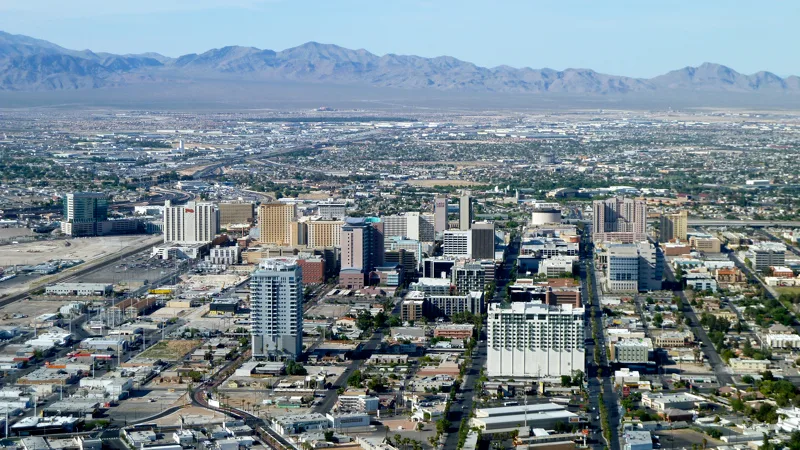
This early move by candidates toward Nevada illustrates a new dynamic: primaries are no longer won only in the traditional early states, but in a broader and more diverse set. Candidates who want to exist in 2028 must learn to navigate between the Nevada caucuses, the South Carolina primaries, and the industrial strongholds of Michigan. Those who have not started building ties as early as 2025 are already behind.
The Nevada Independent article does not give the names of the four candidates, but their mere presence in Las Vegas, more than a year before the deadline, says a great deal about the intensity of the competition. The Democratic Party is in "permanent primary" mode.
5. Early polls: between signal and noise
Can we trust polls conducted three years before the election? Newsweek published polls in October 2025 showing the main candidates in three states. These figures, although early, give an indication of the name recognition and acceptability of the contenders. However, they should be taken with caution: at this stage, voters often decide on the basis of name recognition rather than a mature political choice.
The 2025 polls mainly reveal who has managed to become known outside their home state. Cory Booker, already a candidate in 2020, benefits from national name recognition. Mark Kelly, a former astronaut and husband of Gabby Giffords, has a positive image among independents. Josh Shapiro, buoyed by his landslide victory in Pennsylvania in 2022, is perceived as a competent manager. But none clearly dominates, which leaves the door open to outsiders.
These polls also serve as a barometer for donors: a candidate who rises in the surveys more easily attracts funding. Yet money is crucial in a primary that promises to be long and costly. The 2025 struggles are therefore also a disguised fundraising race.
6. Three neglected truths about this Democratic bench
Beyond names and numbers, what structural lessons can be drawn from these 2025 battles? Here are three often neglected truths.
First truth: the calendar is a tool of power, not mere logistics. The decision to reorganize the order of the primaries was not made at random. It reflects an ideological choice: the party wants to give more weight to Black and Hispanic voters, even at the risk of upsetting traditional states. This choice benefits certain candidates: those who have roots in these communities or who can devote time to them. It disadvantages candidates who were counting on Iowa and New Hampshire to create a cheap media momentum. To understand this calendar is to understand who the party wants to see emerge.
Second truth: the absence of a clear leader is an opportunity, not a weakness. After the 2024 defeat, many lamented the absence of a natural leader. But this vacancy has an advantage: it forces the contenders to define themselves by their ideas rather than by their loyalty to a leader. Intra-party fights, like those described by Politico, are the sign of a living party that is debating its future. Democratic voters, frustrated by defeats, want a battle of ideas, not a coronation.
Third truth: the 2028 primaries are being played out right now in the swing states. Pennsylvania and Nevada are not chosen at random. These are two states that flipped narrowly in the last presidential elections. By investing early in these states, candidates send a message: "I can win where it matters." Local battles, like the challenge to Fetterman, are not anecdotes: they are stress tests for the party apparatus in these crucial states.
7. Myths and realities: what these struggles do not say
It is tempting to overinterpret every move. Let us untangle a few myths.
Myth 1: "The party is in ruins and has no credible candidate." Reality: the pool is large, with at least two dozen names tracked by strategists. The problem is not scarcity, but ranking.
Myth 2: "The 2028 primaries will be a repeat of 2020, with a crowd of candidates and a chaotic process." Reality: the calendar reform aims precisely to reduce chaos by giving more weight to diverse but few states at the start. If the field remains large, the structure of the calendar could favor faster consolidation.
Myth 3: "The internal struggles of 2025 are personal quarrels of no importance to the average voter." Reality: these struggles determine which voices will be amplified and which policies will be put forward. The challenge to Fetterman, for example, could send a signal about the party's tolerance for elected officials who deviate from the line.
8. What lessons for observers and voters?
What should be watched in the coming months to gauge this Democratic bench?
- Travel to early-voting states: who spends time in South Carolina, Nevada, Michigan? Repeated visits signal serious intent.
- Fundraising: a candidate who attracts major donors as early as 2025-2026 will have a structural advantage.
- Positions on divisive issues: candidates who dare to defy party orthodoxy, as Fetterman did, test the limits of what is acceptable.
- Local alliances: support from local officials in swing states is sometimes worth more than national support.
In short, the battles of 2025 are a prelude. They set the tone, establish the rules of the game, and reveal who is ready to fight. For digital professionals accustomed to deciphering complex systems, this reading of internal struggles offers a fascinating glimpse into the mechanics of American politics.
Further reading
- Centerforpolitics - Analysis of the Democratic primary calendar and its importance for 2028.
- Newsweek - Polls on Democratic candidates in three states.
- WHYY - Article on potential candidates who are less discreet about their plans for 2028.
- Politico - Analysis of the 2028 presidential race and intra-party fights.
- NBC News - Report on Democrats' early positioning for 2028.
- The Nevada Independent - Account of statements by four potential candidates in Las Vegas.
- Spotlight PA - Analysis of John Fetterman's possible candidacy in 2028 and the internal challenge.
- PBS - Report on the reelection of Pennsylvania Supreme Court justices and its implications for 2028.