

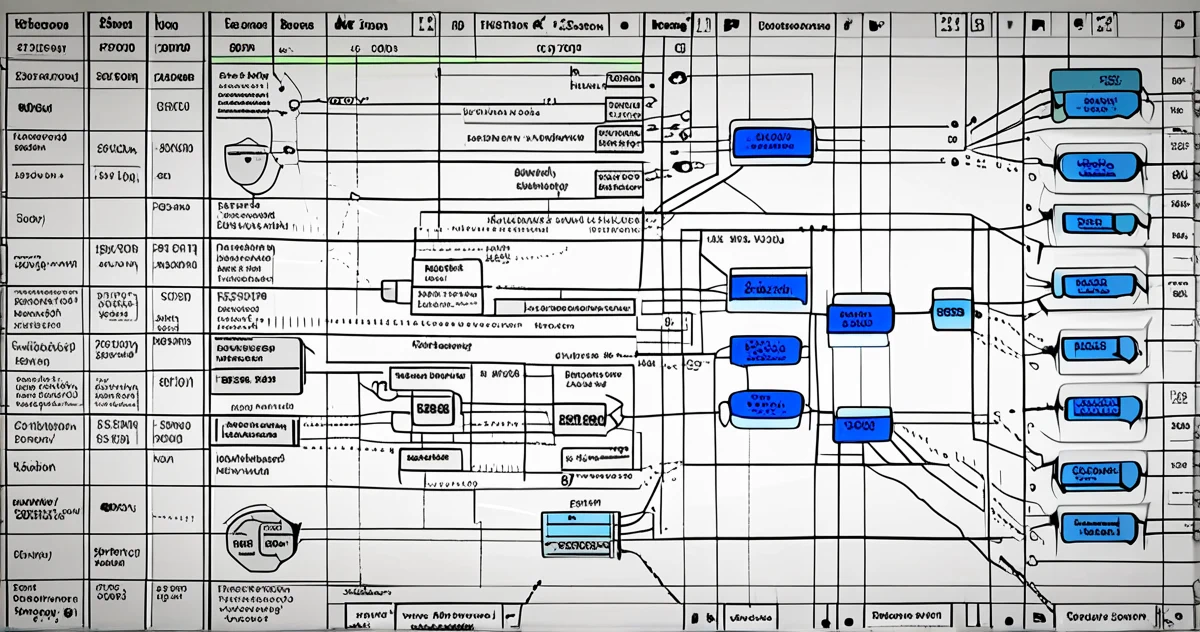
Imagine a forum starting with a few dozen passionate users. Queries are instantaneous, the interface responds immediately, and everything seems perfect. Then, gradually, registrations accelerate: 100, 500, 1000 members. It's at this point that the first signs of slowdown appear - pages taking several seconds to load, database timeouts, a user experience that deteriorates. This critical transition, from a small community to a large-scale platform, represents one of the most complex technical challenges for forum developers.
For digital professionals, understanding these issues is not optional. Poor scalability management can turn a community success into a technical nightmare, with user abandonment and infrastructure costs exploding. This article guides you through the lessons learned during forum scaling, focusing on database optimization and strategies to avoid common pitfalls.
We will explore how companies like Adobe and Apple approach these challenges through their own implementations, while identifying warning signals that indicate it's time to rethink your architecture.
The tipping point: when growth becomes a technical problem
The first critical threshold typically arrives around 1000 to 2025 active members. At this stage, solutions that worked perfectly for a small community begin to show their limits. Traditional relational databases, unoptimized, become major bottlenecks. Queries that executed in milliseconds now take several seconds, and database locks become common.
Warning signals to monitor:
- Page loading times regularly exceeding 3 seconds
- Sudden increase in database timeout errors
- CPU usage consistently above 80% during peak hours
- Inability to maintain stable user sessions
Adobe's experience with its Security Lakehouse illustrates this transition well. By adopting approaches like OCSF (Open Cybersecurity Schema Framework) and optimizing data efficiency, they managed to maintain high performance despite massive growth in data volumes and users.
Database architecture: choosing between relational and graph
The choice of database technology is often the first major technical compromise. Traditional relational databases offer proven maturity and tools, but can become bottlenecks for complex queries involving multiple joins.
What not to do: Cling to a pure relational architecture when your data models become heavily interconnected. Modern forums, with their complex relationships between users, messages, threads, and interactions, can benefit significantly from graph approaches.
Dgraph, for example, was specifically designed for this type of use case. However, as the Dgraph community points out, this technology "is not yet a complete application database" and may require supplements for certain business features. This significant limitation means that for many forum projects, a hybrid approach may be necessary.
| Database Type | Scaling Advantages | Scaling Limitations |
|------------------|----------------------|------------------------|
| Relational | Mature tools, ACID guaranteed | Expensive joins, rigid schema |
| Graph (Dgraph) | Fast relational queries | Limited application features |
| Hybrid | Flexibility, best of both worlds | Increased maintenance complexity |
Performance optimization strategies

When scaling your pipeline, it's really expensive to misconfigure your architecture. This lesson, drawn from experiences shared on AI agent development communities, applies perfectly to forums. Infrastructure costs can increase exponentially if query optimization and caching are not prioritized from the start.
Proven optimization strategies:
- Implementation of multi-level caches (Redis, Memcached)
- Strategic data normalization and denormalization
- Horizontal partitioning of the largest tables
- Aggressive indexing of frequently queried columns
Apple's approach to anomaly detection demonstrates the importance of designing systems that can identify and respond to performance problems before they affect end users. Applied to forums, this means setting up proactive monitoring of key performance metrics.
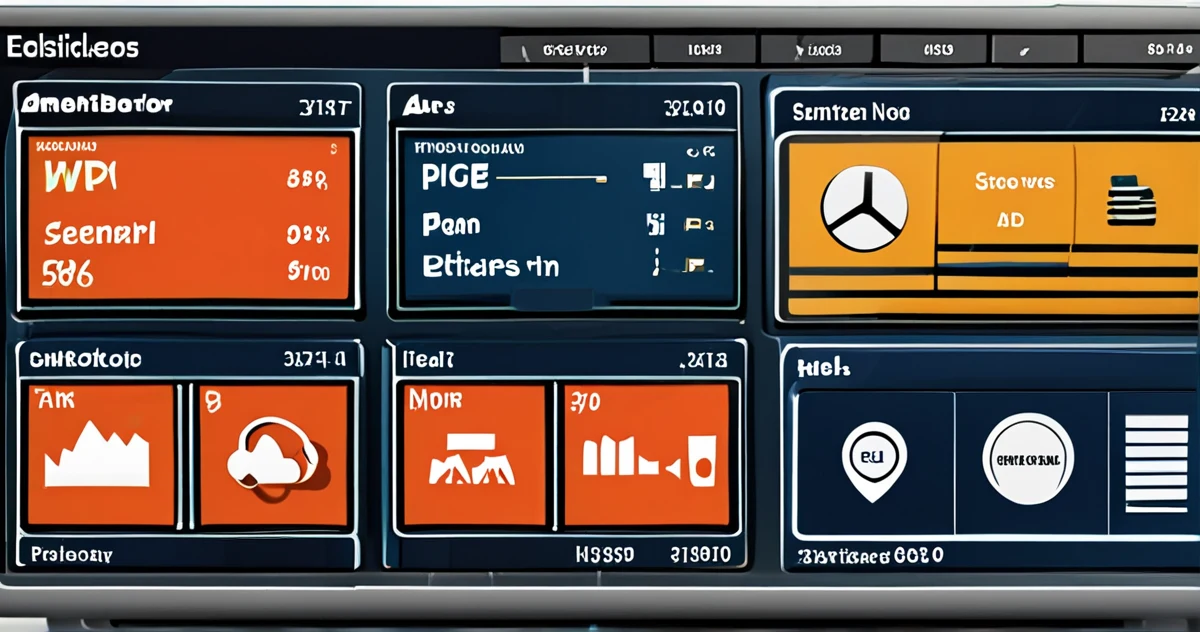
Cache management and query optimization
Optimizing the data pipeline is crucial for maintaining performance at scale. Here are the most effective techniques:
Strategic caching:
- Static page caching for non-logged-in users
- Caching of frequently viewed user profiles
- Caching of popular threads and active discussions
- Caching of complex search results
SQL query optimization:
- Avoiding N+1 queries in loops
- Using composite indexes for frequent joins
- Limiting the number of selected columns
- Implementing efficient pagination
Community management at scale: beyond technology
Nick Howell, who focuses on empowering technology leaders and scaling communities, reminds us that a forum's success doesn't rely solely on technology. Social architecture is just as crucial as technical architecture. A well-structured community with effective moderators and clear guidelines reduces the load on technical systems.
Organizational pitfalls to avoid:
- Underestimating the impact of user behavior on system load
- Neglecting moderator training on technical tools
- Ignoring user feedback signals about performance issues
Growth planning: from 10,000 to 100,000 members

Reaching 10,000 members is not an end in itself, but a step in a continuous growth journey. The most successful forums are those that anticipate the next orders of magnitude - 50,000, 100,000, even a million members.
Recommended architecture for growth:
- Microservices: Break down the application into independent services
- Load balancing: Distribute load across multiple servers
- CDN: Use content delivery networks for static assets
- Distributed database: Partition data across multiple nodes
Lessons from Gerdau, a leader in the steel industry for 120 years, remind us of the importance of building to last. In the context of forums, this means adopting modular architectures that can evolve with needs, rather than monolithic solutions that will become obsolete.

Long-term health indicators:
- Stable response times despite traffic increase
- Infrastructure costs increasing linearly with growth
- Ease of adding new features without major redesign
- Maintained or improved user satisfaction
Scaling checklist for your forum
Phase 1: 0-1,000 members
- [ ] Optimize database indexes
- [ ] Set up basic caching
- [ ] Configure performance monitoring
- [ ] Document current architecture
Phase 2: 1,000-5,000 members
- [ ] Implement multi-level caching
- [ ] Partition large tables
- [ ] Automate backups
- [ ] Plan migration to distributed architecture
Phase 3: 5,000-10,000+ members
- [ ] Deploy microservices architecture
- [ ] Implement load balancing
- [ ] Configure database replication
- [ ] Automate horizontal scaling
Scaling a forum from zero to 10,000 members represents a demanding but rewarding technical journey. By understanding critical tipping points, wisely choosing database technologies, and continuously optimizing data pipelines, it's possible to build resilient and high-performing digital communities.
The true measure of success is not only in the numbers, but in the ability to maintain an exceptional user experience at every stage of growth. As you plan your next forum or optimize an existing platform, remember that today's technical decisions will determine your community's viability tomorrow.
To go further
- Caiomsouza Medium - Large-scale Databricks management and security lakehouse approaches
- Discuss Dgraph - Current limitations of Dgraph as an application database
- Reddit Machine Learning - Community discussions on technical optimization and scaling
- Reddit AI Agents - Guide on tools to build AI agents and pipeline scaling
- LinkedIn Nick Howell - Community scaling strategies and technology leadership
- Gerdau Careers - Perspectives on building sustainable and scalable organizations