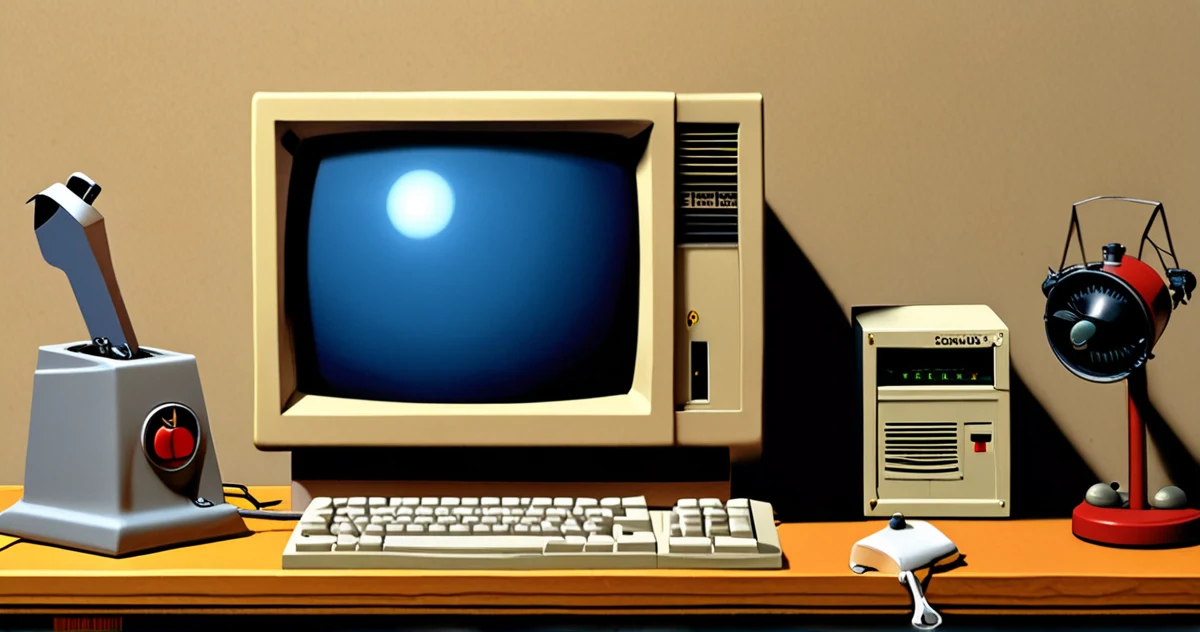
Imagine unboxing an original 1984 Macintosh, sealed in its period packaging. The 9-inch monochrome screen, the single-button mouse, the 3.5-inch floppy drive – a relic that revolutionized personal computing. But what happens when you try to restart it? This machine, which made university studies on previous technologies obsolete according to Hardcoresoftware Learningbyshipping, now poses unique challenges to restorers.

Why be interested in a computer over 40 years old? Because its 1984 Macintosh restoration reveals timeless principles about innovation, durability, and technological evolution. This article guides you through the necessary historical computing tools, encountered obstacles, and valuable lessons learned from this experience, particularly relevant for digital professionals facing ever-faster product cycles.
Preparation and Essential Tools for Restoration
What tools are essential to bring the Macintosh back to life?
The 1984 Macintosh restoration begins with assembling the right tools. Unlike modern computers where software updates can change everything – like the Acrobat 2025 interface that pushed users to seek rollbacks according to Community Adobe – here, hardware takes precedence.
Essential physical tools:
- Specific Torx screwdrivers to open the case
- Anti-static tweezers to handle sensitive components
- Multimeter to test power supply and circuits
- Electronic cleaning kit for oxidized contacts
Storage and data support:
- 3.5-inch floppy drives compatible with 400 KB floppy disks
- Emulation solutions to transfer data to modern systems
- Preserved disk images by the enthusiast community
Essential technical documentation:
- Original electrical schematics
- Apple technical service manuals
- Component specifications specific to that era
Practical analogy: Restoring a 1984 Macintosh is like working on a classic car – you can't rely on standard tools from a modern garage; you need parts and knowledge specific to the period.
Technical Challenges and Detailed Solutions
What are the most common technical challenges during restoration?
Technical restoration challenges abound, from component degradation to software incompatibilities. How to overcome these obstacles without damaging the machine?
Electronic component problems:
- Lead-acid batteries that may have leaked and corroded the motherboard
- Aging electrolytic capacitors requiring systematic replacement
- Oxidized connectors requiring meticulous cleaning
Display and backlight challenges:
- Monochrome CRT screen with brightness or focus issues
- Failing backlight requiring electronics skills
- Complex convergence adjustments for optimal display
Operating system and software compatibility:
- Original Mac OS system often corrupted on floppy disk
- Compatibility issues with specific hardware
- Data recovery from obsolete media
Comparative table of challenges and solutions:
| Technical Challenge | Recommended Solution | Necessary Tools |
|----------------|---------------------|-------------------|
| Leaking capacitors | Complete replacement | Soldering iron, new capacitors |
| Corrupted floppy disks | Use of preserved images | External drive, emulation software |
| Failing power supply | Testing and replacement | Multimeter, test power supply |
| Problematic CRT screen | Manual adjustment | Calibration tools, electronics skills |
Red flags to watch for: Beware of online sellers promising "new" parts for the 1984 Macintosh – many are replicas of variable quality that may not work properly. Always verify authenticity with reliable sources.

Innovation Lessons and Sustainable Perspectives
What lessons does this project teach about innovation and durability?
This 1984 Macintosh restoration is not just a technical exercise; it offers profound digital innovation lessons for digital professionals.
Disruptive innovation and category creation:
- The Macintosh launch in 1984 made previous technologies obsolete
- Example of "category-making" cited by Clearpurpose Media
- User-centered design principles still relevant
Technological durability and planned obsolescence:
- 1984 Macintosh designed to last despite its simplicity
- Contrast with current rapid renewal cycles
- Importance of digital preservation in an ephemeral world
Data management and backward compatibility:
- Recovery challenges similar to erased hard drives
- Importance of regular backups and archiving
- Major issue of backward compatibility in software evolution
Key principles for digital professionals:
- Comprehensive documentation of processes and specifications
- Data preservation on multiple media
- Modular design to facilitate future maintenance
- Upward compatibility in software development
Practical Step-by-Step Guide
How to plan your restoration project?
Initial assessment and diagnosis:
- Complete visual inspection of general condition
- Testing of power supply and main components
- Identification of missing or damaged parts
Acquisition of necessary resources:
- Search for authentic parts from specialized suppliers
- Collection of appropriate technical documentation
- Assembly of a complete toolkit
Systematic restoration process:
- Meticulous cleaning of all components
- Replacement of aging electronic elements
- Progressive testing after each intervention
- Final validation of restored functionalities

Professional analogy: Like an architect restoring a historic building, the Macintosh restorer must balance preservation and functionality, offering lessons for designing more resilient future technologies.
Impact and Future Perspectives
Why does this experience remain relevant today?
In summary, restoring a 1984 Macintosh goes beyond nostalgia; it's a dive into the roots of modern computing. The historical computing tools and technical restoration challenges encountered highlight the importance of documentation, compatibility, and technological durability – issues still relevant for digital professionals.
Identified timeless principles:
- Functional simplicity vs unnecessary complexity
- Design durability in the face of planned obsolescence
- Importance of user experience in technology adoption
- Value of preservation of digital heritage
As we move towards technologies like AI, let's remember that fundamental principles, like user experience and longevity, transcend decades. What if your next project included reflection on digital preservation? Share your experiences in the comments.
To go further
- Clearpurpose Media - Case studies on technological category creation
- Community Adobe - Discussions on software interface changes
- Hardcoresoftware Learningbyshipping - Analysis of technological tool evolution
- Support Mozilla - Data loss and synchronization issues
- Apple Discussions - Hard drive data recovery challenges
- Reddit - Advice for computer selection and durability
- Reddit - Discussions on macOS system maintenance
- Apple - Announcements on product innovation and durability