Redis as Primary Database: Challenges and Opportunities for Real-Time Applications
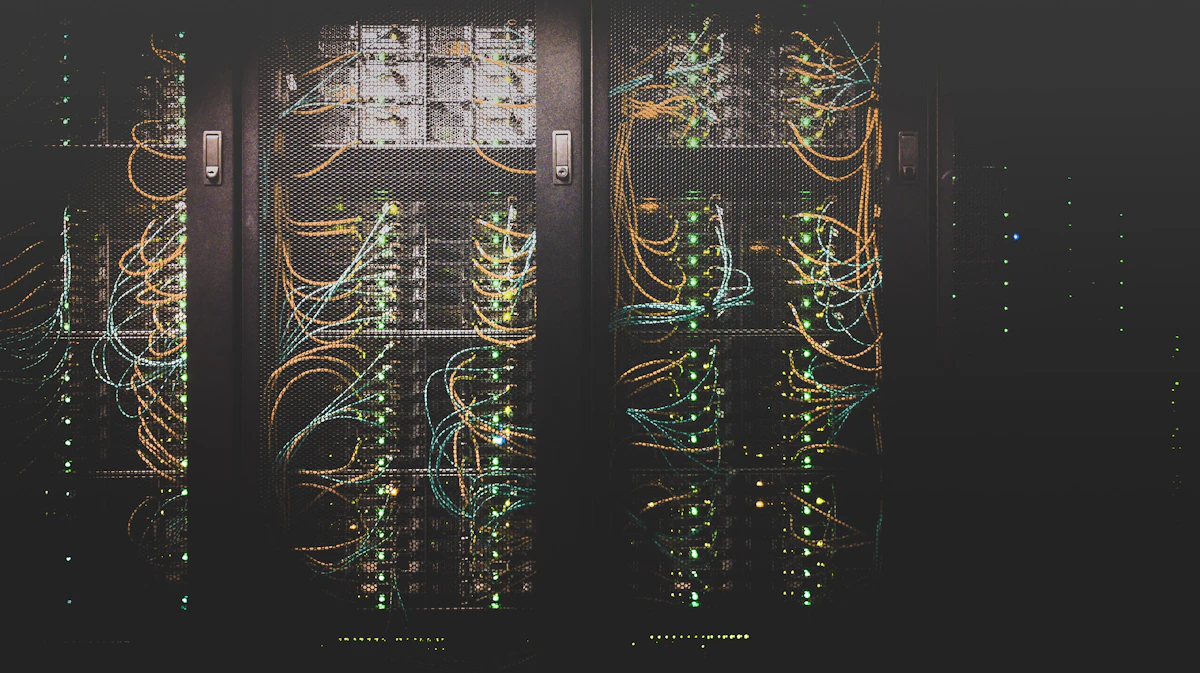
Redis architecture combining RAM and persistence mechanisms - credit: Unsplash
Imagine a high-frequency trading platform where every millisecond counts, or a recommendation system that must adapt to user interactions in real time. In these scenarios, latency is not just an inconvenience – it's a critical business constraint. It's in this context that the question arises: Redis, traditionally confined to the role of cache, can it take on the responsibility of primary database?
The answer is not binary. While some developers consider that "Redis is a database and should therefore be your primary database" according to a reflection shared on Medium, this statement deserves nuance. This article explores use cases where Redis excels as a primary solution, the trade-offs to accept, and performance benchmarks that illuminate these architectural decisions.
Table of Contents
- Beyond Cache: Distinctive Characteristics
- Advanced Use Cases
- Performance/Persistence Trade-offs
- Comparative Benchmarks
- Migration and Ecosystem
- Hybrid Architectures
- FAQ
- Conclusion
Beyond Cache: Characteristics That Make Redis a Serious Candidate {#caracteristiques}
Redis is no longer just a fast key-value store. Its sophisticated data structures and persistence capabilities make it a versatile system. Three main characteristics distinguish it:
- Memory Orientation: Redis is "rather memory-oriented" and "really good for frequently updated real-time data," as highlighted in a Stack Overflow discussion. This architecture enables exceptional performance for read/write operations.
- Native Data Structures: Unlike traditional SQL databases, Redis offers lists, sets, hashes, and streams directly at the API level, eliminating the need for complex object-relational mappers.
- Operational Simplicity: As noted on Medium, "Redis is easy and enjoyable to learn, deploy, and use," reducing the learning curve and operational costs.
Advanced Use Cases Where Redis Shines as Primary Solution {#cas-usage}
SaaS Applications Requiring Multi-Tenant Isolation
In modern SaaS architectures, data isolation between clients is crucial. Redis, with its ability to efficiently manage multiple databases or use key prefixes, "suits Software-as-a-Service (SaaS) applications and complex use cases," as indicated by FalkorDB in its migration guide. Redis data structures allow implementing elegant isolation models without the overhead of traditional relational schemas.
Distributed Session and State Systems
For large-scale web and mobile applications, consistent management of user sessions across multiple servers represents a major technical challenge. Redis excels in this domain thanks to its low latency and consistency guarantees. As mentioned on Stack Overflow, it is "really good for... session storage, state database, statistics." Its in-memory nature allows near-instantaneous updates of user state, essential for interactive experiences.
Real-Time Analytics and Aggregations
When decisions must be made within seconds on continuous data streams, Redis often outperforms traditional databases. Although a Reddit discussion mentions DuckDB for aggregations on large datasets ("I did a group by and sum on 20GB of data"), Redis shines for real-time aggregations on hot data. Its data structures like HyperLogLogs and Sorted Sets enable complex statistical calculations with predictable latency.
The Performance/Persistence Trade-off: The Real Challenge {#compromis}

Comparison of RDB and AOF persistence mechanisms - credit: Unsplash
The main objection to using Redis as a primary database concerns data durability. Although Redis offers persistence mechanisms (RDB and AOF), they involve trade-offs:
| Mechanism | Advantages | Disadvantages | Ideal Use Case |
|-----------|-----------|---------------|-------------------|
| RDB (snapshots) | High performance, compact backups | Possible data loss between snapshots | Replayable data, temporary metrics |
| AOF (append-only file) | Maximum durability, disaster recovery | Performance impact, large files | Critical data, financial transactions |
| RDB + AOF | Performance/durability balance | Increased operational complexity | Mixed applications, moderate tolerance |
This tension between speed and security explains why, as noted on Reddit, "Redis is often used for a caching layer" rather than as primary storage. Applications that tolerate limited data loss (like temporary metrics or replayable sessions) are better candidates than those requiring strict ACID guarantees.
Comparative Benchmarks: Where Redis Makes the Difference {#benchmarks}
Performance comparisons reveal Redis's relative strengths. According to Scalegrid, "Redis outperforms MongoDB in terms of absolute performance for certain use cases," particularly for simple read/write operations and applications requiring low latency.
Key Benchmark Points:
- Latency: Redis maintains latency below 1 ms for most operations
- Throughput: Up to 100,000 operations per second on a single node
- Scalability: Linear performance with Redis clustering

For AI embedding caching applications, Redis demonstrates significant advantages. The Redis documentation describes how "embedding caching" can accelerate AI applications by storing pre-calculated vector representations, reducing inference latency.
In the cloud context, Cloudoptimo compares Redis to Amazon ElastiCache, noting that managed solutions can offer "caching strategies, optimization tips, and real use cases" while reducing operational burden.
Migration and Ecosystem: Practical Considerations {#migration}
Adopting Redis as a primary database requires careful planning. The FalkorDB migration guide for RedisGraph (which has announced end-of-life) illustrates technical challenges related to dependencies on specific features. Teams must:
- Assess Functional Dependencies: Which Redis data structures and commands are essential?
- Plan Persistence: Which mechanism (RDB, AOF, or combination) matches business requirements?
- Anticipate Scalability: How to partition data when a single node's memory becomes insufficient?
Hybrid Architectures: Combining Redis with Other Databases {#hybrides}

Architecture combining Redis for real-time and PostgreSQL for persistence - credit: Unsplash
The true power of Redis as a primary database often emerges in hybrid architectures. Rather than completely replacing relational databases, Redis can serve as a complementary real-time layer:
E-commerce Architecture Example:
- Redis: User cart, sessions, real-time recommendations
- PostgreSQL: Product catalog, historical orders, customer data
- Advantage: Smooth user experience with durability guarantee
This approach addresses the question raised on Medium: "Can Redis replace PostgreSQL?" The answer is often "no, but it can complement it perfectly."
FAQ {#faq}
Can Redis guarantee data durability like a relational database?
No, Redis does not provide the same ACID guarantees as a relational database. Its persistence mechanisms (RDB/AOF) offer different levels of durability with performance trade-offs.
When to avoid Redis as a primary database?
Avoid Redis as a primary database when:
- You need strict ACID guarantees
- Your data significantly exceeds available memory
- You perform complex joins between datasets
- Data loss is unacceptable
How to manage scalability with Redis?
Redis offers several approaches:
- Clustering: Automatic data partitioning
- Replication: Scalable reading with replicas
- Redis Enterprise: Managed solutions with horizontal scalability
Is Redis suitable for financial applications?
Yes, but with precautions. Redis can handle real-time data (quotations, positions), but critical transactions must be persisted in ACID databases.
Conclusion: Redis as Strategic Choice, Not Universal Solution {#conclusion}
Redis can indeed serve as a primary database, but only for applications whose characteristics match its strengths: frequently updated data, extreme latency requirements, and tolerance for certain durability limitations. It excels in session systems, real-time dashboards, message queues, and SaaS applications requiring lightweight multi-tenant isolation.
The fundamental question is not "Can Redis replace PostgreSQL?" – a question raised on Medium – but rather "What trade-offs can my application accept?" For systems where every millisecond counts and where data has limited lifespan, Redis represents a valid, even optimal architectural choice.
In a technological landscape where tool specialization intensifies, true architectural sophistication lies in the ability to match each component to its specific use case. Redis, freed from its traditional role as simple cache, can become the cornerstone of high-performance real-time systems – provided its distinctive characteristics are understood and accepted.
What if the next generation of applications didn't choose between relational and NoSQL databases, but intelligently combined both according to the specific needs of each functional module?
To Go Further
- Cloudoptimo - Comparative guide between Redis and Amazon ElastiCache with caching strategies
- FalkorDB - Migration guide for RedisGraph with focus on SaaS applications
- Medium - Reflection on Redis positioning between cache and primary database
- Stack Overflow - Discussion on appropriate use cases for key-value stores
- Reddit - Exchange on the usefulness of in-memory databases
- Scalegrid - Performance comparison between Redis and MongoDB
- Redis - Official documentation on embeddings caching for AI
Related articles on our blog: