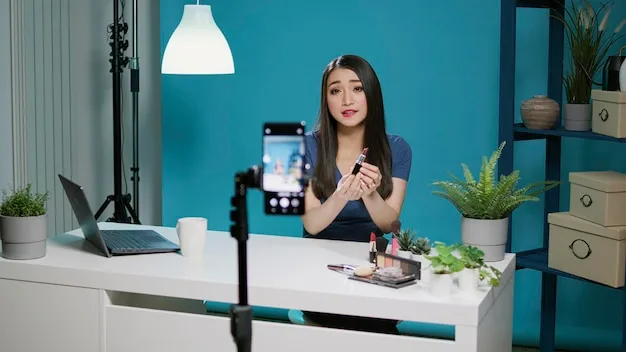
Let's imagine a small natural cosmetics brand with a budget of €5,000 for its next Instagram campaign. It can either pay a fashion macro-influencer for a single post, or split the sum among around twenty beauty micro-influencers for a series of authentic publications. Which option will generate the best return on investment?
This question is on the minds of many marketing managers. According to the American Marketing Association, influencers with a smaller audience are often more profitable, but the temptation of large reach remains. Yet recent data published by researchers and specialized platforms paints a clear trend in favor of micro-influencers for small brands. This article compares the two approaches, draws on the available studies, and offers a concrete decision-making framework to make the most of your budget.
Definitions: micro, macro, nano, mega influencers
Before comparing, we need to agree on the terms. Classifications vary slightly depending on the source, but the following orders of magnitude can be retained:
- Nano-influencers: fewer than 10,000 followers
- Micro-influencers: between 10,000 and 100,000 followers
- Macro-influencers: between 100,000 and 1 million followers
- Mega-influencers: more than one million followers
These thresholds are not set in stone, but they help frame the debate. A study published in ScienceDirect specifically examines micro, macro, and mega-influencers on Instagram and shows that the parasocial relationship—that one-sided emotional bond the public develops with an influencer—has a direct and positive effect on follower behavior. This finding holds for all audience sizes, but the implications differ.
What the data says: engagement matters more than follower count
The metric most often highlighted is follower count. Yet research converges: this figure does not predict a campaign's effectiveness. The Keller Center at Baylor University analyzed the relationship between follower count and engagement. Their finding: brands tend to favor macro-influencers in the belief that their broad reach generates better results, but smaller influencers, such as nano and micro-influencers, often achieve higher engagement rates.
The American Marketing Association agrees. In an analysis published in February 2024, it reports that influencers with smaller audiences offer a better return on investment. Why? Because they cost less and their followers are often more engaged and more receptive to recommendations. The AMA also notes that Instagram expanded its analytics tools in 2023, making it easier for brands and influencers to track performance.
The platform Trend.io, which connects brands and influencers, confirms: micro-influencers cost significantly less than macro-influencers, which makes it possible to run more collaborations for an equivalent budget. Moreover, their content is often perceived as more authentic, which translates into a better conversion rate.
A comprehensive review published in PMC and devoted to micro-influencer marketing emphasizes that micro-influencers have an advantage in terms of proximity and trust. They are generally perceived as peers rather than celebrities, which strengthens the credibility of their recommendations. This review also highlights the importance of the parasocial relationship in the consumer's purchase decision.
Why micro-influencers win for small brands
For a small brand, the advantages of micro-influencers fall into four areas: cost, authenticity, engagement, and flexibility.
1. A lower cost per engagement
Micro-influencers are cheaper to pay. Trend.io indicates that they charge significantly lower amounts, which makes it possible to multiply collaborations. Rather than betting on a single expensive post, a brand can launch a campaign with ten or twenty micro-influencers, thereby increasing the frequency of exposure and the diversity of audiences reached. This dispersion also reduces risk: if one partnership does not work, the others continue to carry the campaign.
2. Superior perceived authenticity
Micro-influencer followers often feel they are following a person "like them." According to the PMC review, this proximity fosters trust and identification. When this creator recommends a product, the recommendation is perceived as advice from a friend rather than advertising. This is a powerful lever for small brands seeking to build a loyal community. The Shelf agrees: micro-influencers produce more authentic and more varied content than major celebrities, because they must maintain a close relationship with their audience.
3. A higher engagement rate
The Keller Center at Baylor observed that nano and micro-influencers generate higher engagement rates than macro-influencers. Because their audience is smaller, they interact more with their followers, respond to comments and create a stronger bond. This interaction carries over to sponsored posts: likes, comments and shares are proportionally more numerous. For a small brand, this engagement often translates into more clicks to the website, product saves and conversions.
4. Creative and contractual flexibility
Micro-influencers are generally more open to co-creation and varied formats. The Shelf notes that they produce diverse content tailored to their community, which allows brands to test different angles without major financial risk. A small brand can thus experiment with stories, reels, tutorials or testimonials, and identify what resonates best with its target audience.
Note: The Shelf does, however, qualify this picture by indicating that micro-influencers often produce better results than nano-influencers. Minimum size matters: a creator with 30,000 active followers will have more impact than a profile with 2,000 followers and no real community. The choice should therefore fall on micro-influencers with an engaged audience that is consistent with the brand.
When a macro-influencer remains relevant
It would be wrong to conclude that macro-influencers are useless. Their strength lies in massive reach and instant awareness. For a small brand, this can be relevant in specific cases.
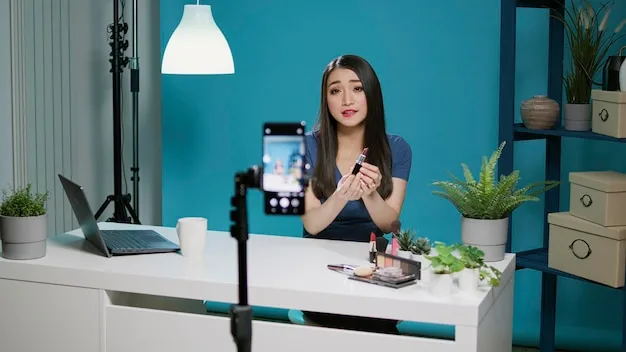
The study published in ScienceDirect highlights that the parasocial relationship with a macro or mega-influencer can also be positive. If the goal is to make a brand known on a large scale, launch a product in a competitive market or associate the brand image with a recognized personality, a macro-influencer can provide visibility impossible to achieve with a cluster of micro-influencers.
Research conducted by academics and published on ResearchGate compared the effects of posts by macro-celebrities and micro-influencers on brand engagement on Instagram. Result: macro-celebrity posts attracted more new followers to the brand's Instagram page, while micro-influencer posts generated stronger engagement on the posts themselves. In other words, the macro is used to acquire audience, the micro to convert it.
The Influee platform also recommends not opposing the two categories, but rather allocating the budget: most brands achieve better results by combining macro-influencers for awareness and micro-influencers for conversion. This hybrid approach can be considered even with a modest budget, provided spending is carefully balanced.
A four-step decision framework
To choose between micro and macro, small brands can follow a simple process.
Step 1: Set the main objective
Ask yourself what you expect from the campaign:
- Awareness and broad reach? → macro-influencer
- Engagement and conversion? → micro-influencers
- Both? → combination
Step 2: Evaluate the budget and cost per result
Calculate the total cost of each option and compare the cost per engagement or per click. Platforms like Trend.io point out that the cost of a micro-influencer is significantly lower, which allows more actions for the same budget. Don't forget to include indirect costs, such as the time spent managing collaborations.
Step 3: Analyze the candidates' audience and engagement
Don't rely on follower count. Examine the engagement rate, the quality of comments, and how well the audience aligns with your target. The Keller Center at Baylor insists on this point: audience size is a poor predictor of performance. Also check that the creator hasn't bought fake followers, which would distort the metrics.
Step 4: Measure and adjust
Set up tracking indicators: reach, engagement, clicks, sales. The PMC review emphasizes the importance of rigorous evaluation to optimize future campaigns. Use Instagram's native analytics tools or third-party platforms to track performance in real time.
A concrete example from the research
The ResearchGate study mentioned above offers an illuminating illustration. In their experiment, a macro-celebrity's posts led to a significant increase in followers of the brand's Instagram page, while a micro-influencer's posts generated more likes, comments, and interactions on the brand's content. For a small brand that wants to build an engaged community, the micro-influencer is therefore more effective in the short term; for a brand that needs immediate visibility, the macro is essential.
This case shows that the question is not "which one is better?" but "which one fits my goal and my stage of development?"
Comparison table
| Criterion | Micro-influencer | Macro-influencer |
|---|---|---|
| Cost per post | Low | High |
| Potential reach | Limited (10k - 100k) | Broad (100k - 1M+) |
| Engagement rate | High | Lower proportionally |
| Perceived authenticity | Strong | Variable |
| Main impact | Conversion, trust | Awareness, follower acquisition |
| Recommended use for a small brand | Regular campaigns, niche products | Launch, event, awareness |
Common mistakes to avoid
- Focusing only on follower count. The Keller Center at Baylor showed that this is a costly mistake. Prioritize engagement rate and community quality.
- Neglecting audience fit. A micro-influencer in your niche is worth more than a macro-influencer whose followers don't match your target.
- Betting the entire budget on a single post. Influee recommends spreading the budget to multiply touchpoints and reduce risk.
- Confusing awareness with conversion. A macro-influencer can bring followers, but that doesn't guarantee sales. Measure these two objectives separately.
- Ignoring micro-influencers on the grounds that they are "small." Data from the AMA and Trend.io demonstrate their superior profitability.

In the end
The question "micro or macro?" has no universal answer, but for a small brand on Instagram, the scales tip clearly in favor of micro-influencers. Their lower cost, authenticity, and ability to generate engagement make them allies of choice for building a community and converting. Macro-influencers retain a role for occasional spotlights, provided you have the necessary budget.
The key is to clearly define your objectives, experiment with varied formats, and rigorously measure results. Recent data converge: in most cases, spreading your budget across several micro-influencers offers a better return than a massive investment in a single big name. And if you're still hesitating, remember that the Influee platform recommends combining both approaches to maximize impact.
Further Reading
- ScienceDirect - Study on micro, macro and mega-influencers on Instagram and the parasocial relationship.
- Trend.io - Comparison of macro vs micro-influencers and tips for campaigns.
- Keller Center, Baylor University - Analysis of the trade-off between follower count and engagement.
- AMA - Research on the ROI of influencers with smaller audiences.
- The Shelf - Complete guide to micro-influencers.
- PMC / NIH - Comprehensive review of micro-influencer marketing.
- Influee - Definition of the macro-influencer and budget allocation tips.
- ResearchGate - Study on the effect of macro-celebrity and micro-influencer endorsements on brand engagement.