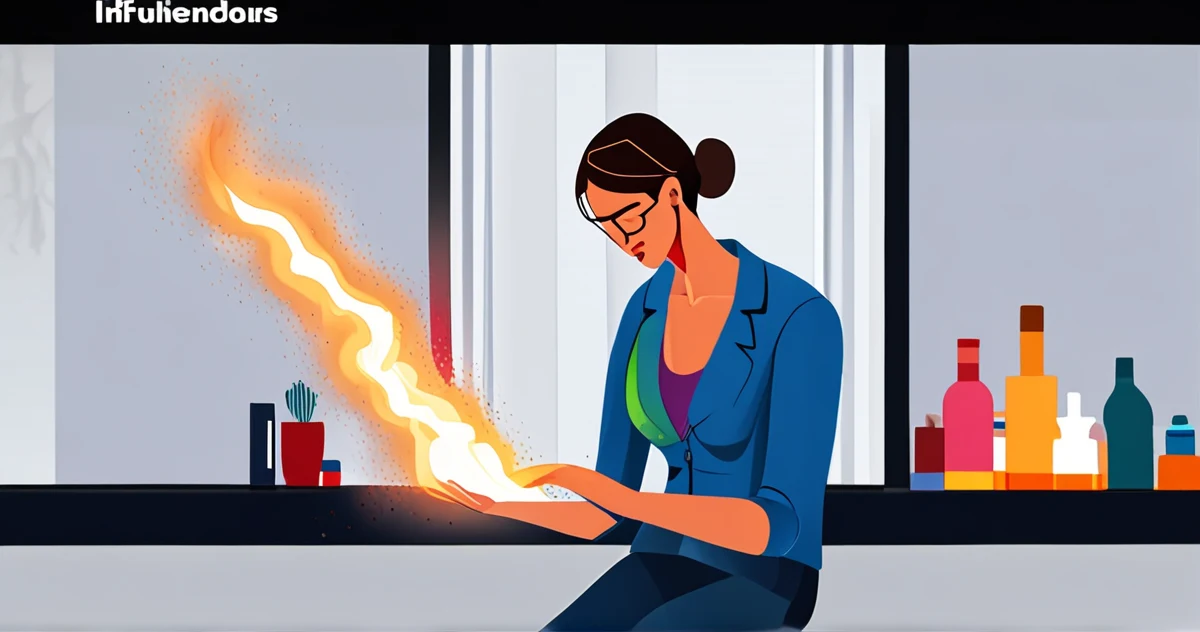
Influencers: Burnout and Mental Health Behind the Appearances

The hidden reality behind perfect posts: stress, constant pressure, and exhaustion
In the sparkling universe of social media, influencers often present us with an idealized life, filled with travel, free products, and apparent success. Yet, behind these perfect feeds lies a much less glamorous reality, marked by constant pressure, mental health issues, and professional burnout that affects many content creators.
This article explores the hidden side of influencer marketing, a phenomenon that concerns not only digital professionals but also everyone interested in the evolution of web-related jobs. We will break down the mechanisms that lead to burnout, analyze the impact on mental health, and examine emerging solutions to preserve creators' well-being.
The Pressure of Continuous Creation: An Infernal Pace
The influencer profession requires incessant content production. Unlike traditional jobs with defined schedules, creators must constantly feed their platforms or risk seeing their audience and income diminish. This permanent demand creates a state of chronic stress that is difficult to manage.
According to a BBC report, influencers are subjected to "constant pressure to feed" their platforms, which often pushes them to work excessively. This infernal pace leaves little room for recovery, turning what could be a passion into a source of exhaustion.
Platforms like YouTube exacerbate this phenomenon by rewarding regularity and publication frequency. As CNN notes, YouTube creator burnout is very real, pushing some to take extended breaks or even abandon their channels completely.
Aggravating Factors of Creative Pressure
- Changing algorithms: Constant algorithm modifications force creators to continually adapt
- Fierce competition: The increasing number of influencers creates intense competition for attention
- Brand expectations: Commercial partnerships impose specific deadlines and requirements
- Evolving trends: The need to stay relevant in a constantly changing digital landscape
The Profound Impact on Creators' Mental Health
The combination of constant pressure, public exposure, and financial uncertainty creates fertile ground for mental health problems. Influencers must not only manage their public image but also face negative comments, social comparison, and the fear of obsolescence.
Whitebeardstrategies emphasizes that behind the apparent glamorous lifestyle lie real mental health issues and financial instability. The need to maintain a perfect image at all times can lead to anxiety, depression, and other psychological disorders.
Health Indicators Among Content Creators
| Measure | Value | Source | Date |
|--------|--------|--------|------|
| Burnout prevalence | High | BBC News | 2025 |
| Mental health problems | Frequent | Whitebeardstrategies | 2025 |
| Performance pressure | Constant | Pcicenters | 2025 |
Concrete Manifestations of Mental Disorders
- Performance anxiety: Constant fear of not meeting expectations
- Seasonal depression: Linked to fluctuations in audience and engagement
- Sleep disorders: Due to irregular work schedules and stress
- Emotional exhaustion: Psychological resources constantly solicited
The Visibility Paradox: When Success Becomes Suffering
The more popular an influencer becomes, the more the pressure increases. As Pcicenters explains, the pressure to constantly perform and maintain notoriety can lead to burnout, thus exacerbating mental health problems. This cruel paradox creates a situation where apparent success becomes a source of suffering.
Academic research is beginning to document this phenomenon. According to a netnographic study from Scholarspace, media reports about toxic influencer culture and creator exhaustion are multiplying, although academic literature on the mental health challenges of influencers and creators remains limited.
The Vicious Cycle of Popularity
- Audience growth → More pressure to perform
- More partnerships → More obligations and deadlines
- Media exposure → More scrutiny and criticism
- Increased expectations → More stress and anxiety
Burnout Mechanisms Among Influencers

The 4 phases of creative burnout: from passion to total exhaustion
Burnout among influencers generally follows a recognizable pattern:
- Phase 1: Overinvestment - The creator dedicates all their time and energy to producing content
- Phase 2: Emotional exhaustion - Psychological resources deplete, leading to irritability and fatigue
- Phase 3: Depersonalization - The creator develops a cynical attitude toward their work and audience
- Phase 4: Decreased personal accomplishment - Feelings of incompetence and loss of meaning
As reported by several sources, including Reddit discussions, influencers are "harassed by the pressure to constantly create new content," which accelerates this exhaustion process.
Warning Signs of Creative Burnout
- Loss of motivation: Difficulty finding inspiration to create
- Quality decline: Less polished and less engaging content
- Irritability: Disproportionate reactions to criticism
- Social isolation: Avoiding professional and personal interactions
- Physical problems: Sleep disorders, headaches, digestive issues
Practical Solutions to Prevent Creator Burnout
Faced with these challenges, the creator community is beginning to develop strategies to preserve their mental health. Some adopt more realistic publication schedules, others diversify their income sources to reduce financial pressure, and many open up about their difficulties, thus breaking the taboo surrounding these issues.
Individual Prevention Strategies
Time and priority management
- Establish fixed work schedules with regular breaks
- Plan content in advance to reduce last-minute stress
- Learn to say no to collaborations that don't align with your values
Mental health preservation
- Practice daily meditation or mindfulness
- Regularly consult a psychologist specialized in creative professions
- Maintain a social life outside of social media
Income diversification
- Develop multiple income sources to reduce platform dependency
- Invest in training to acquire new skills
- Create derivative products or complementary services
Collective and Structural Initiatives
The growing awareness could lead to structural changes in the industry. Platforms could develop better comment moderation tools, implement psychological support systems, or rethink their algorithms to value quality over quantity.
Social platform actions
- Improvement of hate comment moderation tools
- Implementation of educational resources on mental health
- Creation of psychological support programs for creators
Partner brand roles
- Respect for reasonable deadlines in collaborations
- Financial support for struggling creators
- Promotion of a wellness culture in partnerships
Practical Guide: How to Recognize and Prevent Burnout
Personal Assessment: 10 Signs to Watch For
- Persistent fatigue despite sufficient sleep
- Loss of enthusiasm for projects that once excited you
- Difficulty concentrating and decreased productivity
- Increased irritability with your professional circle
- Recurrent sleep disorders
- Physical ailments without identified medical cause
- Permanent feeling of failure
- Progressive social isolation
- Excessive consumption of coffee, alcohol, or medication
- Constant negative thoughts about your work
Anti-Burnout Action Plan in 7 Steps
Step 1: Weekly self-assessment
Take 30 minutes each week to assess your mental and physical state. Note your energy, stress, and satisfaction levels.
Step 2: Define clear boundaries
Set precise work hours and respect them. Turn off notifications outside these time slots.
Step 3: Strategic planning
Create a monthly editorial calendar to avoid last-minute stress.
Step 4: Activity diversification
Develop hobbies and activities completely disconnected from social media.
Step 5: Support network
Identify 3-5 trusted people with whom to share your difficulties.
Step 6: Indicator monitoring
Regularly track your wellness metrics rather than just your performance.
Step 7: Continuous adaptation
Adjust your strategy based on your state and observed results.
Specific Risk Factors for Influencers
Unique Work Environment
Influencers operate in a distinct professional environment that presents specific psychosocial risks:
- Absence of traditional professional framework: No fixed office, vague schedules
- Uncertain monetization: Variable income depending on engagement and algorithms
- Permanent exposure: Private and professional life constantly intertwined
- Continuous evaluation: Real-time audience metrics and comments
Comparative Table of Psychosocial Risks
| Risk factor | Impact on mental health | Frequency among influencers |
|-------------------|-----------------------------|----------------------------------|
| Time pressure | Chronic stress, anxiety | Very high |
| Professional isolation | Depression, loneliness | High |
| Online harassment | Anxiety disorder, PTSD | Frequent |
| Financial instability | Generalized anxiety | Very high |
| Social comparison | Decreased self-esteem | Constant |
Revealing Testimonials and Case Studies
The human reality behind audience numbers and partnerships
Discussions on Reddit and other community platforms reveal the extent of the problem. Many creators share their personal experiences with burnout, describing 70-hour work weeks, anxiety related to engagement metrics, and the difficulty of maintaining a positive image in the face of personal challenges.
These testimonials highlight several important realities:
- The dissonance between projected image and lived reality
- Professional isolation despite a large audience
- The difficulty of establishing healthy boundaries in a job without fixed hours
- Constant financial pressure in a volatile sector
Case Study: Marie's Journey, Lifestyle Influencer
Marie, 28 years old, shares her experience: "After three years of working 60 hours per week, I had a severe burnout. I couldn't get up in the morning anymore, I had anxiety attacks in front of my phone. The worst part was that I had to keep posting smiling photos while I was collapsing inside."
Timeline of her exhaustion:
- Months 1-6: Passion and enthusiasm, rapid growth
- Months 7-18: Increased workload, first signs of insomnia
- Months 19-30: Progressive exhaustion, constant anxiety
- Months 31-36: Complete burnout, necessary work stoppage
Lessons learned:
- The importance of time boundaries
- The necessity of a support network
- The value of transparency with one's audience
Mental Health Expert Perspectives
Psychologists' Opinion
Mental health professionals observe specific patterns among content creators. According to experts, several factors make this profession particularly vulnerable:
- Lack of work/life separation: Social media being omnipresent
- Constant external validation: Dependence on likes and comments
- Blurred professional identity: Difficulty defining oneself beyond the influencer status
Therapists' Recommendations
For prevention:
- Establish daily disconnection rituals
- Develop multiple identities (not just "influencer")
- Practice self-compassion in the face of failures
For crisis management:
- Recognize early warning signs
- Consult before the situation becomes critical
- Accept taking breaks without guilt
Resilience Strategies for Content Creators
Developing a Sustainable Approach
To counter the harmful effects of the profession, influencers can adopt proven resilience strategies:
Protecting personal boundaries
- Create dedicated physical and temporal spaces for rest
- Establish clear rules regarding social media use
- Disable notifications during rest periods
Continuous personal development
- Invest in transferable skills beyond social media
- Maintain non-monetized creative activities
- Cultivate authentic offline social relationships
The Future of Influencer Marketing: Towards More Humanity
Influencer marketing, often perceived as a dream job, is gradually revealing its dark side. The constant pressure to create, combined with public exposure and financial instability, creates an environment conducive to burnout and mental health problems.
As the industry continues to evolve, a crucial question arises: how to build a digital ecosystem that values creators' well-being as much as the quality of the content they produce?
Positive Evolution Perspectives
Increased transparency: Influencers share more of their real difficulties
Preventive education: Training new creators on psychosocial risks
Support communities: Mutual aid groups among creators to share challenges
Ethical regulation: Legal frameworks protecting content creators' rights
Conclusion: Towards a More Human Industry
The recognition of mental health challenges in the influencer industry marks an important turning point. By breaking the silence about burnout and constant pressure, we pave the way for more sustainable practices that respect creators' well-being.
Solutions exist, but they require a collective approach: platforms, brands, the public, and creators must work together to build a healthier digital ecosystem. The future of influencer marketing depends on our ability to value the human behind the content.
Essential psychological support for struggling content creators

The importance of support communities among content creators
To Go Further
- BBC News - Article on the dark aspects of being a content creator
- Whitebeardstrategies - Analysis of the dark side of being an influencer
- Pcicenters - Study on the impact of fame on mental health
- CNN - Report on YouTube creator burnout
- Scholarspace Manoa Hawaii Edu - Netnographic study on influencer mental health
- Reddit - Community discussion on the reality of being an influencer
- Reddit - Testimonials on the challenges of creative careers
- Lemon8-app - Personal testimony on the difficulties of being an influencer
Keywords: influencer marketing, creator burnout, mental health, social media pressure, creative exhaustion, influencer well-being
Language: en