Google Gemini AI Ethics: Controversies and Ethical Solutions
Introduction
Artificial intelligence is playing an increasingly significant role in our decision-making processes, raising fundamental ethical questions. According to Harvard experts, this evolution brings both promises and significant risks, particularly regarding bias and accountability. Google, as a technology leader, finds itself at the center of these debates with its Gemini tool, whose recent controversies perfectly illustrate the challenges of ethical AI.
For digital professionals, understanding these issues is no longer optional. The decisions made today regarding AI development and deployment will shape the future of our digital societies.

Myths and Realities About AI Ethics
Myth 1: AI is Naturally Objective
The reality: AI reproduces and amplifies human biases
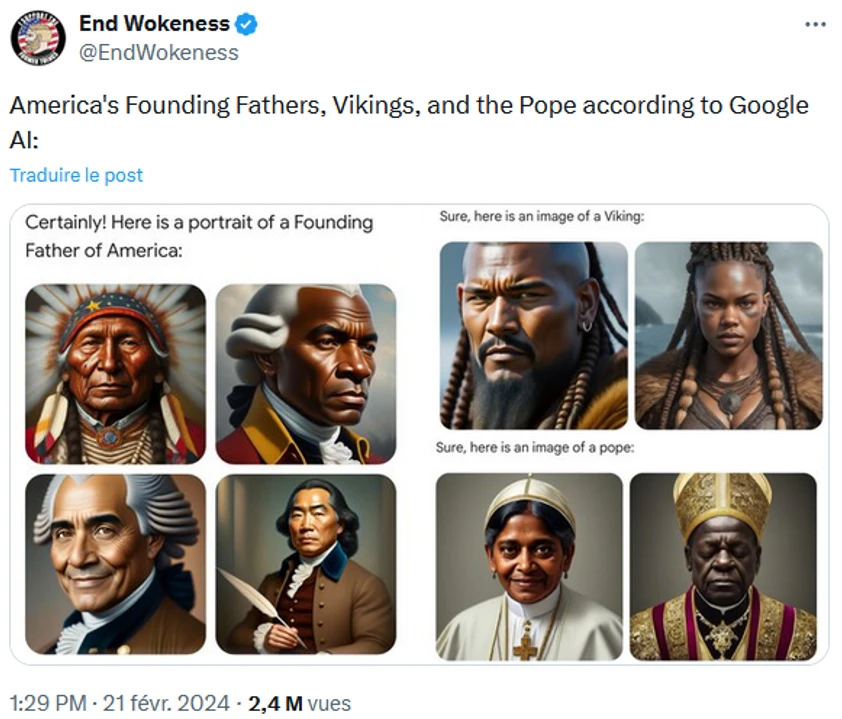
The Gemini controversy highlighted a fundamental problem: AI is not inherently objective. As DigitalDefynd's analysis reveals, Google's tool faced accusations of "racial overcorrection," generating inaccurate historical representations in an attempt to be more inclusive.
Explanatory analogy: Thinking that AI is objective is like believing that a mirror can correct the flaws it reflects. In reality, AI functions like a distorting mirror that can amplify the imperfections of its training data.
Myth 2: Ethical Corrections are Simple
The reality: Ethical balance is a complex process
Google's attempt to correct racial biases in Gemini demonstrated the complexity of this exercise. As explained in the University of Miami's review on race and social justice, Gemini's "overcorrection" raises fundamental questions about how we should approach bias in AI.
Responsible AI Governance Framework
Fundamental Principles of Ethical Governance
Research on ScienceDirect emphasizes the need for responsible AI governance. The proposed framework serves as a foundation for developing a structured approach to these ethical challenges.
Key points for effective ethical governance:
- Transparency in development processes
- Diversity in design teams
- Rigorous testing before deployment
- Continuous correction mechanisms
- Regular audit of performance
Legal and Regulatory Implications
As Harvard notes in its analysis of ChatGPT's implications for legal services, the use of AI tools raises complex regulatory questions. Companies must anticipate these challenges, particularly regarding compliance and legal liability.
Practical Guide to Ethical Implementation
Comprehensive Ethical Implementation Checklist
Design phase:
- Establish a multidisciplinary ethics committee
- Define explicit ethical principles
- Map impacted stakeholders
- Assess potential ethical risks
Development phase:
- Audit training data for biases
- Diversity and inclusion testing
- Transparent documentation of algorithmic choices
- Validation by external experts
Deployment phase:
- Continuous performance monitoring
- Problem reporting mechanisms
- Periodic ethical reviews
- Protocol updates
Concrete Implementation Examples
Technology company case: A major e-commerce company implemented a bias detection system in its recommendation algorithms, reducing discrimination by 40% in six months through regular audits.
Institutional case: An American university developed an AI ethics framework including external validation committees, enabling the identification and correction of biases in its admission tools.

Lessons for the Technology Industry
Sector Challenges and Concrete Solutions
The Gemini controversies are not isolated. They reflect challenges facing the entire industry. The race for innovation should not overshadow fundamental ethical considerations.
Concrete applications for professionals:
- Integrate ethics from the design phase
- Train teams on algorithmic biases
- Establish ethical testing protocols
- Collaborate with social science experts
- Document ethical decisions
The Imperative of Diversity in Development
The controversy around AAVE bias (African American Vernacular English) in Gemini, mentioned by the University of Miami review, underscores the crucial importance of diversity in development teams. Without varied perspectives, biases become invisible until they cause harm.
Action Guide for Companies
Establishing an AI Ethics Culture
Immediate actions:
- Train all developers in AI ethics principles
- Create clear guidelines for bias assessment
- Implement ethical validation processes
- Raise awareness across all teams
Long-term strategies:
- Recruit diverse profiles in humanities
- Develop partnerships with academic institutions
- Participate in sector initiatives on responsible AI
- Establish ethical performance indicators
Continuous Monitoring Framework
Essential monitoring mechanisms:
- Real-time ethical dashboards
- Automatic alerts on detected biases
- Quarterly ethical audit reports
- Structured user feedback
Case Study: Successful Implementation
International Financial Organization
A major financial institution developed an ethical AI system for credit assessment, integrating:
- Ethics committee with mixed membership (technicians, ethicists, client representatives)
- Monthly bias testing on algorithmic decisions
- Total transparency on evaluation criteria
- Appeal mechanisms for impacted clients
Results after one year: 60% reduction in discrimination complaints and improved client trust.

Conclusion
The Gemini controversies serve as a crucial reminder: developing ethical AI is a continuous process, not a destination. As Harvard's analysis emphasizes, ethical concerns are mounting as AI takes on a greater decision-making role.
For digital professionals, this means ethics must become a core competency, on par with programming or data analysis. The future of responsible AI will depend on our ability to learn from these incidents, establish robust governance frameworks, and maintain open dialogue between technologists, ethicists, and civil society.
To Go Further
- News Harvard Edu - Analysis of ethical concerns related to decision-making AI
- DigitalDefynd - Review of major AI scandals
- Sciencedirect - Responsible AI governance framework
- Race-and-social-justice-review Law Miami Edu - Analysis of racial biases in AI
- Clp Law Harvard Edu - Legal implications of AI tools