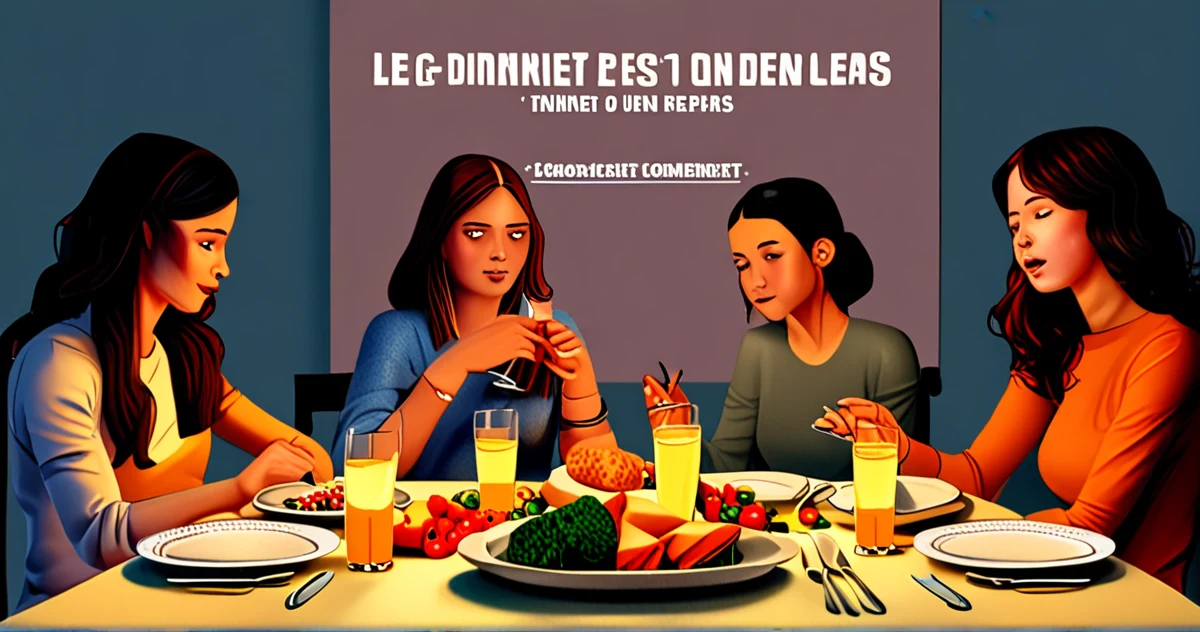
Imagine a meal tray composed of a pickle, a few crackers, and a handful of raisins. For many, it's an improvised and minimalist meal. For a part of Generation Z, it's a "Girl Dinner" – a deliberate act of reclaiming the everyday, which has gone viral on TikTok. This phenomenon, far from being isolated, fits into a constellation of practices – from "Hot Girl Walks" to "soft girl" aesthetics – that, under the guise of digital lightness, form the outlines of a silent cultural resistance. While debates about the return of traditional femininity intensify, these micro-trends reveal how a generation uses the absurd, the hyper-feminine, and the mundane to negotiate its identity in the face of economic, social, and digital pressures.
This article deciphers how these memetic "aesthetics," far from being mere passing fads, constitute a coded language and a space of agency. We will explore their function as counter-narratives against injunctions to productivity and normative femininity, and analyze why their apparent superficiality is precisely their subversive strength.
When the Absurdity of 'Girl Dinner' Becomes an Anti-Productivity Manifesto
The "Girl Dinner" is often mocked for its lack of nutritional structure. Yet, its essence lies in its refusal. Refusal to cook a "real" meal, refusal to perform domesticity, refusal even of the logic of a traditional meal. It's a celebration of "good enough," a rebellion against the ideal of the woman who "does everything well." In a context where burnout is endemic and expectations for young women remain high – between career, appearance, and social life – assembling a tray of leftovers becomes an act of self-preservation. It's less about what is eaten than about the permission taken: the permission to be messy, lazy by traditional standards, and to prioritize an immediate need (feeding oneself without effort) over a social performance (preparing a presentable meal). This trend, like others identified in the analysis of "girlhood" aesthetics, transforms daily acts into identity statements.
The 'Hot Girl Walk' and the Reclamation of Public Space
In contrast to the domestic confinement of "Girl Dinner," the "Hot Girl Walk" proposes a reclamation of outdoor space. It's not simply about walking, but about doing so with a specific intention: listening to a motivating podcast, practicing gratitude, and above all, feeling "hot" – a term that here transcends the physical to encompass confidence and self-affirmation. This practice responds directly to the frustration expressed by some regarding the rise of traditional femininity aesthetics, often perceived as passive or centered on the male gaze. The "Hot Girl Walk" is active, inward-focused, and takes place in public space. It converts a simple activity into a ritual of personal empowerment, creating a bubble of control and positivity in an environment that can be perceived as hostile or objectifying. It's a way of saying: this space also belongs to me, and I move through it on my own terms.
Hyper-Femininity as Armor and Secret Language
An apparent paradox of this resistance is its recourse to hyper-feminine aesthetics: pink, lace, corsets, silks, as noted in an online discussion concerning trends among teenage girls. Far from being a simple step backward, this aesthetic is often diverted and exaggerated to become a performance. Wearing a corset over ripped jeans, adopting "coquette core" in an ostentatious manner, is playing with the codes of traditional femininity without necessarily embracing its constraints. It becomes a shared visual language, a way of signaling belonging to a community that understands irony and reappropriation. As an academic analysis on the subject explains, these "memetic aesthetics of hyper-femininity" matter precisely because they allow for negotiating and performing gender identity in a complex and conscious manner. It's a chosen armor, sometimes ironic, which can serve to disarm expectations or subvert them from within.
What This Resistance Does NOT Do (and Why It's Crucial)
To understand the scope of this movement, it's essential to clarify what it is not. First, it is not an organized political movement with manifestos and leaders. Its strength lies in its decentralization and organic character, spread by millions of micro-contents. Second, it is not a uniform rejection of all tradition or femininity. It's rather a selective bricolage: taking an element (the corset as clothing), dissociating it from its constraining historical context (the corset as an instrument of bodily control), and reinvesting it with new meaning (the corset as an aesthetic choice of self-expression). Third, it is not a frontal and conflictual resistance. It is oblique, based on diversion, humor, and the creation of alternative spaces (like the "Girl Dinner" tray or the "Hot Girl Walk" route). Finally, it does not claim to offer systemic solutions to structural inequalities. Instead, it offers tactics for daily survival and self-affirmation in the immediate.
The Future of Memetic Resistance: Between Co-optation and Evolution
The major risk for these trends is commercial co-optation. "Girl Dinner" could be sold as a box, the "Hot Girl Walk" could become a sportswear brand, and the "coquette" aesthetic could be stripped of its meaning by fast fashion. The challenge for Gen Z will be to maintain the agility and irony that make these practices subversive, in the face of a marketing machine eager to capitalize on everything that goes viral. The other path, more likely, is constant evolution. These "aesthetics" are by nature fluid. Today's "Girl Dinner" could take another form tomorrow, responding to new pressures. Resistance will likely continue to nestle in the interstices of daily life, in shared personal rituals, and in the playful exaggeration of cultural codes. Its power lies in its ability to transform banality into a statement and routine into a ritual of the self.
Ultimately, Gen Z's viral trends, from "Girl Dinner" to "Hot Girl Walks," are much more than ephemeral TikTok fads. They constitute a repertoire of cultural tactics for navigating a complex world. By elevating the absurd, the personal, and the hyper-feminine into principles of action, this generation is inventing a form of resistance adapted to the digital age: diffuse, ironic, centered on the micro and the everyday. It does not seek to overturn the table, but to compose its own meal tray with what it finds there, thus affirming a fundamental right: that of defining for itself the terms of its existence, one pickle and one walk at a time. The question for observers is not whether these trends will last, but whether we are capable of decoding the manifesto hidden behind the filter.
To Go Further
- Upworthy - Article illustrating intergenerational exchanges and Gen Z's unapologetic tone.
- Reddit / TwoXChromosomes - Online discussion about the rise of traditional femininity aesthetics and the reactions they provoke.
- UWspace UWaterloo - Academic analysis on "memetic aesthetics of hyper-femininity" and their importance in the construction of "girlhood."
- Advertising Week NY 2026 - Site referencing Gen-Z and Millennial consumer expectations, useful for marketing context.
- Juan Espi Photographer on Medium - Article using the term "lifestyle" in a context of personal research, evoking the quest for lifestyles.
Note: The other sources provided (News Ufl Edu, CCBCmd Edu, Librarything) did not directly address the subject of Gen Z trends and cultural resistance, and were therefore not cited in the body of the article.