Last updated: 2026-11-06T08:30:04.755Z UTC
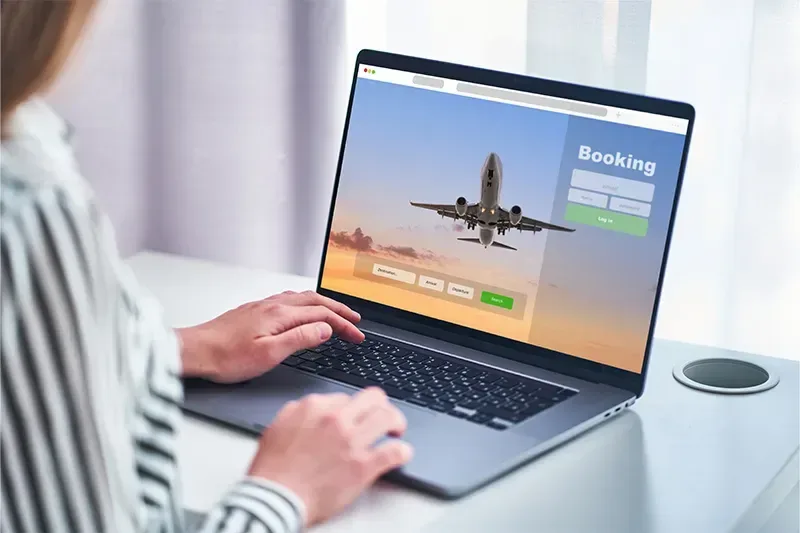
It is 11:47 p.m., and Claire is refreshing a flight comparison page for the third time in ten minutes. The Paris–New York flight she has been monitoring since morning has just gone from €742 to €896. No one else in the room has touched a screen. Yet the price has moved.
Claire is not the victim of a bug. She is experiencing dynamic pricing, the mechanism that adjusts prices in real time according to demand, supply, time of day, the device used, browsing history and sometimes more intimate personal data. Behind the promise of "real-time prices" lie invisible costs: hours wasted chasing the right deal, decision-making stress, a sense of unfairness and a loss of trust in platforms.
This article dissects the workings of this opaque pricing in travel apps, draws on recent surveys measuring consumer sentiment and identifies the warning signs to watch for so as not to become an algorithm's adjustment variable.
The great price divide: a user experience under strain
Claire's scenario is anything but anecdotal. Flight, hotel, train and ride-hailing booking apps adjust their prices continuously. Jettly, an air travel specialist, describes this unpredictability as "turbulence": plane tickets can change price at the very moment you are about to click "book." The same flight can display several prices on the same day.
This variability imposes on travelers a permanent lookout duty: checking multiple comparison sites, clearing cookies, switching devices, betting on a drop or a rise. According to a study published on ResearchGate, the perception of price fairness plays a decisive role in the satisfaction of users of apps like Uber. When travelers poorly understand why a trip costs more than it did an hour earlier, trust erodes.
ABC10 reports that Carnival Cruise Line recently extended dynamic pricing to drink packages and onboard Wi-Fi. The price of these options varies depending on the cruise and other unspecified parameters. Cruise passengers are discovering that the "unlimited" package has no fixed price, which complicates budgeting.
The hidden side of the algorithm: when your data sets the price
Forbes investigated "surveillance pricing": pricing based on monitoring behavior and personal data. Airlines and other players can use information such as location, purchase history, device type, loyalty status or browsing behavior to offer different prices to different profiles.
The principle is simple: a hurried traveler checking a flight on a high-end smartphone during business hours may be offered a higher price than that shown to an internet user browsing in private mode from a desktop computer. The price no longer reflects only supply and demand, but each user's estimated willingness to pay.
This personalization raises a fundamental question: where does commercial optimization end and discrimination begin? The data used is rarely made explicit. Travelers do not know whether the extra cost is linked to high overall demand or to their own digital profile. This information asymmetry generates a sense of unfairness, even if the practice is legal in many countries.
What travelers really think: perceived fairness in figures
A survey conducted by YouGov explores sentiment on the application of dynamic pricing to hotels, flights and trains.
| Mode of transport | Share of consumers judging dynamic pricing "fair" |
|-------------------|----------------------------------------------------------------------|
| Trains | 41% |
| Flights | 39% |
| Hotels | (not specified in the source) |
Data from the YouGov survey cited in reference; the percentages indicate the proportion of respondents considering dynamic pricing fair for each mode. The "hotels" cell is not specified in the available summary.
Even for trains and flights, fewer than half of respondents consider dynamic pricing fair. This means that a relative or absolute majority perceives it as unfair or unacceptable. This legitimacy deficit is a strong signal for platforms.
The study published on ResearchGate points in the same direction. By analyzing Uber usage, the researchers show that the perception of price fairness directly influences satisfaction and loyalty. When the price of a ride increases suddenly without a clear explanation (for example during high demand), users tend to attribute this increase to a manipulative intention by the platform, even if it is objectively due to a demand spike. Transparency about the reasons for surge pricing appears to be an essential lever for maintaining trust.
Hidden costs are not only monetary
When we talk about dynamic pricing, we first think of the immediate extra cost. But indirect costs, less visible, sometimes weigh more heavily.
The time spent hunting. To avoid paying too much, many travelers multiply searches, compare browsers, activate alerts. This time, added up across a household, represents hours every year.
The mental decision-making burden. The permanent uncertainty about the "right moment" to buy transforms the simple act of booking into an anxiety-inducing dilemma. Should you wait for a drop? Will the price go up again? Have I been "profiled"? This rumination reduces the pleasure of anticipating a trip and can lead to hasty or regretted decisions.
The erosion of trust. A platform whose prices vary without a credible explanation loses its legitimacy. The traveler ends up suspecting systematic manipulation, even when the fluctuation is legitimate. This distrust translates into lower loyalty, workarounds (VPN, private browsing, multiple accounts) and negative word of mouth.
The opportunity cost of bad decisions. A traveler who buys too early for fear of an increase may miss a later promotion. Conversely, one who waits too long may see the price double. The absence of stable reference points leads to suboptimal trade-offs.
| Type of hidden cost | Concrete manifestation | Impact on the traveler |
|--------------------|------------------------|------------------------|
| Wasted time | Multiple search sessions, comparing devices, alerts | Unpaid hours, frustration |
| Mental burden | Doubts, continuous price monitoring, fear of missing an offer | Stress, impulsive decisions, regret |
| Loss of trust | Feeling manipulated, insufficient transparency | Disloyalty, diversion to other channels |
| Bad decision | Buying too early or too late, biased comparison | Financial extra cost or missed opportunity |
Warning signs: when the dynamics become suspicious
Not all price adjustments are illegitimate. An increase linked to a real demand spike can be justified. But certain signals should alert the traveler.
1. The price changes when the page refreshes. If the fare for a flight or hotel increases after a few minutes without the inventory having visibly changed, the algorithm may be reacting to your search behavior.
2. Price gaps between devices or browsers. Comparing the same itinerary on a smartphone and a computer, in private browsing and in a logged-in session, can reveal differences unexplained by overall demand.
3. The absence of an explanation for the price calculation. When a rideshare app applies a multiplier (for example ×1.8) but does not specify the cause (high demand, number of available drivers, weather conditions), the traveler cannot assess the legitimacy of the surcharge.
4. Price variations on ancillary products. Carnival Cruise Line's announcement, reported by ABC10, about dynamic pricing for beverage packages and Wi-Fi shows that this mechanism is extending to services that were traditionally fixed.
5. The use of your status or your data. Forbes describes how companies can use your loyalty status, your location or your purchase history to modulate prices. If the displayed fare is higher after logging into your customer account than without logging in, the platform may be valuing your profile asymmetrically.
Common mistakes when facing price fluctuations
Mistake #1: Believing that clearing your cookies is enough. Many people think that deleting cookies or switching to private browsing guarantees a neutral price. But algorithms cross-reference multiple signals (IP address, browser fingerprint, session behavior). Private mode does not hide everything.
Example: Julien systematically clears his cookies before searching for a hotel. Yet he notices rates identical to those in his logged-in session. In reality, the platform recognizes him by his fixed IP address.
Mistake #2: Waiting for a systematic drop. The myth of "last minute is cheaper" persists, especially for flights. While some last-minute promotions do exist, they are rare and unpredictable.
Example: Sarah monitors a Paris–Lisbon ticket for three weeks, convinced that the fare will drop. The price goes from €180 to €340 in ten days. She ends up paying more than at the first display.
Mistake #3: Relying on a single comparison site. Comparison sites do not all list the same channels and may apply variable commissions. A "lowest" price on one site can be beaten on another.
Example: Karim books a flight through a well-known comparison site, believing he has the best fare. Checking directly on the airline's website, he discovers the same ticket 12% cheaper, because the comparison site was adding service fees.
Mistake #4: Ignoring the effect of the device. Prices can vary depending on the terminal. Users of high-end smartphones are sometimes considered more creditworthy.
Example: Lucie searches for a hotel on her recent iPhone: €215 per night. On her partner's old laptop, the same hotel displays at €198.
Toward more transparent pricing?
Faced with these abuses, voices are being raised to demand more transparency. The question is not to ban dynamic pricing as such – it optimizes resource allocation and can benefit flexible travelers – but to guarantee understandable rules.
The study published on ResearchGate suggests that the perception of fairness is strongly linked to transparency. When Uber explains that a surcharged fare is being applied due to high demand, users are more inclined to accept it. Conversely, an unexplained increase is immediately interpreted as opportunistic.
YouGov shows that fewer than half of travelers find dynamic pricing fair for trains and planes. This skepticism is a warning to platforms: without an effort at education, they risk pushing consumers toward more legible alternatives.
Forbes highlights the problem of "surveillance pricing": the use of personal data to set individualized prices. As long as travelers do not know what data is collected and how it influences the price, the feeling of injustice will predominate. Regulation requiring disclosure of pricing criteria could restore trust.
The example of Carnival Cruise Line shows that dynamic pricing is extending to services that were once stable. If the trend continues, the total cost of a trip will become increasingly difficult to anticipate.
What can the traveler do right now?
Compare across multiple devices and browsers. Discrepancies sometimes exist. Using a computer, a smartphone, a tablet, in private browsing and in a logged-in session, gives a more complete picture.
Use price alerts. Tracking services (often built into comparison sites) send notifications when the price drops, which avoids compulsive checking.
Book directly with airlines or hotels. Checking the official website can reveal more advantageous conditions than third-party platforms.
Set a price ceiling before starting the search. Determining the maximum acceptable amount in advance allows for a rational decision.
Pay attention to the explanations provided. When a rideshare app displays a multiplier, read the justification. If the explanation is vague or absent, consider the alternatives.
Do not overvalue your time. Comparing for hours to save a few euros is not always rational. Book and move on.
Conclusion: the price you don't see
Dynamic pricing is neither an absolute monster nor a panacea. It optimizes the match between supply and demand and can allow flexible travelers to obtain good rates. But it comes with very real hidden costs: lost time, decision-making stress, erosion of trust and a feeling of injustice.
The surveys conducted by YouGov and the work published on ResearchGate converge: the perception of fairness is low when the rules are not transparent. The "surveillance pricing" described by Forbes adds a layer of opacity. And the extension of these practices to services such as cruise drink packages, reported by ABC10, shows that the phenomenon is growing.
For the traveler, the best defense remains knowledge: recognizing warning signs, avoiding common mistakes and adopting reasoned comparison strategies. But responsibility cannot rest solely on the consumer. Travel platforms will have to choose between short-term optimization and the lasting trust of their users. Because a traveler who feels manipulated does not come back.
Further reading
- Forbes – The Hidden Costs Of Surveillance Pricing And How To Avoid Them
- ResearchGate – Dynamic pricing and price fairness perceptions: a study of the use of the Uber app in travels
- YouGov – Do travelers like dynamic pricing? Exploring consumer sentiment on hotel, flight, train costs
- Jettly – Dynamic Pricing in Air Travel: What Passengers Really Think
- ABC10 – Travel News from ABC10 in Sacramento