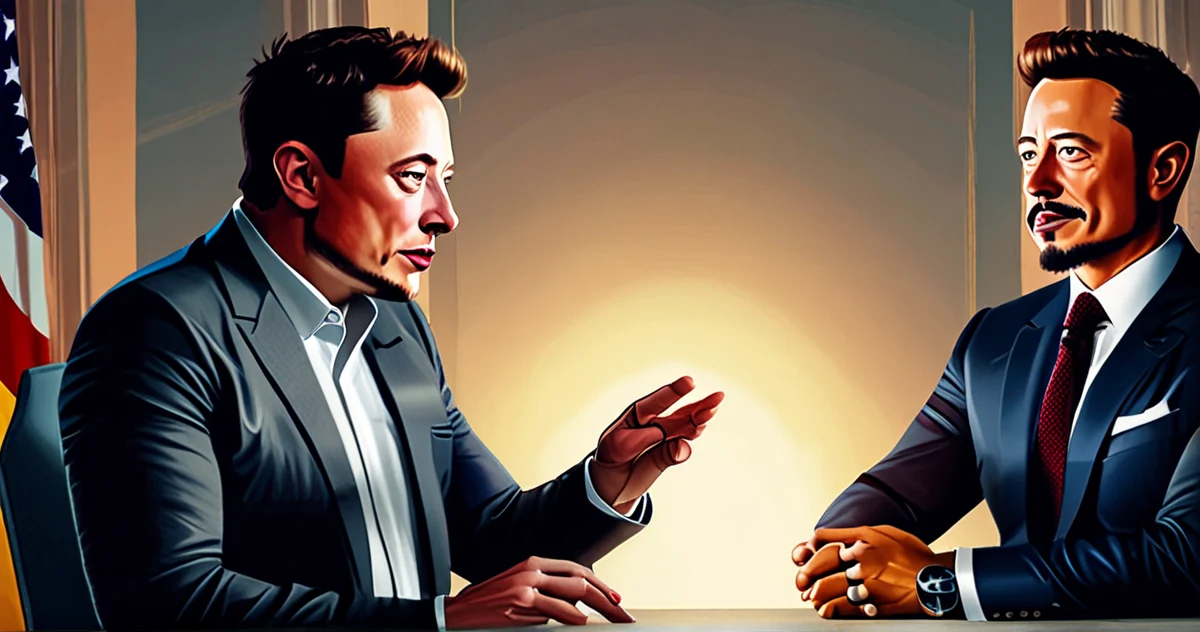
In 2025, the film Iron Man featured Tony Stark, a billionaire genius and playboy who saves the world with his inventions. That same year, Elon Musk, co-founder of PayPal and CEO of SpaceX, was on the brink of bankruptcy. Yet, a decade later, the two figures are inextricably linked in the collective imagination. This fusion is not a coincidence, but the result of a deliberate media construction that reveals how the exceptional figures of technological capitalism write their own legend, often drawing inspiration from fiction to shape reality.
For digital professionals, understanding this mechanism is crucial. It goes beyond simple corporate storytelling to touch on how innovation is funded, perceived, and mythologized. The image of the "solitary genius" or the "capitalist superhero" is not neutral: it influences investments, public policies, and societal expectations towards technology. This article analyzes the construction of this image through the lens of the Musk-Stark duo, drawing on verified sources, to dissect communication strategies and their real implications.
Why Did Tony Stark Become Elon Musk's Model?
The comparison between Elon Musk and Tony Stark is not a simple media coincidence. According to an article from La Vie des idées, Elon Musk directly inspired the character of Tony Stark in Marvel comics, creating an organic link between fiction and reality. This association has been carefully maintained because it offers a powerful, pre-existing narrative to the public. Tony Stark embodies the archetype of the billionaire genius who uses his fortune and intellect not for mere profit, but for heroic causes – saving the world. By aligning himself with this image, Musk benefited from instant goodwill and credibility, escaping the criticisms often directed at mere business magnates.
As highlighted in an article from Current Affairs, this image of the "billionaire superhero" serves as a rhetorical shield. It transforms commercial ambitions into epic quests and failures into mere narrative obstacles on the path to greatness. For observers, the danger lies in the fact that this mythology can mask less glorious realities, such as difficult working conditions or hyper-dependence on public funding, a point raised by economist Mariana Mazzucato and cited in La Vie des idées.
How Is the Public Image Cracking?
The narrative of the benevolent genius is not immutable. A discussion on Reddit points to a notable shift in perception: Elon Musk has gone from the "adored face of the Internet" to a much more controversial figure. The reasons for this erosion are multiple and offer an essential counterpoint to the Stark legend.
- The gap between promise and reality: The Tony Stark image was based on a promise of rapid and spectacular technological progress for the common good. However, as noted by a Reddit user, certain episodes – such as the difficult acquisition of Twitter (renamed X) where Musk had to "pay double" for a platform that "doesn't really make money" – revealed strategic limits and fueled a discourse portraying him as less brilliant than he appears.
- Excessive personalization of the narrative: By placing himself at the center of all narratives (from electric cars to the colonization of Mars), Musk created a single point of failure. Every controversial statement or contested management decision directly affects the perception of all his companies, unlike a more resilient collective or institutional image.
- The end of media immunity: Initially carried by a tech-savvy press fascinated by his projects, Musk now faces more critical scrutiny from mainstream media and on social networks, where his own behavior fuels controversy.
This cracking shows that the "capitalist superhero" is a role difficult to sustain indefinitely in the face of the complexity and compromises of the real world.
Beyond the Solitary Genius: The Narrative of Exception and Persecution
Faced with criticism, the communication strategy of Elon Musk and other figures like Peter Thiel has evolved. A university analysis published on Tandfonline identifies a recurring dual narrative: "Founder as Victim, Founder as God." This framework is particularly effective in consolidating a support base.
- The Founder-God: This is the figure of the exception, the visionary whose genius surpasses the understanding of ordinary mortals, regulators, or competitors. It is the continuation of the Stark myth.
- The Founder-Victim: This is the figure persecuted by dark forces – bureaucracy, traditional media, "woke mobs" – jealous of his success or incapable of understanding his vision. This narrative transforms legitimate criticisms into evidence of a conspiracy, reinforcing the loyalty of supporters.
As summarized in the Tandfonline article, they present themselves as "figures of exception." This binary narrative allows for defusing failures (it's the fault of the persecutors) and magnifying successes (it's proof of exceptional genius). It is a much more sophisticated and politicized communication strategy than simply aligning with a comic book superhero.
What Are the Real Consequences of These Narratives?
The construction of these images is not a simple media game. It has concrete impacts on the economy, society, and innovation culture.
- Concentration of power and resources: The myth of the solitary genius justifies an extreme concentration of wealth and decision-making power in the hands of a single person, to the detriment of more collaborative or democratic models.
- Distortion of the innovation process: It invisibilizes the crucial role of the state, public research, and vast teams of engineers, as reminded by the reference to Mazzucato. Innovation is presented as the fruit of an exceptional individual, not a complex ecosystem.
- Influence on policy and regulation: A figure perceived as a "real-life Tony Stark" can exert disproportionate influence on policymakers, passing off private interests as the progress of humanity, and potentially weakening regulatory frameworks.
- Toxic cultural model: This narrative promotes a culture of extreme work and charismatic, authoritarian leadership, often at the expense of employee well-being and sustainable management.
The example of Austin, transformed from a "laid-back and weird" city into a "turbocharged tech megalopolis" by the influx of Silicon Valley exiles, cited by The New Yorker, is a tangible illustration of the geographical and social impact of these dynamics driven by such narratives and the capital they attract.
Conclusion: Beyond the Myth, What Place for Collective Innovation?
The parallel between Elon Musk and Tony Stark is much more than a cultural anecdote. It is the revealer of a powerful narrative construction mechanism where fiction fuels the perception of an economic reality, and where this perception, in turn, shapes real policies and investments. Musk's trajectory – from the icon inspired by Stark to the divisive figure sheltering behind narratives of victimhood and persecuted genius – shows both the strength and the limits of this strategy.
For tech professionals, the lesson is twofold. On one hand, it is necessary to decipher these narratives with lucidity to avoid confusing marketing mythology with the economic and social realities of innovations. On the other hand, it is urgent to promote and value counter-narratives: those of collective innovation, public research, open cooperation, and models that redistribute credit and power. The question is not whether we need visionaries, but whether we can afford to bet everything on the myth of the solitary superhero in a world whose challenges require systemic and shared solutions. The future of innovation may well depend on our ability to tell a better story, a story that includes us all.
To Go Further
- La Vie des idées - Elon Musk: the High-Stakes Gambler of Technological Capitalism - Analysis of Musk's journey and his image as a high-stakes gambler.
- Tandfonline - 'Founder as Victim, Founder as God': Peter Thiel, Elon Musk and the Myths of Tech Leadership - Academic study on the narratives of exception and persecution in the construction of public image.
- Current Affairs - Surely We Can Do Better Than Elon Musk - Critical article on the figure of Musk and the myth of the billionaire superhero.
- Reddit - How did Elon Musk go from the beloved face of the internet to the ... - Community discussion on the evolution of public perception of Musk.
- Reddit - CMV: Elon Musk is not nearly as smart as he or many in the public ... - Online debate questioning the narrative of exceptional genius.
- The New Yorker - The Astonishing Transformation of Austin - Report on the concrete impact of the tech industry and its culture on a city.
- Creativeprocess - Art as Connection - Reflection on the power of galleries and media to shape public perception, a principle applicable to tech leaders' communication.