Introduction
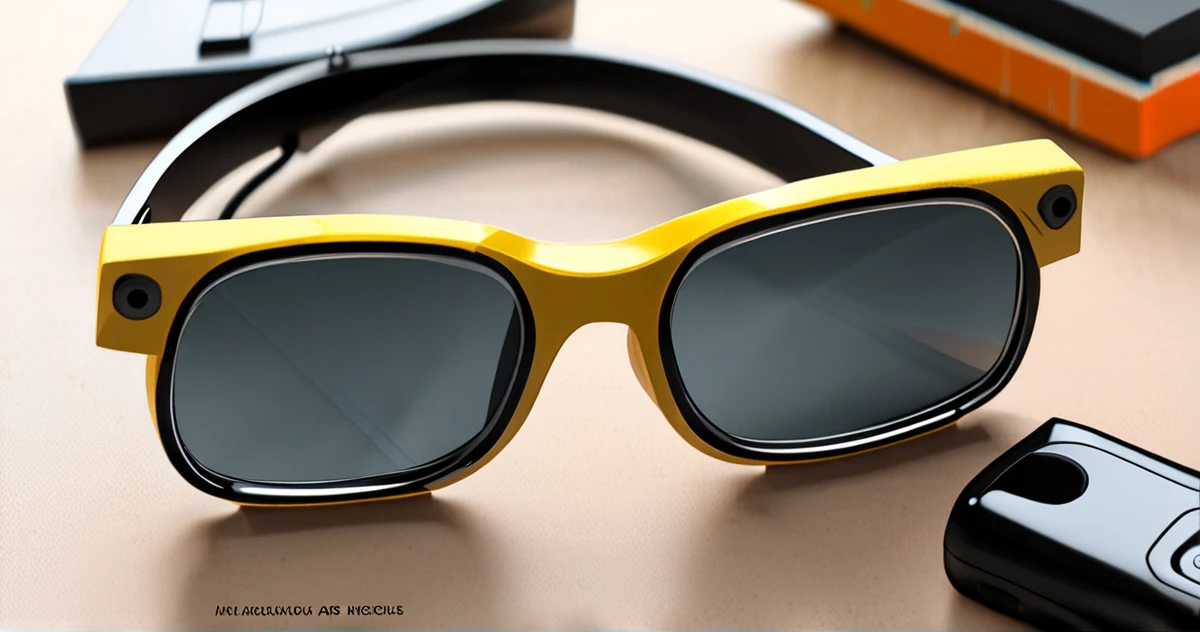
Augmented reality (AR) is no longer reserved for tech giants. With the rapid evolution of electronic components, it's now possible to build your own DIY AR glasses. This innovative electronics project allows you to fully customize your device while mastering the emerging technologies that will transform our daily lives.
According to trends identified by Vivint, connected technologies and artificial intelligence are at the heart of 2025 innovations, making this type of project more accessible than ever. In this article, we guide you step by step to assemble your AR glasses using cutting-edge components, with practical advice and insights on challenges to anticipate.
> Key takeaways:
> - Use modular components to facilitate assembly
> - Prioritize energy optimization for extended battery life
> - Test each step to avoid costly errors
> - Customize the design for comfortable use
Why Build DIY AR Glasses in 2025?
Creative Freedom and Personalization
Building your own DIY AR glasses offers unparalleled creative freedom. Unlike commercial products, you can adapt every aspect – from design to functionality – to your specific needs. For example, Labprojectsbd highlights that DIY electronics projects in 2025 integrate cutting-edge components to push the boundaries of personal innovation.
Analogy: Designing DIY AR glasses is like assembling a high-tech puzzle where each piece – displays, sensors, processors – must fit perfectly to create an immersive experience.
Practical Advantages of DIY AR Glasses
- Cost control: By avoiding big brand markups, you achieve significant savings
- Technical learning: You acquire skills in electronics, programming, and 3D design
- Advanced customization: Add unique features, such as heart rate monitoring, inspired by Subscribr Ai projects on DIY connected objects
Essential Components for 2025 AR Glasses
Key Elements for Your DIY Project
To succeed in your DIY AR glasses project, the choice of electronic components is crucial. Here are the essential elements, based on current trends:
- Micro-OLED displays: Offer high resolution and compact size, ideal for overlay display
- Inertial sensors (IMU): Enable head movement tracking for smooth AR experience
- Low-power processors: Essential for battery life, like those recommended by Labprojectsbd for innovative electronics projects
- Lithium-polymer batteries: Lightweight with good energy density
- Connectivity modules: Bluetooth and Wi-Fi for interaction with other devices
Display Technology Comparison
Comparative table of usable display types:
| Display Type | Advantages | Disadvantages |
|--------------|-----------|---------------|
| Micro-OLED | High contrast, low consumption | High cost |
| LCOS | Good value for money | Slight latency |
| DLP | Very bright | Implementation complexity |
Practical implication: Prioritize modular components to facilitate future updates, an approach encouraged by makers to stay at the forefront of wearable technology.
Step-by-Step Construction Guide
Step 1: 3D Design and Modeling
Start by drawing your glasses frame using CAD software like Fusion 360. Ensure the design is ergonomic and lightweight for extended wear. Noboringdesign emphasizes the importance of personalized design in innovative projects for optimal user experience.
Important points:
- Precisely measure your face for perfect fit
- Plan the necessary space for all electronic components
- Optimize ventilation to prevent overheating
Step 2: Component Selection and Purchase
Gather the previously listed parts. Choose reputable suppliers to guarantee quality. For example, micro-OLED displays are available from electronic component specialists.
Purchase checklist:
- Micro-OLED or LCOS displays
- 6-axis IMU sensors
- Low-power processor
- Li-Po battery
- Bluetooth/Wi-Fi modules
- Soldering components
Step 3: Electronic Assembly
The assembly of electronic components requires precision and method:
- Component soldering: Use a precise soldering station to connect sensors and displays to the processor
- Wiring: Organize cables to minimize bulk and avoid interference
- Initial testing: Check each connection with a multimeter before powering on
Tip: Get inspired by Subscribr Ai guides on DIY projects, which recommend testing each subsystem independently to isolate problems.
Step 4: Programming and Calibration
Develop simple firmware to manage AR display and sensor inputs. Use open-source libraries like ARCore or ARKit to accelerate the process. Calibrate sensors to ensure movement accuracy.
Programming steps:
- AR library configuration
- Inertial sensor calibration
- User interface development
- Energy consumption optimization
Step 5: Finalization and Complete Testing
Assemble the frame, secure the components, and perform battery life and comfort tests. Adjust the design if necessary to improve ergonomics.
Tests to perform:
- Battery autonomy
- AR display stability
- Extended wear comfort
- Sensor performance
Tools Needed for Your Project
Recommended tools list:
- Soldering station and soldering iron
- Multimeter for electrical tests
- 3D printer for the frame
- CAD software (Fusion 360, SolidWorks)
- Development environment (Arduino IDE, PlatformIO)
- Software calibration tools
Technical Challenges and Practical Solutions
Component Overheating
High-performance electronic components can generate heat. Solution: Integrate heat sinks and optimize air circulation in the frame design.
Limited Battery Life
As noted by Vivint, energy efficiency is key in 2025. Solution: Use low-power components and batteries with capacity adapted to your usage.
Complex Sensor Calibration
Sensors require precise adjustment. Solution: Follow online tutorials and use dedicated software calibration tools.
Analogy: Overcoming these challenges is like solving a technical puzzle where each solution improves device reliability.
Applications and Evolution Perspectives
DIY AR Glasses Application Areas
- Education: Interactive visualization of complex concepts
- Healthcare: Medical assistance and vital parameter monitoring
- Entertainment: Personalized games and immersive experiences
- Professional: Maintenance assistance and technical training
Future AR Technology Evolutions
Labprojectsbd predicts that 2025 electronics projects will push the boundaries of what's possible, paving the way for innovative applications in various fields.
Features to integrate:
- Advanced voice recognition
- Mixed reality (MR)
- Embedded artificial intelligence
- Non-invasive brain interfaces
Practical implication: By mastering these skills, you'll be ready to adapt your glasses to future innovations, such as embedded AI integration for smarter interactions.
Conclusion
Building your own DIY AR glasses in 2025 is an ambitious but achievable electronics project, offering unique immersion in emerging technologies. By following this step-by-step guide, you can create a personalized device that meets your needs, while developing valuable skills in electronics and programming.
This innovative project places you at the forefront of wearable technology and prepares you for future evolutions of augmented reality.
So, ready to dive into the world of augmented reality? Start by designing your frame and gathering your components – innovation is waiting for you.
To Go Further
- Vivint - Connected technologies and AI trends for 2025
- Labprojectsbd - Innovative electronics projects with cutting-edge components
- Subscribr Ai - DIY electronics project ideas and connected objects
- Noboringdesign - Importance of personalized design in innovation