
Imagine a confidential file being downloaded from your network at 3 AM from an unknown IP address. Without a monitoring system, this activity would go unnoticed until it's too late. Early detection of data breaches is no longer reserved for large companies with significant budgets.

Today, with Python and accessible machine learning libraries, any digital professional can implement an automated monitoring solution. This article guides you through the practical steps to build your own intrusion detection system, leveraging open-source tools and machine learning models tailored to limited resources.
We'll explore how detection systems work as "security cameras for your network" according to freecodecamp, what hardware components like the Raspberry Pi make this affordable, and how to structure your Python code to analyze network traffic in real-time.
Why a DIY Breach Detection System Makes Sense
Traditional security architectures often create silos that weaken threat detection, as Wizardcyber points out in their analysis of home system gaps. However, a well-designed approach offers several advantages:
- Total control over data and detection rules
- Adaptability to your infrastructure's specific needs
- Reduced cost thanks to affordable hardware and open-source software
- Hands-on learning of cybersecurity and machine learning concepts
Unlike proprietary solutions, a system you build yourself evolves with your needs and doesn't depend on updates from an external provider.
The Essential Components of an Effective Detection System
A functional intrusion detection system relies on three fundamental pillars:
- Data collection: Capturing network flows, system logs, and user activities
- Real-time analysis: Applying algorithms to identify suspicious behaviors
- Alerting and visualization: Notifying administrators and presenting results in an understandable way
As described in the freecodecamp tutorial, an IDS (Intrusion Detection System) acts as a permanent surveillance camera that continuously scans traffic for anomalies. The key lies in the ability to distinguish normal noise from truly malicious activities.
Technical Implementation with Python and Machine Learning
Python stands out as the ideal language for this type of project thanks to its rich ecosystem of data science and security libraries. Here are the key implementation elements:
Object Detection and Facial Recognition as Inspiration
Computer vision techniques offer interesting parallels for network detection. The GitHub practical-tutorials project includes tutorials on object detection with YOLOv3 and facial recognition with OpenCV - concepts that can be adapted to network pattern analysis.
For breach detection, similar approaches can be used:
- Anomaly detection: Identifying behaviors that deviate from normal
- Classification: Categorizing activities as legitimate or suspicious
- Supervised learning: Training models with labeled data of known attacks
Affordable Hardware Architecture with Raspberry Pi
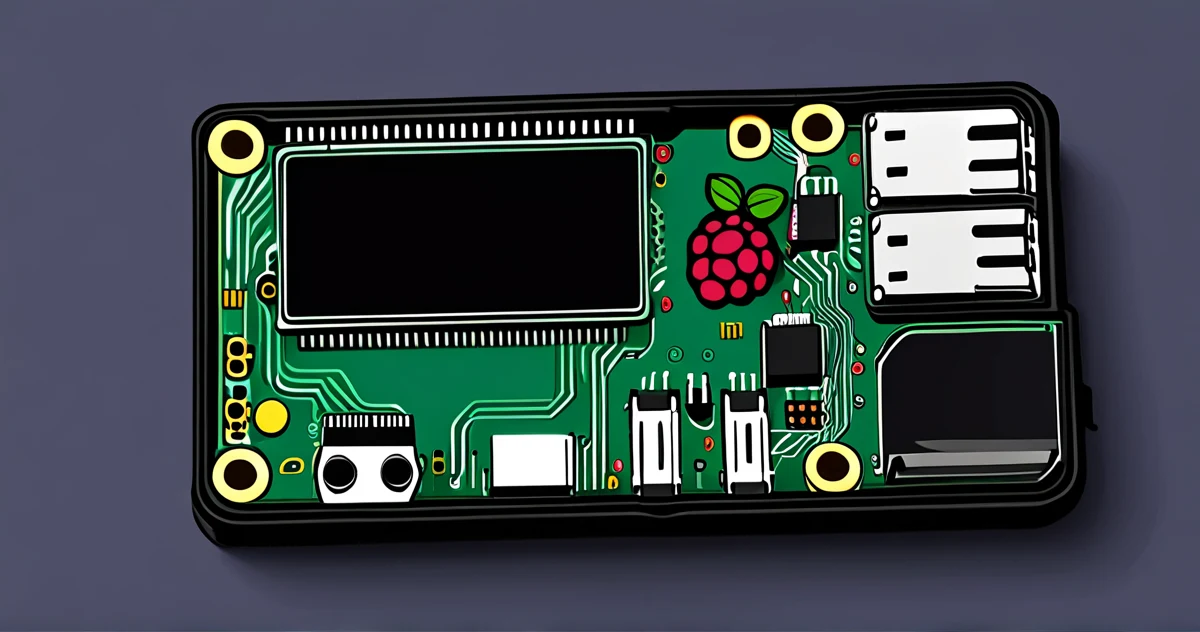
For DIY projects, the Raspberry Pi represents an ideal platform, as demonstrated by Community Intel in their guide on practical deep learning applications. Its advantages include:
- Low cost and energy consumption
- Native support for Python and large community
- Ability to handle moderate processing loads
- Compatibility with various sensors and peripherals
As also shown in the autonomous drone project on Reddit, the Raspberry Pi can serve as the brain for complex systems requiring real-time processing.

Practical Steps to Build Your System
Here's a typical path to develop your solution:
- Define the perimeter: Determine what you want to monitor (local network, specific servers, applications)
- Set up collection: Use libraries like Scapy to capture network traffic
- Prepare data: Clean and normalize collected logs and metrics
- Implement algorithms: Start with simple models like isolation forest for anomaly detection
- Test and refine: Validate with known datasets before production deployment
> Key points to remember:
> - A DIY IDS requires thorough planning but remains accessible
> - Python and machine learning democratize intrusion detection
> - Raspberry Pi offers an affordable platform for testing and deployments
> - Start simple and iterate based on results
Common Challenges and How to Overcome Them
Building an effective system presents several pitfalls:
- False positives: Overly sensitive tuning generates too many insignificant alerts
- Scalability: The system must handle increasing data volumes
- Maintenance: Machine learning models require regular updates
The solution lies in a progressive approach: start with simple rules, collect performance data, and gradually improve your algorithm sophistication.
Detection Approach Comparison
| Method | Advantages | Limitations | Ideal Use Case |
|-------------|---------------|-----------------|----------------------|
| Anomaly detection | Detects unknown threats | High false positive rate | General network surveillance |
| Signature detection | Low false positive rate | Doesn't detect new threats | Protection against known attacks |
| Supervised learning | High accuracy | Requires labeled data | Environments with attack history |
Beyond Detection: Towards Proactive Security
A detection system is only one part of the security ecosystem. As Wizardcyber mentions about data architectures, integration with other tools (like SIEMs) and threat intelligence data sharing can transform a homegrown solution into an enterprise-ready system.

The future of DIY detection lies in orchestration - connecting your system to cloud platforms, automating incident responses, and creating feedback loops that continuously improve detection.

Conclusion: Take Control of Your Security
Building your own breach detection system is no longer a utopia reserved for security experts. With Python, machine learning, and accessible hardware, any digital professional can take control of their data monitoring. The real challenge isn't technical, but organizational: dedicating the necessary time to learning, testing, and continuous improvement.
Start with a simple prototype, monitor a specific aspect of your infrastructure, and extend your capabilities as you gain confidence. Your future timely detected breach could justify the investment.
To Go Further
- freecodecamp - Tutorial for building a real-time intrusion detection system with Python
- Community Intel - Practical deep learning applications with Raspberry Pi
- Wizardcyber - Analysis of DIY security architecture challenges
- GitHub practical-tutorials - Practical projects including object detection and facial recognition
- Real Python - Guide for facial recognition with Python
- Reddit r/Python - Discussions about Python and machine learning projects
- Viam - Building modular camera systems without coding