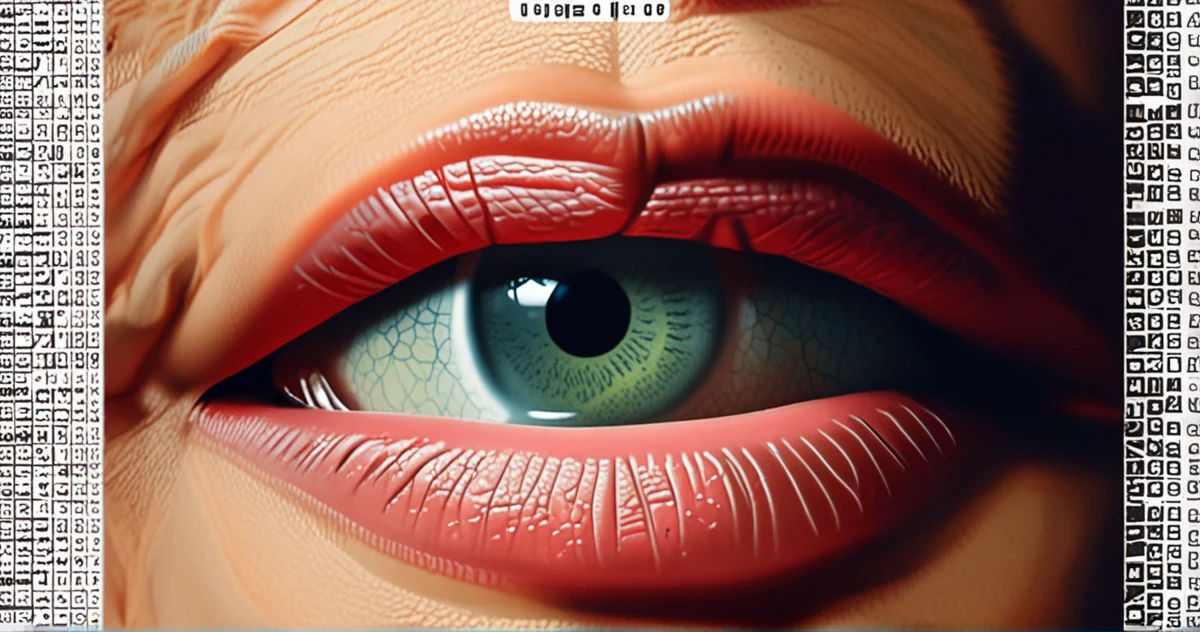
The Perfection Trap: have you ever felt that a video was "too perfect"? Modern deepfakes exploit precisely this bias. Where the human eye looks for an anomaly, generative AI fills every crack. Result: we are no longer equipped to distinguish real from fake. And that is exactly what government agencies fear.
According to a joint report from the NSA and other U.S. federal agencies, deepfakes pose a serious threat to national security, ranging from disinformation to identity theft (NSA, 2026). The problem is no longer whether a video is fake, but how to prove it is not.
Detection: What NOT to Do
Don't Trust Your Gut
The most common mistake? Thinking you can "feel" a deepfake. Researchers at the MIT Media Lab have shown that even experts are wrong in over 30% of cases (Detect Fakes). Our brains are simply not calibrated to spot the subtle artifacts left by neural networks.
Don't Look for "Classic Signs"
Irregular blinking, lip-sync issues: these clues are a thing of the past. Models from 2026-2026 incorporate temporal attention mechanisms that perfectly synchronize lips and speech. An integrative study published in ScienceDirect confirms that modern generators automatically correct these weaknesses (Unmasking digital deceptions, 2026).
The Real Detection Techniques (That Work)
> "The key is not to look at what is visible, but what is mathematically inconsistent."
Color Analysis
One promising avenue relies on colorimetric anomalies. The U.S. GAO highlights that AI models can detect deviations in the color spectrum that the human eye does not perceive (GAO, 2026). For example, skin reflections or shadows can betray abnormal interpolation.
Real-Time Verification
The NSA recommends using real-time verification capabilities combined with passive detection techniques (NSA, 2026). Concretely, this involves analyzing the video stream on the fly to detect digital signatures—such as compression artifacts or inconsistencies in noise.
Proactive Authentication
The UK government emphasizes a preventive approach: embedding watermarks or cryptographic signatures at the point of content creation (GOV.UK, 2026). This requires cooperation between platforms and creators, a still nascent effort.
Warning Signs to Know
- Inconsistency in eye reflections: eyes are a challenge for GANs. Impossible reflections (two contradictory light sources) are a strong indicator.
- Edge artifacts: a blurry or pixelated outline around the face, especially in motion.
- Temporal inconsistency: a breathing loop identical every 10 seconds can betray a generated sequence.
- Lack of micro-expressions: fleeting emotions (fraction of a second) are often smoothed out or absent.
Common Mistakes in Detection
Focusing on Content Over Container
Many analysts examine the message rather than the medium. Yet, a deepfake can convey a perfectly coherent speech. The priority should be forensic analysis of the file: metadata, sensor noise, compression.
Underestimating Audio Deepfakes
Voice is often the weak link. Audio deepfakes are easier to produce and harder to detect than videos. Yet, few detection tools account for them. Digital forensic science is beginning to incorporate spectral voice analysis, but the road is long (West Oahu, 2026).
Why Detection Alone Is Not Enough
Even the best algorithms have a non-negligible error rate. UNESCO warns of a "knowledge crisis": if we can no longer trust what we see, the entire information edifice wobbles (UNESCO, 2026).
The Solution: Adopt a Systemic Approach
- Educate the public on verification reflexes (source, context, consistency).
- Deploy detection tools in browsers and social networks.
- Strengthen legislation to require platforms to flag synthetic content.
- Invest in research on multimodal detection (text, audio, video combined).
What the Future Holds
A systematic review published in Expert Systems with Applications predicts an escalation: generators and detectors will evolve in symbiosis, making the race perpetual (A systematic review, 2026). But one avenue is emerging: using blockchain to timestamp and certify the authenticity of recordings from capture.
> "In ten years, we will no longer talk about detection, but certification."
Conclusion
Deepfakes are not a passing fad. They redefine our relationship with truth. For digital professionals, the reflex should no longer be "is it real?" but "how to verify it?" Techniques exist, but their deployment is uneven. It is up to each of us to train, equip our teams, and maintain constructive skepticism.
Further Reading
- GAO - Science & Tech Spotlight: Combating Deepfakes
- MIT Media Lab - Detect Fakes
- GOV.UK - Deepfake detection technology
- UNESCO - Deepfakes and the crisis of knowing
- NSA - U.S. Federal Agencies Advise on Deepfake Threats
- ScienceDirect - Unmasking digital deceptions: An integrative review
- West Oahu - Digital Forensics Techniques to Detect Deepfakes
- ScienceDirect - A systematic review of deepfake detection and generation