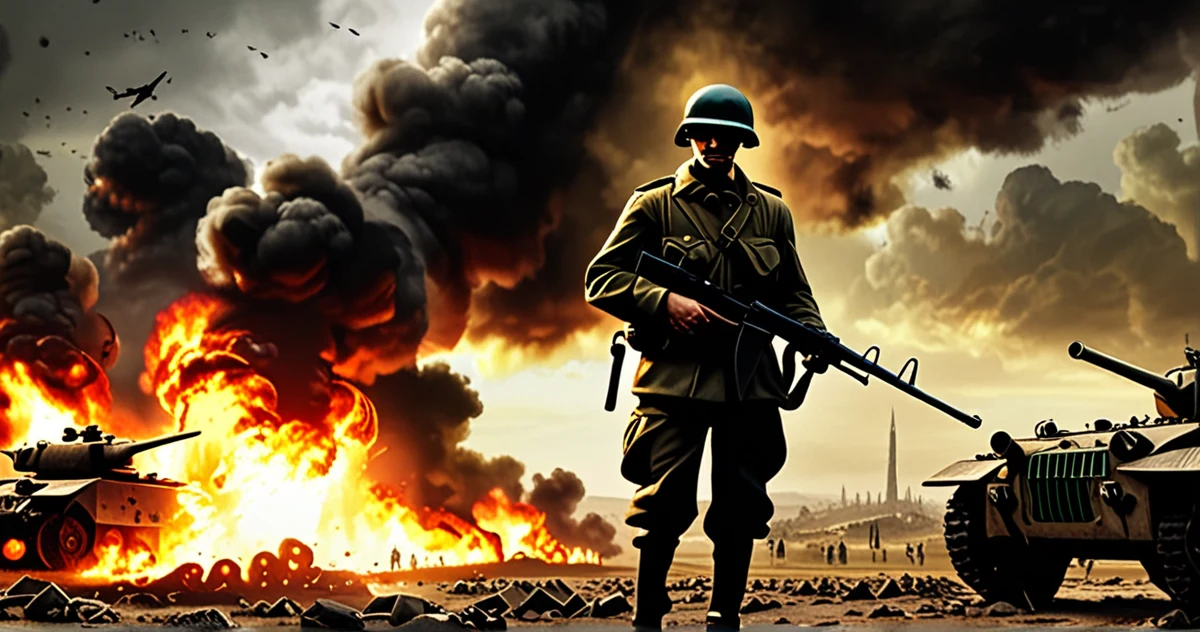
Imagine an army that loses nearly half of its tanks and artillery in just a few years, while maintaining an aggressive posture. This is Russia's reality today, according to recent online discussions. This forced transformation illustrates why it's crucial to master the vocabulary of armed conflicts, not only for military strategists but also for digital professionals who design defense, cybersecurity, and resilience systems.
In a world where the boundaries between conventional warfare and covert actions are blurring, understanding terms like "Blitzkrieg" or "hybrid warfare" is no longer an academic luxury. It's a necessity for anticipating threats, protecting critical infrastructure, and making informed decisions. This article guides you through key concepts, avoiding common pitfalls and connecting these ideas to contemporary issues like data security and disinformation.
We will first explore classical strategies, then modern approaches, before concluding with implications for tech professionals. Warning: don't just memorize definitions; learn to recognize their manifestations in current events.
Classical Strategies: From Lightning War to Asymmetric Maneuvers
Traditional military methods often rely on large force maneuvers, as described in Wikipedia's list of military strategies. For example, Blitzkrieg (lightning war) is a German tactic from World War II that combines speed, surprise, and concentration of forces to disorganize the opponent. Contrary to a common misconception, it's not simply a brutal attack, but rather coordination between armor, infantry, and aviation to break through enemy lines.
What not to do: Confuse Blitzkrieg with a simple frontal offensive. In modern warfare, a similar approach could be imitated by massive, synchronized cyberattacks aimed at paralyzing systems within hours.
Other classical concepts include war of attrition, where the goal is to exhaust the adversary's resources, and diversionary maneuvers. These strategies remain relevant, but their application has evolved with technology.
The Rise of Hybrid Conflicts: Blending Conventional and Irregular
Hybrid warfare represents a major break. According to an excerpt from Stanford University Press, it combines conventional, irregular, and cybernetic elements in the same conflict. For example, a state might use regular soldiers alongside cyberattacks, social media disinformation, and proxy militias to obscure tracks and avoid direct response.
What not to do: Think that hybrid warfare is simply "unconventional warfare." It involves deliberate integration of diverse means, often to undermine an adversary's legitimacy without open declaration of war. For digital professionals, this means threats don't only come from isolated hackers but can be coordinated with physical actions.
The concept of "full spectrum dominance" (mentioned in the same source) aims to control all domains—land, sea, air, space, and cyber—but hybrid warfare shows that non-state actors or rival powers can challenge this dominance with asymmetric means.
Impact on Modern Military Forces: Lessons from Current Events
Recent conflicts, like the war in Ukraine, illustrate how these strategies affect armies. On Reddit, discussions indicate that the Russian army has suffered significant equipment losses—tanks, artillery, aircraft—which has weakened its ability to conduct conventional operations. This may have pushed it toward more hybrid tactics, such as using Wagner groups or disinformation campaigns.
Comparative table of hypothetical military losses (based on online discussions):
| Equipment Type | Estimated Reduction | Impact on Strategy |
|--------------------|-------------------|--------------------------|
| Tanks | Up to 50% | Limits armored offensives |
| Artillery | Notable reduction | Reduces long-range firepower |
| Aircraft | Decrease | Affects air superiority |
This table, inspired by sources like Reddit, shows how material losses can force a transition toward methods less dependent on heavy equipment, such as hybrid warfare. For tech experts, this highlights the importance of designing resilient systems that can function despite coordinated attacks.
Implications for Digital Professionals: Security and Resilience
Understanding these terms isn't just about general knowledge. Hybrid warfare, in particular, has direct ramifications for cybersecurity, data management, and combating disinformation. For example, a hybrid attack could combine a network outage (cyber) with online rumors to sow confusion.
What not to do: Neglect the interconnection between physical and digital domains. A robust defense strategy must integrate surveillance of hybrid threats, training teams to recognize weak signals like disinformation campaigns coupled with network intrusions.
Educational programs, like the Hertog Foundation's War Studies Program, aim to train students on the theory and practice of war, including these modern aspects. For professionals, this means that investing in a deep understanding of conflicts can improve the design of proactive security tools.
In summary, mastering the terminology of military conflicts—from Blitzkrieg to hybrid warfare—enables better risk anticipation in a complex security landscape. These concepts aren't fixed; they evolve with technology and geopolitical realities. As a digital professional, you have a role to play in strengthening resilience against these multidimensional threats. Start by integrating these notions into your risk analyses, and stay curious about new forms of conflict.
To Go Further
- War Studies Program - Hertog Foundation - Educational program on the theory and practice of war.
- Reddit - Discussions on the weakening of Russian military forces.
- Stanford University Press - Excerpts on hybrid warfare and full spectrum dominance.
- Wikipedia - List of military strategies and concepts.