
Imagine a fake video of a political candidate making inflammatory remarks, shared thousands of times within hours. This scenario is no longer science fiction, but an operational reality for modern disinformation campaigns. According to SentinelOne, generative AI now enables the creation of misleading content specifically targeting certain audiences or social platforms, transforming disinformation into a scalable and personalized threat.
For cybersecurity and media professionals, understanding the technical mechanisms behind these campaigns is not just academic curiosity—it's a strategic necessity. This article takes you behind the scenes of these operations, breaking down the tools, methods, and emerging defenses that shape the information landscape in 2025.
Illustration of a botnet network coordinating disinformation campaigns
How do botnets amplify disinformation?
> "Botnets represent the basic infrastructure for the massive dissemination of manipulated content, enabling artificial amplification that exceeds human capabilities."
A security manager at a major social platform explains: "We observe networks of automated accounts that coordinate their activity to make a hashtag trend or flood a discussion with identical messages. Their sophistication lies in their ability to mimic human behavior, varying posting times and interacting with each other."
According to Palo Alto Networks, a botnet is a network of remotely controlled infected devices, often used for denial-of-service attacks, but increasingly repurposed for influence campaigns. The practical implications are clear: moderation teams must now distinguish not only truth from falsehood, but also human from automated.
Types of botnets used in disinformation
- Social botnets: Networks of automated accounts on social platforms
- IoT botnets: Compromised connected devices used to amplify traffic
- Hybrid botnets: Combination of automated accounts and paid humans
Generative AI: a factory for misleading content?
Generative AI no longer just generates text—it produces convincing images, videos, and synthetic voices. SentinelOne emphasizes that these technologies allow disinformation campaigns to start as targeted operations, potentially evolving into viral phenomena. An artificial intelligence expert at Google Cloud notes: "We use a variety of technical signals to track state actors and their infrastructure, and we can correlate this data with emerging disinformation campaigns."
For organizations, this means detection can no longer rely solely on content analysis, but must integrate behavioral metadata and dissemination patterns.
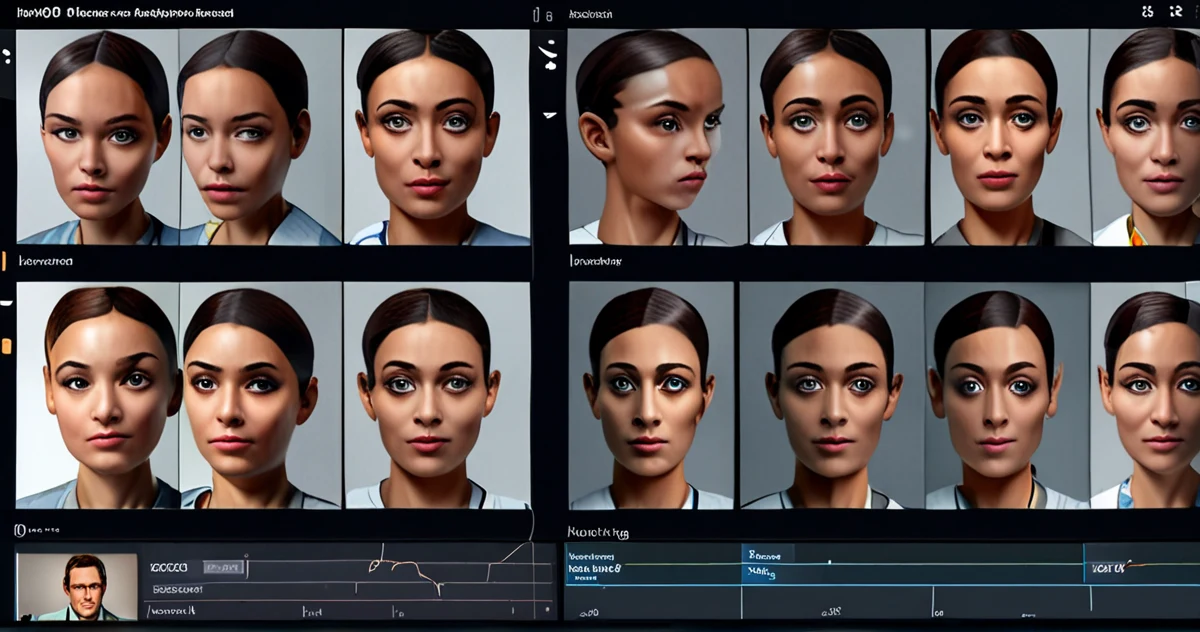
AI-generated content illustrating media manipulation risks
What are the social engineering techniques behind virality?
Social engineering exploits human psychology to encourage sharing. Imperva describes how clickbait scams use appealing content to drive traffic to malicious sites—a technique adapted to disinformation campaigns where sensational headlines serve as bait to engage emotion and bypass critical thinking.
> "Artificial virality relies on a fine understanding of cognitive biases: anger spreads faster than joy, and simplicity prevails over complexity."
A social media analyst adds: "The most effective campaigns create a sense of urgency or group belonging, making users unwitting accomplices in their propagation."
Comparative table of social engineering techniques
| Technique | Objective | Example application |
|-----------|----------|----------------------|
| Emotional appeal | Engage quickly | Alarmist headlines on sensitive topics |
| Social proof | Create mass effect | Fake accounts that massively share |
| Artificial urgency | Limit reflection | "Share before removal" |
| Confirmation bias | Reinforce beliefs | Content aligned with existing opinions |
Future perspectives: towards hyper-personalized disinformation?
Looking towards 2025-2025, several scenarios are emerging. In the worst case, generative AI will enable fully automated disinformation campaigns, adapted in real-time to audience reactions. F5 Labs anticipates that these techniques could be used to influence electoral processes by targeting specific demographic segments with tailored messages.
However, a more optimistic vision emerges from research work like those cited by Scholarship Law Umn Edu, which explore how to strengthen democratic integrity in the digital age. Social platforms are investing in proactive detection algorithms, although technical challenges remain immense.
Detection and prevention strategies
Technical detection methods
- Behavioral analysis: Detection of non-human posting patterns
- Provenance verification: Tracing the origin of multimedia content
- Network analysis: Identification of coordinated account clusters
- Deepfake detection: Specialized algorithms for identifying synthetic media
Organizational approaches
- Continuous training of moderation teams
- Cross-sector collaboration between platforms
- Algorithmic transparency in content moderation
- Regular audits of detection systems
What can professionals do to protect themselves?
Immediate actions
- Verify source and context: Don't rely solely on content, but examine who disseminates it and for what purpose.
- Use detection tools: Technical solutions exist to identify botnets and deepfakes, but they require continuous integration.
- Train teams: Awareness of social engineering techniques reduces internal vulnerability.

Long-term strategies
- Develop a verification culture within organizations
- Invest in cybersecurity solutions adapted to new threats
- Establish response protocols for disinformation incidents
- Collaborate with authorities and other sector organizations

Disinformation threat monitoring and response center
Conclusion
Viral disinformation campaigns are not simply a content problem, but a systemic challenge involving advanced technologies and calculated exploitation of human weaknesses. By understanding the technical mechanisms—from botnets to generative AI—professionals can better anticipate threats and develop resilience strategies.
The stakes go beyond online security: they affect trust in information itself. As these techniques evolve, collaboration between technological, academic, and political sectors will be crucial to preserving the integrity of digital spaces.
To go further
- SentinelOne - Article on generative AI security risks
- F5 - Analysis of how AI can influence elections
- Pewresearch - Study on the future of truth and online disinformation
- Cloud Google - Blog on malicious use of generative AI
- Paloaltonetworks - Botnet definition and analysis
- Imperva - Guide on social engineering attacks
- Scholarship Law Umn Edu - Research on democratic integrity in the digital age