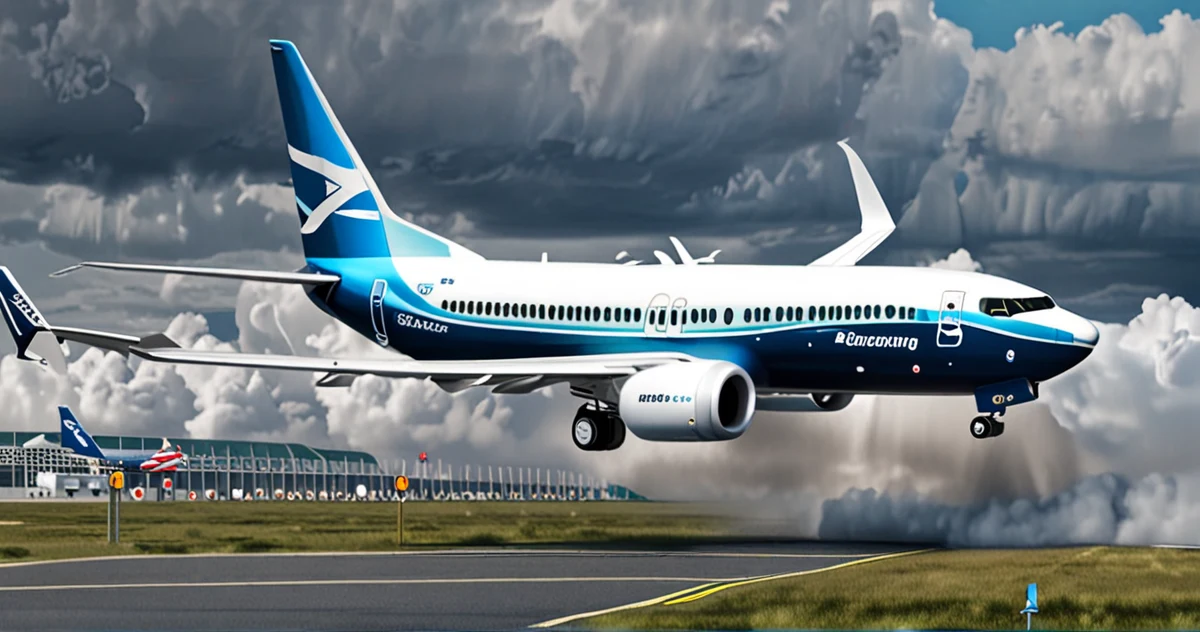
Boeing 737 MAX: When Corporate Pressure Crushes Safety
In October 2025 and March 2025, two Boeing 737 MAX crashes cost the lives of 346 people. These tragedies are not mere technical accidents, but the systemic result of a corporate culture where financial pressure and speed to market took precedence over fundamental safety protocols. For digital professionals, this case offers crucial lessons about the risks of prioritizing rapid innovation at the expense of system integrity. This article explores how managerial decisions, documented in verified sources, led to the flawed design of the MCAS system and persistent ethical failures.
The Emergence of MCAS: A Risky Solution to a Commercial Problem
The MCAS (Maneuvering Characteristics Augmentation System) was designed to compensate for the modified aerodynamic characteristics of the 737 MAX, particularly due to the installation of larger and more efficient engines. According to a GRMI analysis, this system was essential for the 737 MAX to compete with the Airbus A320neo in the market, avoiding costly and lengthy pilot training. However, the MCAS design had critical flaws: it activated from a single angle of attack sensor, without redundancy, and could trigger repeated warnings that were difficult to deactivate in flight. As noted by an expert cited on Reddit, pilots had means to deactivate the system, such as the stabilizer cutoff switch, but these procedures were not sufficiently integrated into training manuals, partly to minimize costs and delays.
This approach reflects a prioritization of time to market. The Harvard Corporate Governance Law Blog highlights that Boeing faced "ongoing competitive pressure" to deliver the 737 MAX quickly, which influenced engineering decisions. For example, to avoid requalifying pilots on a new aircraft—a long and costly process—Boeing opted for MCAS as a software fix rather than redesigning the physical structure. This introduced a unique risk: a single point of failure could lead to loss of control, as occurred in the crashes.
Corporate Culture and Internal Pressures: Ignored Signals
Beyond the technical aspects, Boeing's internal culture played a key role. Sources such as the Springer article on corporate ethics lessons indicate that employees raised safety concerns, but these grievances were not adequately addressed. For instance, engineers expressed doubts about MCAS reliability, but management maintained the goal of rapid delivery, fearing loss of market share to Airbus. This dynamic is corroborated by legal documents, such as those from the Delaware Court of Chancery, which examined allegations that Boeing did not adequately disclose 737 MAX risks to shareholders, highlighting a gap between internal reports and external communications.
The NIH PMC, in its analysis of lessons for engineering ethics, notes that the crashes exposed how corporate pressures can erode safety standards. At Boeing, the post-merger reorganization with McDonnell Douglas intensified a culture focused on short-term financial results, where deadlines and costs often took precedence over thorough checks. This led to compromises in testing: MCAS was not sufficiently simulated in sensor failure scenarios, and pilots did not receive adequate training on its specifics.
Comparative Table: Safe Design vs. Rapid Commercial Approach
| Aspect | Ideal Safe Approach | Approach Adopted for the 737 MAX |
|--------|-----------------------------|----------------------------------|
| Sensor Redundancy | Multiple sensors to avoid single points of failure | Single angle of attack sensor used for MCAS |
| Pilot Training | Detailed manual and critical scenario simulations | Limited information to avoid additional training costs |
| Safety Testing | Exhaustive validation including failure modes | Accelerated testing to meet market deadlines |
| Consideration of Internal Feedback | Proactive integration of engineer concerns | Priority on delivery goals, leading to ignored warning signs |
This table reveals how decisions sacrificed robustness for speed, a pattern that digital professionals recognize in pressured software launches.
Consequences and Responses: A Late Awakening
Following the crashes, the 737 MAX was grounded worldwide, and Boeing undertook corrections, including updating MCAS to use two sensors and improving training. The Harvard Corporate Governance Law Blog mentions that these measures aimed to "improve aircraft safety," but they occurred after irreparable human losses. Under the leadership of CEO David Calhoun, who took office in January 2025 according to CNN, Boeing sought to restore trust, but criticism persists regarding the slowness of cultural changes.
For technology companies, this highlights the importance of robust governance systems. The lessons from the Boeing case, as summarized by GRMI, show that when time to market dominates, systemic risks can be underestimated. In the digital realm, where development cycles are fast, integrating ethics reviews and employee feedback mechanisms can prevent similar disasters.
Practical Implications for Digital Professionals
- Proactive Security Audits: Implement independent checks for critical systems, beyond standard testing.
- Culture of Transparency: Encourage internal reporting without fear of retaliation, inspired by Boeing's failures where alerts were ignored.
- Innovation-Safety Balance: Evaluate trade-offs between speed and integrity; sometimes, delaying a launch can save lives and reputation.
- Continuous Training: Ensure teams understand not only how to use systems, but also how to respond to failures, similar to the gaps in 737 MAX pilot training.
In conclusion, the Boeing 737 MAX crashes are not a simple technical failure, but a warning about the dangers of letting corporate pressures dictate engineering decisions. For digital leaders, this calls for deep reflection: how to build organizations where safety and ethics are not compromised by the pursuit of profit. By learning from these mistakes, we can work towards a future where innovation rhymes with responsibility.
To Go Further
- Corpgov Law Harvard Edu - Analysis of competitive pressures and safety improvements
- Cnn - Context on Boeing's historical problems and the CEO's role
- Grm Institute - Case study on corporate priorities and time to market
- Pmc Ncbi Nlm Nih Gov - Lessons for engineering ethics from the crashes
- Link Springer - Examination of employee grievances and corporate ethics
- Courts Delaware Gov - Legal documents on shareholder disclosures
- Reddit - Expert discussions on MCAS deactivation methods