Autonomous Dragon Docking: The Future of Space Operations
Introduction
In the contemporary space landscape, the autonomy of orbital vehicles represents a major advancement that fundamentally transforms mission design and execution. The SpaceX Dragon capsule, with its fully autonomous docking system, perfectly illustrates this technological evolution. As crewed and cargo space missions multiply, the ability to automatically dock with the International Space Station (ISS) becomes an essential operational standard.
For digital and engineering professionals, this transition toward complete autonomy is not just a simple technical improvement - it redefines the paradigms of safety, efficiency, and scalability of space operations.
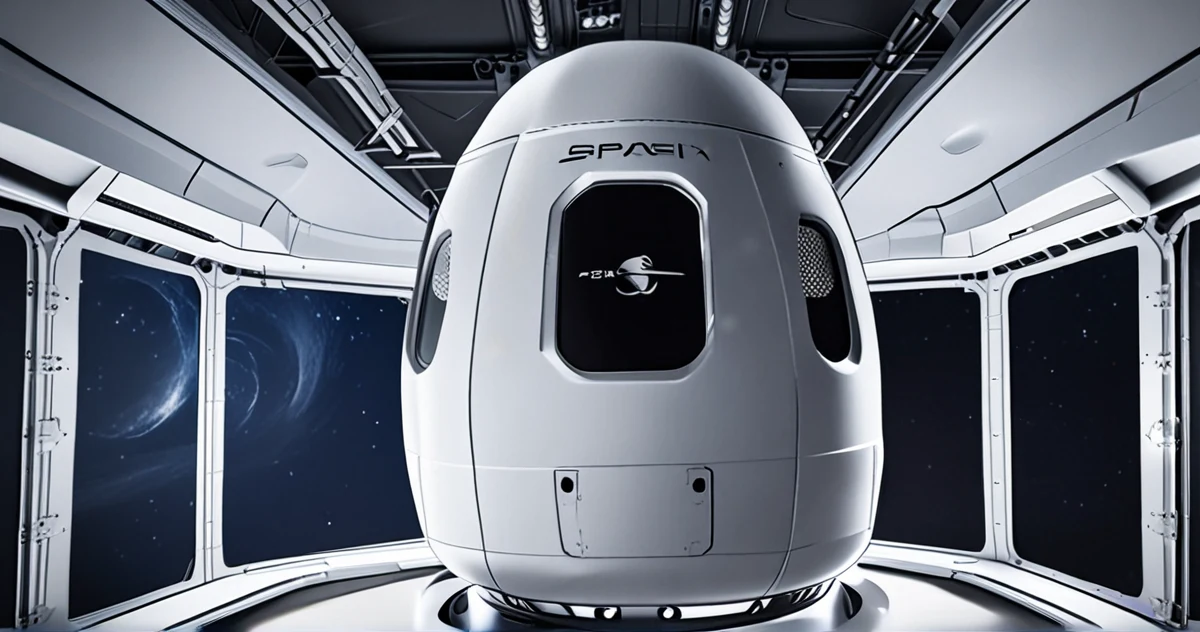
Autonomous Docking: An Operational Revolution
Definition and Technical Context
Spacecraft docking and berthing refer to the process of joining two orbital vehicles, a critical operation that can be temporary or semi-permanent, particularly for space stations. Traditionally, these maneuvers required significant human intervention, but technological evolution has progressively automated these processes.
The Emblematic Example of Dragon
The SpaceX Dragon capsule represents the state of the art in space autonomy. According to available information, Dragon docks autonomously with the ISS Harmony module, demonstrating the maturity of these autonomous systems. This capability is not limited to cargo missions - the Crew Dragon follows the same approach, highlighting the confidence placed in these technologies.
Why Autonomy is Becoming the Norm
Reduction of Operational Risks
- Minimization of human errors: Autonomous systems eliminate risks related to operator fatigue or judgment errors
- Superior precision: Sensors and algorithms enable millimeter-precision maneuvers
- Optimized responsiveness: Systems can instantly adapt to changing conditions
Demonstrated Efficiency and Scalability
Autonomy allows for standardizing operations, facilitating the scaling of space missions. As the SpaceX software team emphasizes, Dragon is designed as a "fully autonomous 21st-century spacecraft," a philosophy that prepares the ground for fleets of vessels operating simultaneously.
Myths and Realities of Space Autonomy
Myth 1: Astronauts Manually Pilot Dockings
Reality: Contrary to popular belief, modern spacecraft operate mostly in autonomous mode. Pilot intervention generally occurs only in case of automated system failures or for specific tests. This approach maximizes safety while freeing the crew for more valuable scientific tasks.
Myth 2: Autonomy Reduces Human Control
Reality: Autonomy does not eliminate human control, but shifts it to a higher level. Ground teams constantly monitor operations and can intervene if necessary, as demonstrated by NASA astronauts during CRS-21 missions.
Myth 3: These Technologies are Experimental
Reality: Autonomous docking is already operational and reliable. Dragon has performed multiple successful autonomous dockings, proving technological maturity. Other players, like Northrop Grumman with its Cygnus spacecraft, are actively developing similar capabilities for their future commercial space stations.
Concrete Advantages of Autonomous Docking
Enhanced Safety
Autonomous systems eliminate risks related to human errors during critical approach and docking phases. The consistent precision of automated systems significantly reduces collision risks.
Resource Optimization
- Reduction of crew training time
- Freeing astronauts for scientific tasks
- Continuous monitoring without human fatigue
- Standardization of procedures
Key Technologies of Autonomous Docking
Navigation and Guidance Systems
Advanced sensors and vision algorithms allow Dragon to detect and track its target with extreme precision. These systems include:
- LIDAR for distance detection
- High-resolution cameras for visual identification
- Differential GPS for orbital positioning
- Inertial sensors for autonomous navigation
Software Architecture
Artificial intelligence and adaptive control systems constitute the heart of Dragon's autonomy. These technologies enable:
- Real-time decision making in the face of unforeseen events
- Machine learning to improve performance
- System redundancy to ensure reliability
- Human-machine interface for supervision
Comparison of Docking Systems
| Aspect | Traditional Docking | Autonomous Dragon Docking |
|------------|---------------------------|------------------------------|
| Human Intervention | Manual and constant | Monitoring only |
| Precision | Operator-dependent | Millimeter and consistent |
| Execution Time | Variable by operator | Standardized and optimized |
| Error Risks | High | Minimized |
| Scalability | Limited | Excellent |
Practical Applications and Use Cases
Cargo Missions to the ISS
- Regular supply: Automated delivery of supplies and equipment
- Sample return: Automated recovery of scientific experiments
- Orbital maintenance: Automated exchange of modules and components
Crewed Missions
- Crew transport: Secure docking for astronauts
- Emergency evacuation: Rapid undocking capability in emergencies
- Crew rotation: Automated transfer between spacecraft
Current Challenges and Limitations
Technical Complexity
Developing autonomous docking systems presents several major challenges:
- Algorithm robustness in the face of unpredictable space conditions
- System integration with existing infrastructure
- Validation and certification of automated procedures
- Failure management and backup scenarios
Safety Considerations
Despite the advantages, complete autonomy requires additional precautions:
- Safety protocols for emergency interventions
- Exhaustive testing before each mission
- Continuous monitoring by ground teams
- Contingency planning for all scenarios
Technological Evolution Perspectives
Integration of Advanced AI
Future versions of autonomous docking systems will incorporate more sophisticated artificial intelligence capabilities:
- Pattern recognition to identify anomalies
- Failure prediction before they occur
- Dynamic optimization of approach trajectories
- Continuous learning from each mission
Multi-Vehicle Interoperability
The future will see the emergence of systems capable of coordinating multiple vessels simultaneously:
- Autonomous formations of spacecraft
- Automated transfers between different stations
- Orbital refueling without human intervention
- Orbital assembly of complex structures
Strategic Implications for the Space Future
Toward Complete Autonomous Ecosystems
Aerospace America anticipates that autonomous robotic systems will play an increasing role in space service operations. This vision extends beyond docking to include automated inspection, maintenance, and repair.
Standardization and Interoperability
The widespread adoption of autonomous docking pushes toward standardization of interfaces and protocols, essential for future commercial space stations and interplanetary missions.
Preparation for Deep Space Exploration
The technologies developed for Dragon prepare the ground for missions to the Moon and Mars, where communication delays make autonomy indispensable.
Step-by-Step Autonomous Docking Process
- Initial Approach Phase: Navigation to the orbital rendezvous zone
- Target Acquisition: Detection and identification of the space station
- Precise Alignment: Millimeter positioning relative to the docking port
- Final Verification: Confirmation of all safety parameters
- Contact and Locking: Physical joining and securing of the vessel
- Seal Verification: Test of connection integrity
Economic and Operational Impact
Cost Reduction
- Reduction of control teams required
- Optimization of mission time and resources
- Reduction of costly errors and delays
- Increase in possible mission frequency
Reliability Improvement
- Consistently high success rate
- Reproducibility of operations
- Adaptability to changing conditions
- Robustness in the face of unforeseen events
Conclusion
The autonomous docking of the Dragon capsule is not just a technical feature, but the foundation of a new space era. By demonstrating the reliability and efficiency of these systems, SpaceX and other industry players are paving the way for safer, more economical, and more ambitious space operations.
As we prepare for lunar and Martian exploration, autonomy will become not an option, but an absolute necessity. The lessons learned with Dragon will serve as a reference for future generations of spacecraft, making autonomy the unavoidable standard of the modern space age.
To Go Further
- Aerospaceamerica Aiaa - Analysis of modern spacecraft docking capabilities
- Reddit - Discussion on the level of autonomy in current space missions
- Spacex - Official information on Dragon missions and capabilities
- Reddit - Exchanges with the SpaceX software team about autonomy
- En Wikipedia - Fundamental principles of space docking
- Mdpi - Review of autonomous robotic systems for space operations
- Eoportal - Details on CRS-21 mission operations
- Spaceflightnow - Evolution toward autonomy in commercial space stations