Introduction

The augmented reality (AR) glasses ecosystem is experiencing remarkable acceleration in 2025, with major announcements at events like CES. For developers, these new devices represent both an exciting opportunity and a significant technical challenge. Building applications for these emerging platforms requires mastering complex technologies while anticipating future uses.
These next-generation AR glasses promise to transform our interaction with the digital world, but their adoption will largely depend on the quality and relevance of the developed applications. In this article, we explore the technical and strategic aspects of application development for these platforms, drawing on the latest documented advances.
> Key Insight: The success of AR glasses will depend less on their hardware than on the richness of their application ecosystem - a challenge that developers must address now.
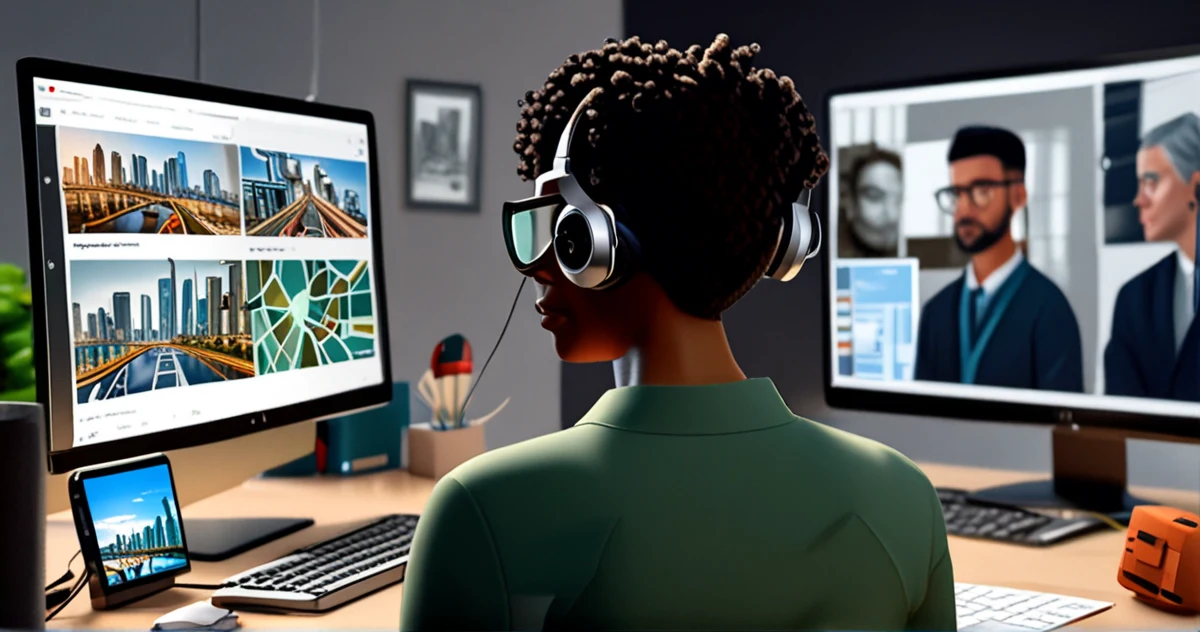
Team of developers working on augmented reality interfaces - Credit: Unsplash
The State of the AR Glasses Market in 2025
The AR glasses landscape is evolving rapidly, with several major players refining their approaches. According to MIT Technology Review, 2025 should see the emergence of more sophisticated AI agents integrated into smart glasses, as well as an expansion of applications developed by third parties. This ecosystem maturation opens up new possibilities for developers who can now target more stable and better-documented platforms.
The race for innovation in this sector is intensifying, as noted by CNET, with companies like Meta and Snap claiming significant advances in the field of smart glasses and augmented reality. This competitive dynamic creates an environment conducive to experimentation and innovation for developers.
Major Technical Challenges of AR Development
Managing Field of View and Waveguides
One of the major challenges for AR application developers lies in optimizing for different fields of view. As analyzed by KGOnTech in their review of Meta Orion AR glasses, achieving a 70-degree field of view represents a significant advancement, but imposes specific constraints for rendering virtual elements. Developers must design interfaces that remain readable and functional within these technical limits.
Waveguide technologies, crucial for superimposing virtual images on real vision, vary considerably between manufacturers. This technological diversity forces developers to adapt their applications to the specificities of each platform, much like an architect must consider the properties of the materials they use.
Performance and Battery Life Optimization
Development for wearable devices like AR glasses requires particular attention to resource optimization. Applications must run smoothly while minimizing energy consumption to preserve device battery life. This constraint directly influences technical choices, from the complexity of 3D models to the frequency of interface updates.
Comparative Table of Technical Challenges
| Technical Challenge | Impact on Development | Recommended Solutions |
|----------------|----------------------------|------------------------|
| Limited field of view | Restricted interface | Adaptive and contextual UI design |
| Variable waveguide technologies | Cross-platform compatibility | Abstraction via specialized SDKs |
| Battery constraints | Energy optimization | Reduced computations, adaptive LOD |
| Rendering latency | User experience | Optimized graphics pipeline |
Strategic Opportunities for Developers
Enterprise Applications and Professional Tools
FrameSixty highlights the growing importance of XR tools for businesses, with operating system updates like VisionOS opening new possibilities for professional application development. Developers can target specific use cases in sectors such as:
- Industrial maintenance: Visual guides for complex repairs
- Professional training: Interactive simulations in real context
- Architectural visualization: Overlaying 3D models on existing sites
Immersive Entertainment Experiences
Glasses like the Viture Pro XR demonstrate the potential of high-quality portable viewing experiences. For developers, this opens the way to creating entertainment applications that fully exploit the virtual display capabilities of these devices, from video streaming to lightweight gaming experiences.

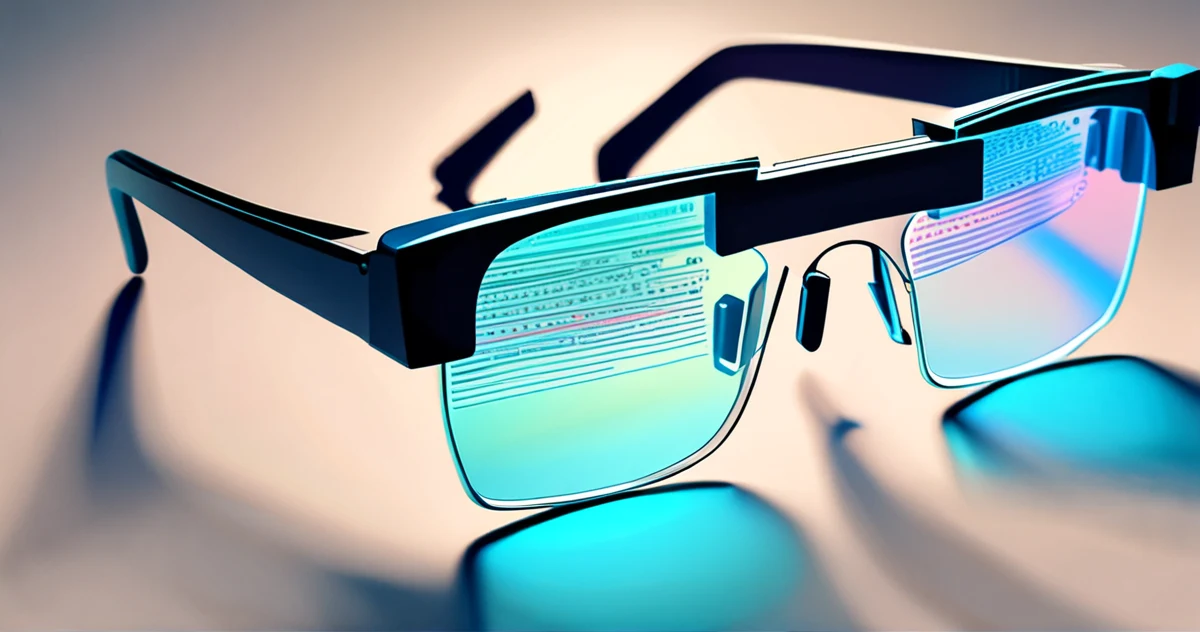
Development interface showing superimposed 3D elements in a real environment - Credit: Unsplash
Development Ecosystem and Available Tools
The emergence of more mature development platforms facilitates developers' entry into the AR ecosystem. Although our sources do not specifically detail the tools announced at CES 2025, the MIT Technology Review mentions the growing importance of third-party applications in the smart glasses roadmap for 2025 and beyond.
Developers should expect to work with specialized SDKs and frameworks that handle the complex aspects of spatial computing, while providing abstractions to facilitate cross-platform application development.
Fundamental UX/UI Principles for Spatial Interfaces
Developing for AR glasses involves fundamentally rethinking user interface principles. Unlike traditional screens, spatial interfaces must respect these key principles:
- Contextual integration: Naturally adapt to the physical environment
- Situational awareness: Maintain safety and perception of reality
- Dynamic adaptation: Content that follows movements and context
- Smooth transitions: Natural passages between interaction modes
This approach requires a deep understanding of spatial design principles and the ergonomic limitations of wearable devices.
Recommended Development Strategies
Progressive Approach to Mastering Spatial Computing
For developers starting in AR, a progressive approach allows acquiring the necessary skills:
- Experiment with available SDKs (ARKit, ARCore, VisionOS SDK)
- Participate in beta programs of AR glasses manufacturers
- Familiarize with Unity/Unreal for real-time 3D rendering
- Study spatial interaction principles and 3D design
Collaboration and Technology Monitoring
Collaboration with existing developer communities and following announcements from major industry players will also be crucial to stay at the forefront of this rapidly evolving technology.
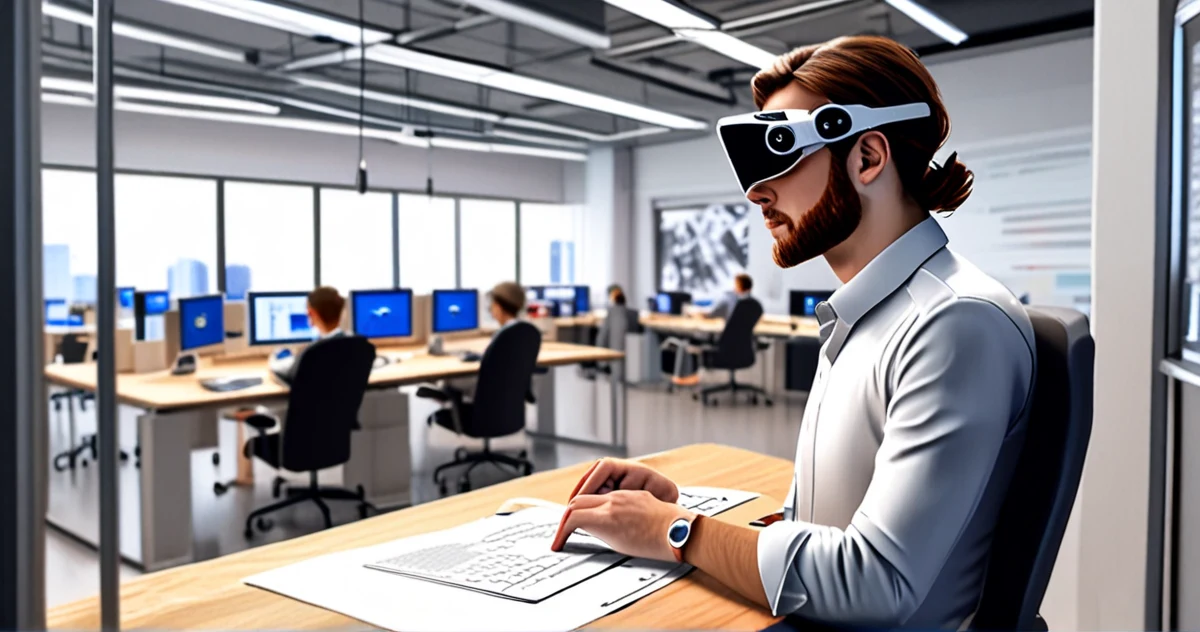
Developer testing augmented reality applications on connected glasses - Credit: Unsplash
Essential Technical Skills for AR Development
Developers wishing to specialize in AR glasses development must master several fundamental technical skills:
- 3D programming: Mastery of rendering engines and spatial transformations
- Computer vision: Understanding of tracking and recognition algorithms
- Mobile optimization: Energy consumption reduction techniques
- Interaction design: Ergonomic principles for spatial interfaces
Concrete Use Cases and Practical Applications
Examples of Successful Enterprise Applications
Developers can draw inspiration from existing use cases to design relevant AR applications:
- Maintenance assistance: Visual guides superimposed on industrial equipment
- Immersive training: Interactive simulations for learning complex procedures
- Data visualization: 3D representations of business data in real time
Innovative Consumer Applications
In the consumer sector, opportunities include:
- Urban navigation: Directions superimposed on the real environment
- Augmented shopping: Product visualization in one's own space
- Interactive entertainment: Immersive games and narrative experiences
Emerging Technologies and 2025 Trends
AI Integration and Intelligent Agents
The integration of artificial intelligence into AR glasses represents a major trend for 2025. Developers must anticipate the incorporation of AI agents capable of:
- Contextual recognition: Automatic understanding of the environment
- Advanced voice assistance: Natural interactions with the user
- Adaptive personalization: Interfaces that adjust to preferences
Evolution of Sensors and Tracking
Advances in sensors enable more precise and responsive AR experiences. Developers should familiarize themselves with:
- 6DoF tracking: Position and rotation tracking in space
- Gesture recognition: Interactions without physical contact
- Real-time mapping: Dynamic creation of the virtual environment
Comparative Table of AR Development Platforms
| Platform | Main SDK | Advantages | Limitations |
|------------|---------------|-----------|-------------|
| Apple Vision Pro | VisionOS SDK | Mature ecosystem, optimized performance | Closed ecosystem, high cost |
| Meta Orion | RealityKit | Extended field of view, Meta integration | Under development, limited documentation |
| Snap Spectacles | Lens Studio | Active community, rapid deployment | Limited features, consumer targeting |
| Viture Pro XR | Proprietary SDK | High-quality display, versatility | Emerging ecosystem, limited support |
Practical Guide: Where to Start with AR Development
Concrete First Steps for Developers
To effectively start in AR development, here is a structured approach:
- Choose a target platform based on your objectives and existing skills
- Configure the development environment with appropriate SDKs
- Create a simple prototype to test basic functionalities
- Iterate and improve by integrating user feedback
Recommended Learning Resources
- Official AR SDK documentation (Apple, Meta, Google)
- Online communities specialized in XR development
- Practical tutorials on Unity/Unreal for 3D rendering
- Certified courses in computer vision and spatial interfaces
Business Challenges and Market Considerations
Beyond technical aspects, developers must consider the commercial realities of AR development:
- Revenue Models: Subscriptions, enterprise licenses, freemium applications
- Distribution: Specialized app stores, direct deployment to businesses
- Customer Support: Ongoing maintenance and regular updates
- Compliance: Adherence to privacy and security regulations
Evolution Perspectives and Advanced Recommendations
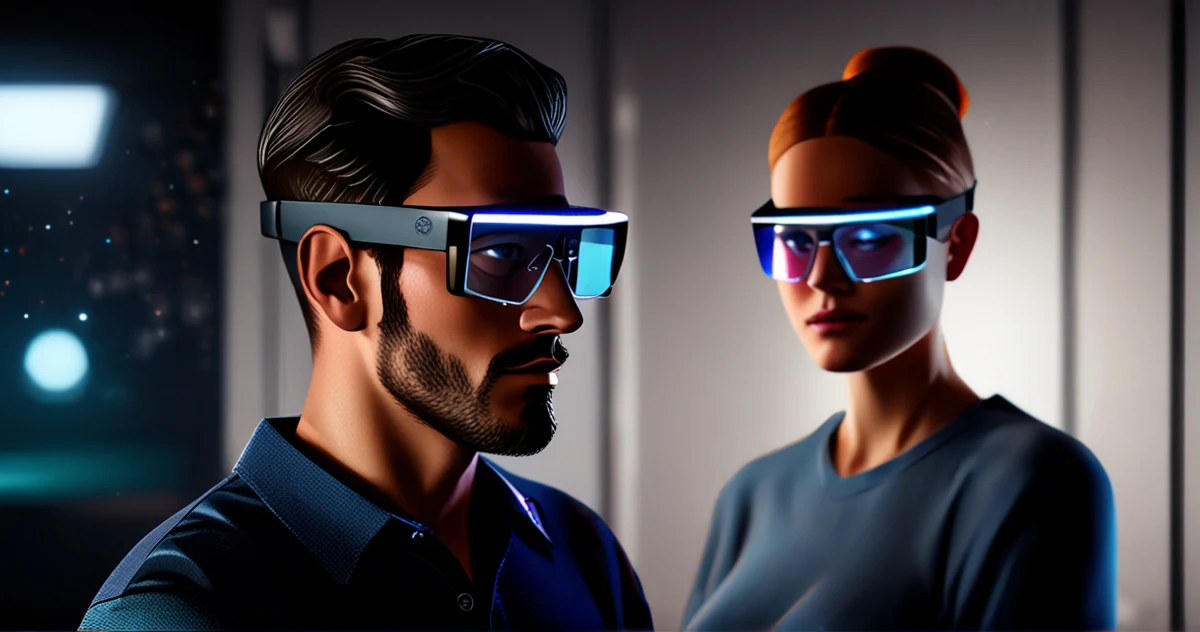
As the AR glasses market continues to mature, developers who invest now in acquiring specialized skills position themselves advantageously for the future. The ability to create applications that fully leverage the potential of these emerging platforms will become an increasingly valuable skill.
Recommended Development Roadmap
- Short term (6 months): Master the basics of spatial computing
- Medium term (1 year): Develop functional prototypes
- Long term (2+ years): Specialization in specific application domains
Conclusion
Developing applications for next-generation AR glasses represents an exciting but demanding territory. The technical challenges are substantial, but the opportunities are equally significant, particularly in professional and entertainment domains. As platforms continue to mature and development ecosystems enrich, developers who master these technologies today will be well positioned to shape the future of spatial computing.
The key to success will lie in the ability to create truly useful and immersive experiences that justify wearing these devices daily. The coming months will be decisive for establishing best practices and standards that will guide AR development in the coming years.
To Go Further
- MIT Technology Review - Perspectives on the future of smart glasses
- KGOnTech - Technical analysis of Meta Orion AR glasses
- FrameSixty - XR development and enterprise tools
- VITURE - Presentation of Viture Pro XR glasses
- CNET - Context on the AR glasses race
- MIT Technology Review - Review of Snap's AR Spectacles