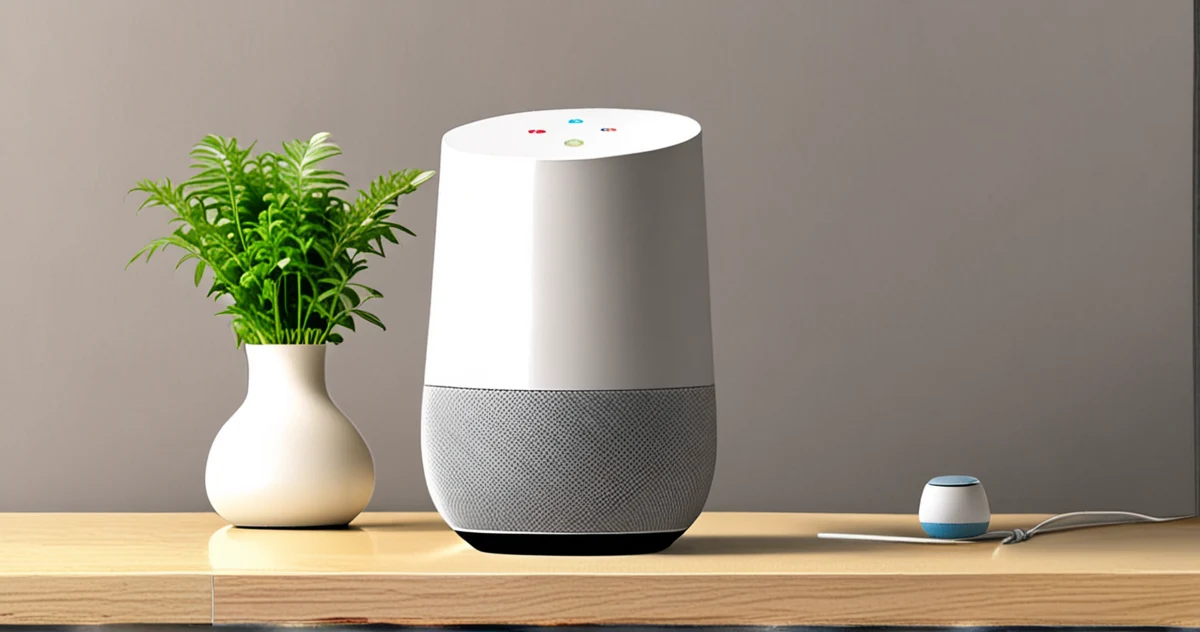
You've probably shouted into the void, asking a speaker to turn off the light. But have you ever thought about what this exchange really entails? The promise of a voice-controlled smart home rests on a fragile balance between convenience and control, between artificial intelligence and data integrity. In 2025, the choice between Alexa, Google Home, and the Apple HomeKit ecosystem is no longer just a matter of brand preference, but a strategic decision concerning the architecture of your digital privacy and the cognitive capabilities you invite into your home.
This article dissects the strengths and weaknesses of these three giants, not from the usual marketing angle, but by analyzing their true AI capabilities and their commitments to privacy. We will also explore how the emergence of the Matter protocol, mentioned by Pimag Kitchenandbathshop, is redefining the rules of the game by enabling smoother integration between these once-siloed ecosystems.
Myth #1: All assistants understand and execute in the same way
The reality is more nuanced. The quality of understanding and execution fundamentally depends on the underlying artificial intelligence and the hardware ecosystem.
Alexa (Amazon): Its strength lies in its vast library of "Skills" and its native integration with the immense Amazon marketplace. It excels at voice shopping commands and controlling a wide range of third-party devices. However, as highlighted in a discussion on Reddit (r/homeassistant), some users criticize its sometimes limited contextual understanding and overly basic responses to complex queries.
Google Assistant (Google Nest): Benefiting from the power of the Google search engine, it is often considered the most capable at answering factual questions, managing complex schedules, or understanding natural language with nuance. Its strength is informational intelligence. Hellouniweb describes it as an assistant with advanced "search capability."
Siri (Apple HomeKit): Its deep integration with the Apple ecosystem (iPhone, Mac, Apple Watch) is its major asset. Commands to control HomeKit devices are fluid for Apple users. However, outside this ecosystem, its capabilities may seem more limited. As noted in the Tekdash article, Apple HomeKit is often presented as the most intuitive, but especially for those already immersed in its universe.
Comparative table of main capabilities:
| Capability | Alexa | Google Assistant | Siri/HomeKit |
| :--- | :--- | :--- | :--- |
| Understanding complex queries | Medium | High (search engine) | Variable (depends on Apple context) |
| Control of third-party devices | Very broad (via Skills) | Broad | Limited (requires HomeKit or Matter certification) |
| Proprietary ecosystem integration | Amazon (shopping, Prime) | Google (Gmail, Calendar, Search) | Apple (iOS, macOS, services) |
| Ease of initial setup | Simple (Tekdash) | Intuitive (Tekdash) | Best for Apple users (Tekdash) |
Myth #2: Privacy is a secondary concern in a connected home
This is perhaps the most dangerous misconception. Privacy practices diverge radically and have concrete implications.
Apple HomeKit and Siri clearly position themselves as the benchmark in this area. The New York Times Wirecutter calls them the "most privacy-respecting platform." A large part of the data processing related to home commands is done locally on the device (like a HomePod or Apple TV), minimizing the sending of information to Apple's servers. This "privacy by design" approach is a strong argument, confirmed by users on Reddit (r/alexa) who migrated to Apple for this reason.
Amazon Alexa and Google Assistant adopt a different approach, more cloud-centric. As reported by the New York Times Wirecutter, "Alexa and Google publish lengthy privacy practices." This means that to improve their services and personalize responses, a greater amount of voice and interaction data is analyzed in the cloud. Users must actively manage their privacy settings and voice history if they wish to limit this collection.
Actionable Insight: Before choosing, ask yourself what value you place on the privacy of your domestic conversations. If it's an absolute priority, Apple's local architecture is hard to beat. If you prioritize advanced features and deep personalization that require cloud analysis, the trade-offs of Alexa or Google Assistant may be acceptable, provided you meticulously configure the privacy settings.
The arrival of Matter: The end of ecosystem wars?
Until recently, choosing an assistant meant locking yourself into an ecosystem of compatible devices. The Matter protocol, IP-based and supported by all major players, changes the game. As explained in the Pimag Kitchenandbathshop guide, Matter "enables seamless integration between Siri, Alexa, and Google Assistant." Concretely, a Matter-certified switch or bulb can be controlled indifferently by your voice commands on HomePod, Echo, or Nest Hub.
What this means for you:
- Freedom of choice: You are no longer forced to buy only "Works with Alexa" or "HomeKit Compatible" devices. Look for the Matter logo.
- Strategic mixing: It becomes conceivable to use a Google Nest Hub in the living room for its informative answers, a HomePod in the bedroom for privacy, and control everything with the same connected devices.
- Future-proofing: Investing in Matter devices protects your setup from obsolescence linked to the closure of an ecosystem.
However, don't be mistaken: Matter standardizes communication between devices and assistants, but it does not standardize the inherent capabilities of each assistant (like the quality of voice understanding) or their privacy policies. The choice of the main assistant remains very important.
What not to do: Choose on impulse or out of habit
Avoid these common pitfalls:
- Not considering the existing ecosystem: If your digital life revolves around iPhone and Mac, ignoring the fluidity of HomeKit is a mistake. Conversely, forcing the use of Siri in an Android/Windows environment can be frustrating.
- Neglecting privacy implications: Read the privacy policy summaries. Configure the settings (automatic voice history deletion, disabling "service improvement") from the initial setup.
- Forgetting long-term strategy: With Matter, think of your smart home as a modular network. Prioritize Matter-certified devices for maximum flexibility, even if you opt for a single voice assistant today.
Conclusion: Towards contextual and ethical domestic intelligence
The battle of voice assistants in 2025 is no longer won solely on the number of jokes they know or gadgets they control. It is played on two fronts: the depth of contextual intelligence and the robustness of the privacy model. Google Assistant bets on informational power, Alexa on the breadth of skills and commercial integration, and Siri on ecosystem security and respect for privacy.
The advent of Matter, as described by Pimag Kitchenandbathshop, is a liberating turning point for consumers, reducing dependence on a single provider. It allows decoupling the choice of devices from that of the voice interface. Ultimately, the ideal assistant might well be the one that not only executes a command but does so by understanding the context of your household while ensuring that the most intimate data from your home remains, precisely, at home. Your final choice should reflect which facet of this promise – ubiquitous convenience, unlimited information, or private sanctuary – resonates most with your vision of a truly smart home.
To go further
- Pimag Kitchenandbathshop - Smart Home Device Compatibility Guide - Guide on smart home device compatibility and the role of the Matter protocol.
- Hellouniweb - Comparison of Siri, Google Assistant, and Alexa - Comparison of voice assistant features.
- Reddit - What's the best voice assistant? - User discussions and feedback on assistants.
- Tekdash - Smart Home Devices: Comparing Top Brands - Comparison of top smart home brands, including ease of installation.
- Reddit - The Cost of Switching away from Alexa - Testimonials on migrating between ecosystems, notably to Apple.
- The New York Times Wirecutter - The Best Smart Speakers - Comparative analysis of the best smart speakers, with a focus on privacy.
- ScienceDirect - Culture, energy and climate sustainability, and smart home - Academic article on the role of smart homes in sustainability.
- Intuz - AI Smart Home - Article on the transformation of home automation by AI.