Introduction
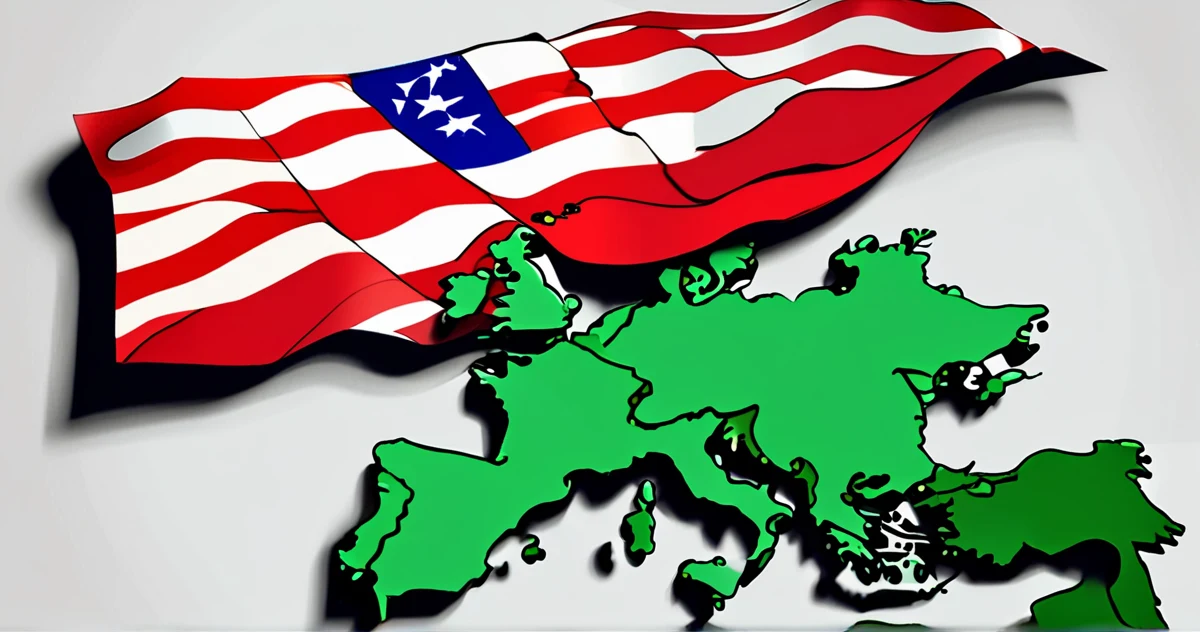
On March 13, 2026, the European Parliament adopted the AI Act, a historic regulation aimed at governing artificial intelligence through a risk-based approach. A few months earlier, in October 2026, US President Joe Biden signed an executive order (Executive Order on Safe, Secure, and Trustworthy Development and Use of Artificial Intelligence) seeking to establish safety and trust standards for AI. These two texts, while sharing the goal of regulating a rapidly expanding technology, diverge profoundly in their philosophy, scope, and mechanisms. For digital professionals operating on both sides of the Atlantic, this divergence is not merely an academic curiosity: it has direct consequences for compliance, innovation, and competitiveness. This article offers a comparative analysis of the two approaches, drawing on the work of recognized institutions such as the Brookings Institution, the University of Chicago, and the law firm Steptoe.
Two Visions of Regulation: A Risk-Based Approach
Europe Focuses on Risk Categories
The European AI Act is based on a typology of AI systems into four risk levels: minimal, limited, high, and unacceptable. Systems posing unacceptable risk (such as social scoring or behavioral manipulation) are simply prohibited. Those with high risk—for example, in healthcare, employment, or justice—are subject to strict requirements regarding transparency, traceability, and human oversight. This approach, described by the Brookings Institution as a "risk-based" model, aims to protect fundamental rights while leaving room for low-risk applications. However, according to an analysis in the Business Law Review of the University of Chicago, this framework could lead to "overregulation" detrimental to industrial growth, especially for innovative SMEs.
The US Prioritizes Guiding Principles
Conversely, the US executive order does not establish binding legal categories. It sets principles—safety, fairness, privacy protection, responsible innovation—and tasks federal agencies (FTC, FDA, etc.) with adopting guidelines tailored to their respective sectors. The Brookings Institution notes that this more flexible approach reflects the American tradition of sectoral regulation and soft law. The goal is to encourage innovation without imposing a disproportionate regulatory burden. However, this flexibility can lead to fragmentation: each agency interprets the principles in its own way, creating a patchwork of rules that is difficult for businesses to follow.
Three Key Differences Reshaping the Landscape
1. Geographic and Legal Scope
The AI Act is a European regulation directly applicable in all member states, with extraterritorial effect: any company, even non-European, that deploys or uses an AI system in the EU must comply. The US executive order, on the other hand, applies only to federal agencies and, indirectly, to companies that interact with them. According to a study by the University of Michigan (Understanding the Future of Artificial Intelligence Governance), this difference in scope means that multinational companies must prepare for multiple regimes, with sometimes conflicting requirements.
2. The Role of Innovation
US regulation emphasizes promoting innovation: the executive order provides for regulatory sandboxes to test AI systems without risking penalties. The EU also includes sandboxes, but conditions them on strict adherence to risk categories. Steptoe notes that this difference could steer startups toward the US for experimentation, while Europe becomes a more regulated but perhaps less dynamic market.
3. Control and Sanction Mechanisms
The AI Act creates centralized governance: a European AI Board, national authorities, and fines of up to 7% of global turnover. The US executive order relies on inter-agency coordination and non-binding recommendations, with limited sanctions. In a comparative analysis published by the Brooklyn Journal of International Law, the authors estimate that this asymmetry could encourage companies to favor the US market to avoid high penalties.
What This Means for You (Digital Professionals)
If you develop or deploy AI systems, here are three direct implications:
- Multiple Compliance: If your product targets the European market, you must map your AI's risks from the design stage. In the US, follow the guidelines of sectoral agencies (e.g., FDA for healthcare).
- Compliance Costs: The European approach requires audits, documentation, and robustness testing. Plan dedicated budgets. The US approach is less costly but more ambiguous.
- Competitive Advantage: An AI certified as compliant with the AI Act can become a selling point for European clients concerned about compliance. Conversely, US flexibility can accelerate time to market.
Toward Convergence or Regulatory Divorce?
Several experts, including those from Steptoe, believe partial convergence is possible through bilateral agreements or international standards (ISO, OECD). The Brookings Institution calls for "transatlantic alignment" to prevent divergences from hindering trade or creating security gaps. However, cultural and legal differences are deep: Europe prioritizes rights protection, the US market-driven innovation. The University of Michigan report predicts that the two systems will coexist, creating increased complexity for global players.
Conclusion
The European AI Act and the US executive order represent two worldviews: one based on strict rules and risk categories, the other on flexible principles and sectoral regulation. Neither is perfect, but their coexistence demands constant vigilance and adaptability from digital professionals. In the short term, companies must invest in regulatory monitoring and compliance tools. In the long term, multilateral discussions could lead to common standards, but in the meantime, the AI regulatory landscape will remain a complex patchwork requiring careful navigation.
Further Reading
- Business Law Review University of Chicago - Comparison of the AI Act and US proposals
- Brookings Institution - Divergences and paths to transatlantic alignment
- Steptoe - Comparative analysis of EU, US, and UK approaches
- Brooklyn Journal of International Law - Comparative analysis of AI regulations
- University of Michigan - Comparison of the AI Act and US executive order