
In an ever-evolving educational landscape, immersive technologies like augmented reality (AR) and virtual reality (VR) are emerging as powerful tools to redefine student engagement. As online learning seeks to bridge the gap of in-person interaction, these technologies offer unprecedented opportunities to create captivating and memorable learning experiences. According to Watermark Insights, AI and higher education are converging to provide students with more innovative and interactive learning opportunities, particularly through AR and VR.
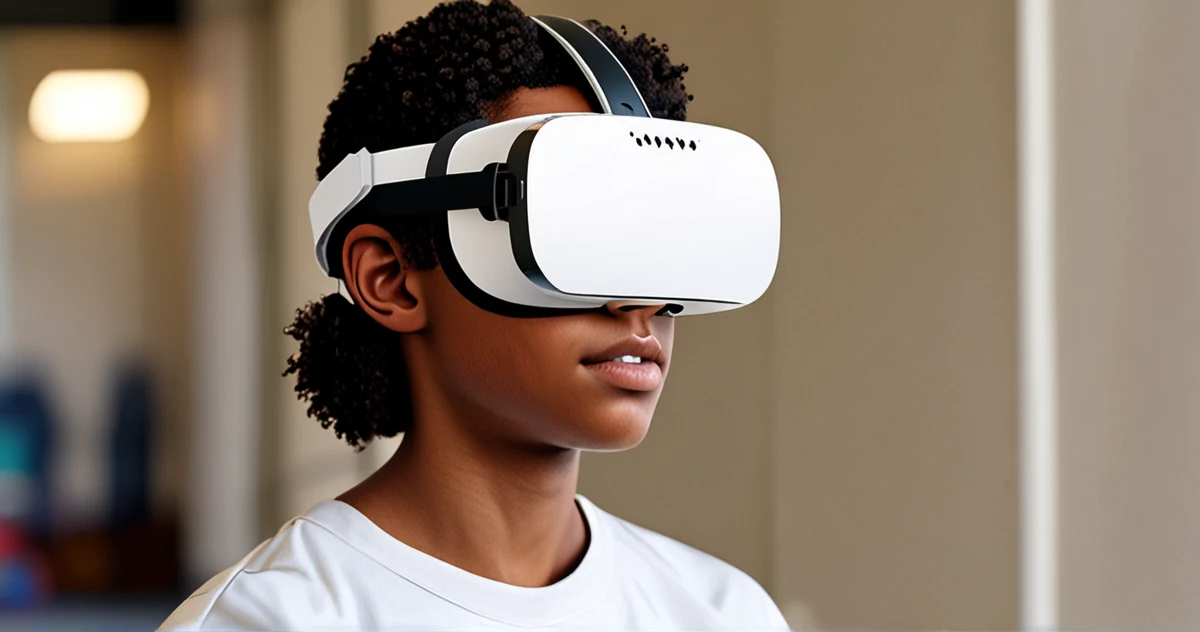
This article explores five creative approaches to integrating AR and VR into online courses, drawing on concrete examples and verified trends. Whether you're a teacher, instructional designer, or digital professional, these ideas will help you transform your learners' engagement and prepare for the future of education.
Key Takeaways
- Immersive Learning Experiences: AR and VR significantly enhance knowledge retention
- Growing Accessibility: These technologies are increasingly integrated into educational platforms
- Increased Motivation: Studies show that immersion boosts student participation
- Pedagogical Innovation: Transformation of traditional teaching methods
1. Immersive Virtual Field Trips to Explore Inaccessible Places
Imagine a history course where students can visit ancient archaeological sites without leaving their homes, or a biology module that transports them to the heart of a marine ecosystem. VR makes this possible by creating simulated environments that mimic reality.
Practical Applications by Field
- History and Archaeology: Exploration of accurately reconstructed historical sites
- Biology and Ecology: Total immersion in complex natural ecosystems
- Geography: Interactive discovery of landforms and geographical features
- Art and Culture: Guided tours of virtual museums and galleries worldwide
According to eLearning Industry, a virtual field trip can transform how students interact with content, making learning more tangible and engaging. In language teaching, Nick Clegg emphasizes that a student could sit in a virtual Parisian café to practice conversation, combining cultural immersion and language practice.
Practical Advantages:
- Stimulation of students' natural curiosity
- Deep understanding beyond traditional textbooks
- Accessibility to otherwise inaccessible places
- Use of equipment like Meta Quest 2 for total immersion
2. Hands-on Simulations for Technical and Medical Skills
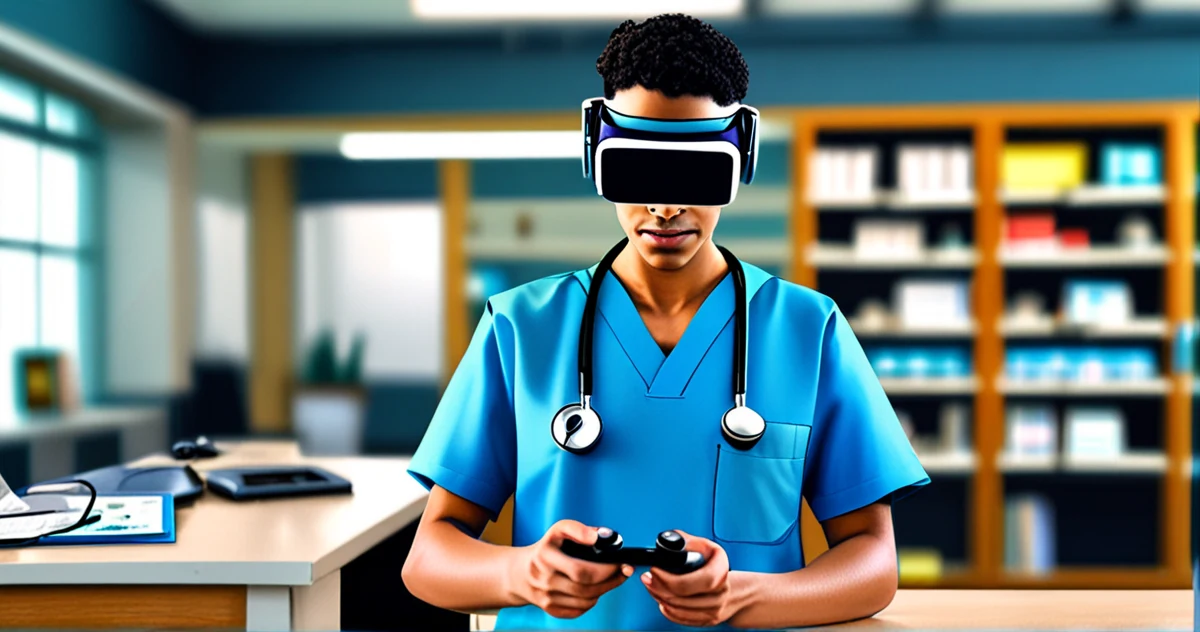
For disciplines requiring manual practice, such as medicine or engineering, VR provides a safe environment to practice without risk. Sciencedirect notes that thanks to AR and VR, students can explore and interact with objects in ways impossible in the physical world.
Preferred Application Areas
- Medicine and Surgery: Simulation of complex medical procedures with real-time feedback
- Engineering and Mechanics: Assembly and disassembly of technical systems
- Biological Sciences: Virtual dissections and detailed anatomical studies
- Chemistry and Physics: Safe experimentation with virtual substances
This approach is supported by resources like those mentioned in PMC, which discuss the transformation of medical education through VR, although it doesn't replace clinical training. Online, this translates to modules where learners use VR interfaces to manipulate virtual tools, receiving real-time feedback on their actions.
Key Advantages of Simulations
- Cost Reduction: Elimination of expenses related to physical materials
- Increased Accessibility: Hands-on learning available everywhere
- Enhanced Confidence: Repeated practice without real consequences
- Safe Environment: Risk-free learning for students
3. AR Integration for Contextual and Interactive Learning
Unlike VR, which creates entirely virtual worlds, augmented reality overlays digital elements onto the real world via smartphones or tablets. This enables practical applications in online courses, such as enriched textbooks where images come to life in 3D when viewed through a device.
Explorance emphasizes that using AR and VR can create immersive learning experiences that enhance student success by making abstract concepts more concrete.
Concrete Application Examples
- Physics: Visualization of magnetic fields around real magnets
- Biology: Observation of 3D cell models rotating on the desk
- Architecture: Overlay of plans and 3D models on real spaces
- History: Augmented reconstruction of historical sites and monuments
eLearning Industry adds that such innovations transform student engagement with content by promoting active exploration rather than passive absorption. By integrating AR into assignments or group projects, educators can encourage remote collaboration, where learners share and comment on augmented objects in real time.
4. VR Role-Playing Scenarios for Social Skills Development
Interpersonal skills, such as communication and empathy, are crucial but often overlooked in online learning. VR can address this by allowing students to participate in realistic social simulations.

Specific Application Areas
- Foreign Languages: Conversational practice in authentic cultural environments
- Psychology and Counseling: Simulation of realistic therapeutic interviews
- Business and Management: Training for negotiations and professional presentations
- Medicine: Doctor-patient communication in complex situations
Nick Clegg cites the example of language students practicing in a virtual environment, but this also applies to fields like psychology or business, where learners can practice interviews or conflict resolution in simulated scenes.
These experiences often use avatars and multiplayer environments, as mentioned in PMC regarding a study on medical students' experiences using multiplayer VR. By recreating stressful or complex situations, VR helps students develop confidence and adaptability, with personalized feedback.
Benefits for Online Learning
- Reduced Isolation: Breaking the loneliness of distance learners
- Strengthened Connections: Creating bonds between participants
- Practical Development: Skill acquisition in controlled situations
- Immediate Feedback: Personalized real-time feedback
5. Complex Data Visualization in AR and VR for Deep Understanding
In subjects like mathematics, economics, or computer science, abstract data can be difficult to grasp. AR and VR transform this by allowing students to "dive" into datasets, visualizing them as interactive 3D graphs or dynamic landscapes.
Sciencedirect explains that this interaction with virtual objects opens new learning pathways impossible in the physical world, such as manipulating statistical models in real time.
Innovative Applications by Discipline
- Data Science: Exploration of large datasets in 3D point clouds
- Mathematics: Spatial visualization of complex formulas and equations
- Economics: Dynamic representation of interactive economic models
- Computer Science: Navigation through data structures and algorithms
For example, a data science course could use VR to explore large datasets as 3D point clouds, where students can identify trends by moving virtually inside them. Similarly, AR can project complex mathematical formulas into real space, allowing learners to adjust them and instantly see the effects.
According to UPCEA, such technologies enhance student engagement by offering new possibilities for the future of higher education, making learning more intuitive and memorable.
Comparison Table: AR vs VR in Education
| Aspect | Augmented Reality (AR) | Virtual Reality (VR) |
|--------|------------------------|------------------------|
| Environment | Digital overlay on real world | Entirely virtual world |
| Equipment | Smartphones, tablets, lightweight glasses | VR headsets, dedicated controllers |
| Applications | Enriched textbooks, contextual 3D visualizations | Virtual field trips, complex simulations |
| Accessibility | More accessible, uses common devices | Requires specialized equipment |
| Immersion | Partial immersion in real environment | Total immersion in virtual environment |
Conclusion: The Future of Student Engagement Through Immersive Technologies
AR and VR are not mere gadgets; they represent a significant advancement for personalizing and enriching online learning. By integrating virtual field trips, hands-on simulations, contextual overlays, social role-playing, and data visualizations, educators can captivate students like never before.
Future Prospects for Educational Technology
- Growing Accessibility: Increasingly affordable equipment and platforms
- Native Integration: Incorporation into standard LMS and educational tools
- Continuous Development: Expanding domain-specific applications
- Increased Personalization: Learning experiences tailored to each student
As these technologies become more accessible, their adoption could well redefine educational engagement standards. To stay at the forefront, explore the resources below and consider experimenting with one of these approaches in your upcoming courses.
Further Reading
- Watermark Insights - Article on transforming higher education through AI and VR
- eLearning Industry - Guide on innovative uses of AR and VR in e-learning
- Nick Clegg Medium - Perspectives on the metaverse and immersive education
- Sciencedirect - Analysis of recent AR and VR applications
- PMC - Study on transforming medical education through VR
- Explorance - Article on enhancing learning through technology
- UPCEA - Resource on using technology to transform higher education