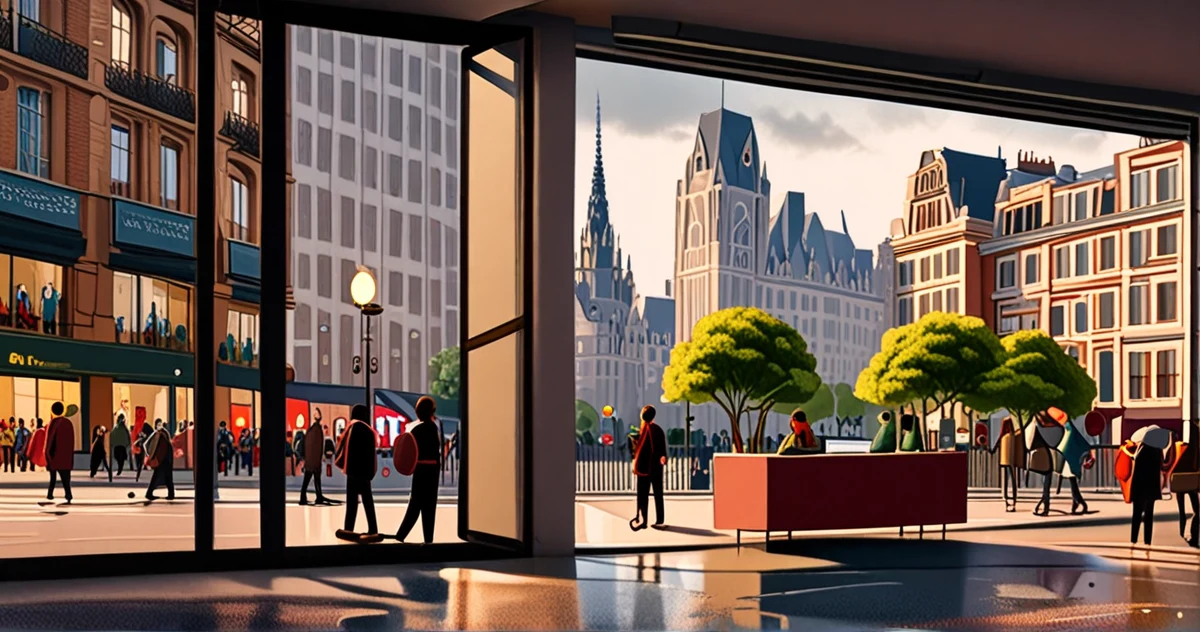
2026: How Smart Cities Are Already Redesigning Our Daily Lives
Imagine a city where your commute is measured in minutes, where green spaces take priority over roads, and where your smart bracelet can detect a health crisis before you even feel it. This is not science fiction, but the THE LINE project in NEOM, a 170-kilometer linear city without cars, where essential services are accessible within a five-minute walk. According to NEOM's website, this city "redefines the concept of urban development and the city of the future" by placing people above transportation and infrastructure. As we approach 2026, this vision is no longer just a concept, but a living laboratory that reveals three often overlooked truths about the ongoing urban revolution.
Why does this transformation directly concern you? Because the quality of life in our cities is intimately linked to the infrastructures that weave daily urban life, as highlighted in a WRI report on transformations for more equitable and sustainable cities. The decisions made today regarding digital technology, mobility, and climate adaptation will shape your living environment in less than five years. This article explores how concrete projects and technological innovations are already redefining infrastructure and daily life, drawing on case studies and verified research, while identifying pitfalls to avoid.
Three Overlooked Truths About the 2026 Urban Revolution
1. Infrastructure Is No Longer a Physical Network, but a Daily Experience
A common belief is that "smart cities" are merely about sensors and data. In reality, the revolution is deeper: it integrates urban infrastructure into citizens' daily lives. A Delphi policy study cited by e-jps.org poses this central question: "How can urban infrastructure be properly implemented in smart cities by 2026?" The answer emerges in projects like THE LINE, where priority is given to pedestrian spaces and local services, radically reducing the need for motorized transport. Infrastructure becomes invisible, seamless, and human-centered.
Red flag to watch for: Beware of projects that tout technology for technology's sake, without a tangible link to improving daily life. A "smart" city that accumulates data without translating it into accessible services (like efficient transport, clean air, or preventive healthcare) risks creating digital and social divides.
> Key insight: "The quality of life in our cities is closely associated with the infrastructure that forms the fabric of daily urban life." – WRI, Seven Transformations for More Equitable and Sustainable Cities.
2. Climate Adaptation Is an Economic Driver, Not Just a Constraint
It is often said that fighting climate change is a costly burden. Data contradicts this idea. According to the Global Center on Adaptation (GCA), investing $1.8 trillion globally in five key areas between 2026 and 2026 could generate $7.1 trillion in net benefits. These areas include early warning systems, resilient infrastructure, and adapted agriculture. In an urban context, this translates into energy-efficient buildings, electrified transport networks, and green spaces that reduce heat islands. Digitalization, a pillar of the fourth industrial revolution, offers powerful tools for this adaptation, as noted in research on ScienceDirect assessing its potential for climate action.
Concrete example: Digital innovations enable optimized resource management (water, energy) and urban planning based on climate models. A city that integrates these tools from the design stage, like NEOM, can avoid future renovation costs and improve its inhabitants' resilience.
3. Urban Health Becomes Proactive Thanks to Artificial Intelligence
Traditionally, healthcare systems react to diseases. The convergence of smart cities and AI reverses this logic. A review on ScienceDirect describes how AI is revolutionizing industries, with smart bracelets capable of detecting epileptic seizures. In a connected city, these devices could be integrated into a broader ecosystem: environmental sensors monitoring air quality would trigger alerts for asthmatic individuals, while mobility data would optimize access to care. This proactive approach aligns with the United Nations' Sustainable Development Goal 3, which aims to "end epidemics of diseases like AIDS, tuberculosis, and malaria by 2026" through preventive innovations.
List of key transformations in daily life by 2026:
- Mobility: Commutes reduced to a few minutes, with active transport options (walking, cycling) prioritized.
- Health: Wearable devices and urban sensors for preventive health monitoring.
- Environment: Green infrastructure and energy-positive buildings to mitigate climate change effects.
- Services: Access to essential shops, schools, and healthcare centers in less than five minutes.
- Governance: Citizen participation facilitated by digital platforms to co-design urban space.
Challenges and Perspectives: Beyond Technology
The urban revolution will not be without obstacles. The main pitfall is viewing technology as an end in itself, rather than a means to improve equity and sustainability. As shown in the University of Pennsylvania case study on daily life in American cities, spatial and social inequalities persist. A "smart" city must therefore integrate mechanisms to include all citizens, notably through affordable housing policies and universal digital access.
Furthermore, implementation requires a long-term vision. The benefits of climate adaptation, although substantial, require initial investments that some communities might hesitate to make. Yet, as demonstrated by the GCA, the return on investment is not only environmental but also economic.
Conclusion
By 2026, smart cities will not be limited to technological gadgets but will fundamentally redefine our relationship with space, health, and community. Projects like THE LINE illustrate a reversed priority: people first, infrastructure second. This approach, coupled with strategic investments in climate adaptation and preventive AI, can generate economic benefits while improving quality of life.
The revolution is already underway in urban laboratories and master plans. For digital professionals, the challenge is to design solutions that serve humanity, avoid divides, and integrate climate resilience from the design stage. Tomorrow's urban planning is being shaped today through these crucial choices.
To Go Further
- GCA – Analysis of the economic benefits of climate change adaptation.
- NEOM - THE LINE – Presentation of the car-free linear city project.
- e-jps.org – Delphi study on infrastructure integration in smart cities.
- ScienceDirect - AI revolutionizing industries – Overview of AI applications, including seizure-detecting bracelets.
- ScienceDirect - Digitalization for Climate Change – Assessment of digitalization's potential for climate action.
- United Nations - Sustainable Development Goals – Presentation of the 17 SDGs, including health for all.
- WRI - Transformations for Cities – Report on seven transformations for equitable and sustainable cities.
- University of Pennsylvania - Urban Studies – Course on daily life in American cities.